
The Best Sustainable Menstrual Products: A Practical Guide

Menstrual cups and period underwear are the strongest sustainable menstrual products available today. Both dramatically cut waste, cost less over time than disposables, and carry manageable health risks when used correctly. Reusable cloth pads are a close secondary option, especially for lighter days or anyone who prefers external-only protection. Biodegradable or organic disposables sit at the bottom of the sustainability ladder but beat conventional pads and tampons on chemical exposure.
Use this guide to pick one or two options to try this cycle:
- Menstrual cups hold more than a tampon, last up to a decade, and rank lowest on environmental impact across multi-country life-cycle assessments.
- Period underwear works like regular underwear, needs no insertion, and can be washed with your normal laundry.
- Reusable cloth pads are the gentlest option for sensitive skin and require only a cold rinse and machine wash.
- Organic or biodegradable disposables reduce chemical exposure but still generate waste; treat them as a backup, not a primary swap.
Key Takeaways
Menstrual cups and period underwear deliver the greatest waste reduction and long-term savings, and most people do best with a mix of two product types rather than relying on one.
| Point | Details |
|---|---|
| Cups rank lowest on environmental impact | A multi-country life-cycle assessment found menstrual cups outperform all other options across most environmental indicators. |
| Reusables save roughly $400+ over five years | Switching from disposables to a cup plus two pairs of period underwear typically cuts five-year period costs by more than half. |
| Washing habits matter | Cold water, full loads, and air drying preserve the environmental advantage of reusables; high-heat drying narrows the gap. |
| Check for PFAS-free and medical-grade labels | Period underwear should carry PFAS-free or OEKO-TEX certification; cups should specify medical-grade silicone or TPE. |
| Sweeteebeauty offers absorbency levels from light to postpartum | The multilayer leak-proof design works as a primary or backup option across flow levels, sports, teen use, and postpartum recovery. |
Table of Contents
- Why sustainable menstrual products deserve a serious look
- What are the main types of eco-friendly period products?
- What are the real health and safety risks?
- How do you choose the right sustainable period product?
- How do you clean and care for reusable period products?
- How much do reusable period products actually save?
- How do you actually make the switch without it feeling overwhelming?
- Why period underwear works for most people
- Balancing sustainability with what actually works for you
- Sweeteebeauty period underwear: where to start
- Sources
Why sustainable menstrual products deserve a serious look
Many people who menstruate use thousands of disposable pads or tampons over a lifetime. Most of those products contain plastic components that take centuries to break down. A conventional pad is roughly 90% plastic by composition, and many end up flushed rather than binned, contributing to plastic pollution in waterways and sewers. The EPA’s national waste data puts the scale of municipal solid waste in stark terms: source reduction, not recycling, is the most effective lever.
The financial case is just as clear. A box of disposable pads or tampons typically costs several dollars per month, adding up to a significant expense over multiple years for products that go straight to landfill. A quality menstrual cup is a one-time purchase that can last many years with proper care. Period underwear costs tens of dollars per pair and can last multiple years with proper care.
Beyond personal savings, the cost burden of disposables hits hardest for people already stretched thin. Research on period poverty shows reusable products can meaningfully reduce that burden, and programs distributing cups and cloth pads have been used as equity interventions in schools and low-income communities.
Three reasons the switch is worth making now:
- Waste reduction: Reusables replace hundreds of single-use products per person per year.
- Chemical exposure: Conventional disposables can contain PFAS, dioxins, and synthetic fragrances; certified reusables and organic disposables carry fewer of those risks.
- Long-term savings: Most reusable options pay for themselves within three to six months of regular use.
What are the main types of eco-friendly period products?
Each product type works differently, fits different bodies and lifestyles, and carries its own trade-offs. Here is a plain-language breakdown.
Menstrual cups
A menstrual cup is a small, bell-shaped cup made from medical-grade silicone, latex, or thermoplastic elastomer. You fold it, insert it like a tampon, and it collects rather than absorbs flow. Most cups hold 20–30 ml, roughly two to three times the capacity of a regular tampon. Empty and rinse every 8–12 hours; boil between cycles to sterilize. One cup can last up to ten years.
Menstrual discs
Discs sit higher than cups, resting at the base of the cervix rather than in the vaginal canal. That position makes them a better fit for some anatomies and allows mess-free sex during a period. Reusable discs are made from silicone; single-use versions exist but generate waste. The learning curve for insertion is similar to cups.
Period underwear
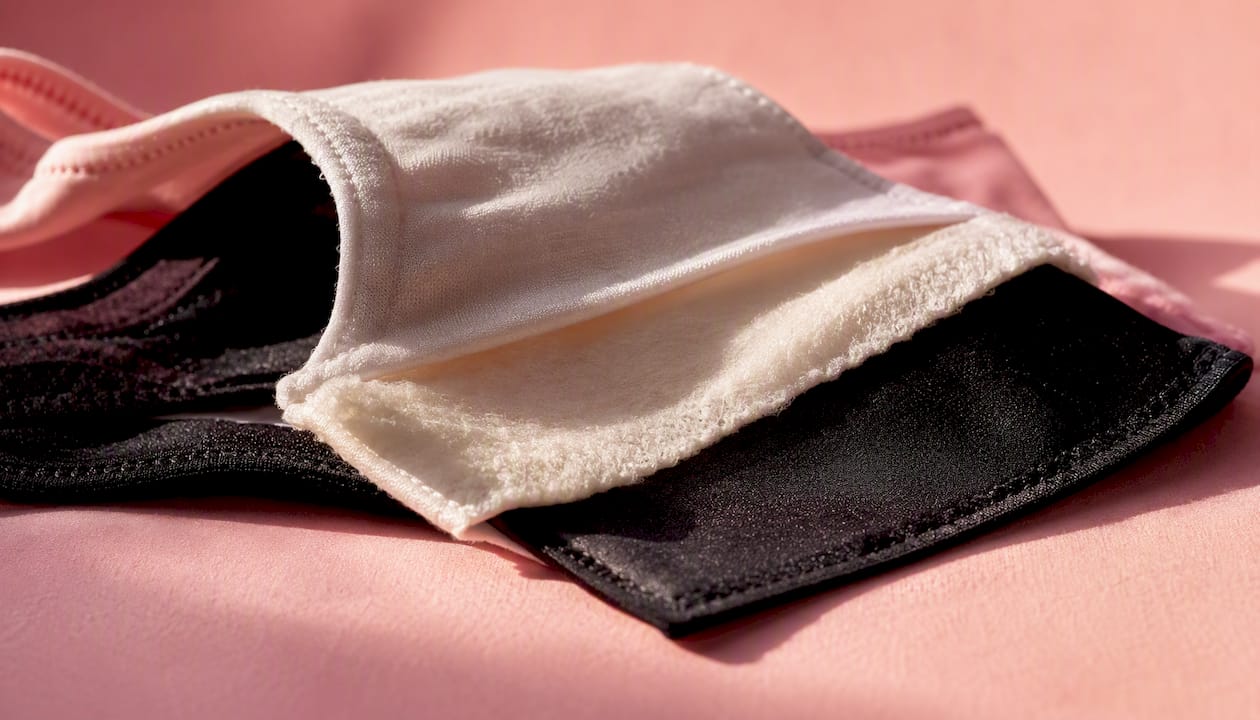
Period underwear looks and feels like regular underwear but contains a built-in multilayer absorbent gusset. No insertion required. Absorbency levels range from light (1–2 tampons’ worth) to heavy (4+ tampons’ worth). Rinse in cold water after use, then machine wash. Lifespan is typically two to five years per pair.
Reusable cloth pads
Cloth pads snap or fold around underwear the same way a disposable pad does. Most are made from organic cotton, bamboo, or flannel. They are the most accessible option for anyone new to reusables or uncomfortable with internal products. Rinse cold, machine wash, and air dry. Expect two to five years of use per pad.
Organic and biodegradable disposables
These are still single-use, but they skip the synthetic fragrances, chlorine bleaching, and plastic backing found in conventional products. Look for GOTS-certified organic cotton or products labeled plastic-free. They biodegrade faster than conventional pads, though “biodegradable” in a sealed landfill is still slow. Think of them as a harm-reduction step, not a full solution.
Side-by-side comparison
| Product | Best for | Materials | Cleaning | Lifespan | Waste reduction | Safety notes |
|---|---|---|---|---|---|---|
| Menstrual cup | Heavy flow, active users, travel | Medical-grade silicone | Rinse + boil | Up to 10 years | Very high | Low TSS risk with correct use; avoid if latex-sensitive |
| Menstrual disc | Anatomical fit issues, sex during period | Silicone (reusable) | Rinse + boil | Up to 5 years | Very high | Same TSS precautions as cups |
| Period underwear | All flows, beginners, postpartum | Polyester/cotton blends, some organic | Cold rinse + machine wash | 2–5 years | High | Check for PFAS-free certification |
| Reusable cloth pads | Sensitive skin, light-to-moderate flow | Organic cotton, bamboo, flannel | Cold rinse + machine wash | 2–5 years | High | GOTS or OEKO-TEX certification preferred |
| Organic/biodegradable disposables | Backup, travel, first-time switchers | Organic cotton, plant-based materials | N/A (single-use) | Single use | Low-moderate | Avoid fragrances; check for plastic-free labeling |
Quick scenario picks:
- Heavy flow + active lifestyle: Cup as primary, period underwear as backup.
- Travel: Cup (no waste to carry out) or a compact pair of period underwear.
- Teen or first-time user: Period underwear or reusable cloth pads; no insertion required.
- Sensitive skin: Organic cotton cloth pads or OEKO-TEX-certified period underwear.
For a deeper look at assembling a full eco-friendly period kit, this practical guide walks through what to pack for different scenarios.
What are the real health and safety risks?
No single product is risk-free, but the risks tied to sustainable options are well-understood and manageable. Here is what actually matters.
Toxic shock syndrome (TSS)
TSS is a rare but serious bacterial infection most associated with tampon use, particularly prolonged wear of high-absorbency tampons. Menstrual cups and discs carry a low TSS risk when emptied every 8–12 hours and sterilized between cycles. The CDC’s guidance on TSS consistently points to extended wear time and inadequate hygiene as the primary risk factors, not the product material itself. Wash your hands before insertion and removal; that single habit eliminates most contamination risk.
PFAS and chemical exposure in disposables
Independent testing has found elevated levels of toxic chemicals in certain disposable menstrual pads, including PFAS compounds sometimes used in leak-resistant layers. PFAS are associated with hormonal disruption and do not break down in the environment. Conventional pads may also contain synthetic fragrances and chlorine-bleached fibers.
What to look for on labels:
- Avoid: “fragrance,” “odor control,” plastic backing without further specification, and any product that does not list materials.
- Prefer: GOTS-certified organic cotton, OEKO-TEX Standard 100, or products explicitly labeled PFAS-free.
- For cups: Look for “medical-grade silicone” on the packaging. That designation means the material has been tested for biocompatibility.
Allergies and irritation
Latex allergies rule out latex cups entirely; silicone or thermoplastic elastomer cups are the safe alternative. Synthetic dyes and polyester blends in period underwear can irritate sensitive skin. If you notice redness or itching, switch to an organic cotton option and check whether the product carries OEKO-TEX certification, which limits harmful dye residues.
Safety checklist before you buy:
- Cups: confirm “medical-grade silicone” or “medical-grade TPE” on the label.
- Period underwear: look for PFAS-free certification or OEKO-TEX Standard 100.
- Cloth pads: GOTS-certified organic cotton is the cleanest option.
- Organic disposables: plastic-free and fragrance-free labeling, GOTS certification where available.
- All products: check the brand’s material disclosure page; if materials are not listed, that is a red flag.
Pro Tip: If you are new to menstrual cups and have a latex sensitivity, silicone is your default. Most major cup brands use medical-grade silicone, but always read the fine print before purchasing.
How do you choose the right sustainable period product?
The honest answer: flow level and comfort with internal products are the two axes that narrow the field fastest. Everything else is secondary.
Work through these questions in order:
- How heavy is your flow? Light to moderate flow opens up every option. Heavy flow points toward cups, high-absorbency period underwear, or a combination of both.
- Are you comfortable with internal products? If yes, a cup or disc gives you the longest wear time and highest waste reduction. If no, period underwear or cloth pads are equally effective and require zero insertion.
- What is your bathroom access like? At home or in a single-occupancy restroom, rinsing a cup is easy. In shared public restrooms, period underwear or a pre-rinsed cup in a small bottle of water is more practical.
- How do you feel about hand-washing? Cloth pads and period underwear need a cold rinse before washing. If that feels like too much, a cup requires the least daily handling.
- What is your budget? A starter pair of period underwear or a single cup is the lowest-friction entry point. Cloth pads require buying several to cover a full cycle.
Best-for quick picks:
- Heavy flow + active: period underwear (high absorbency) plus a cup for longer outings.
- Light flow + sensitive skin: organic cotton cloth pads or OEKO-TEX-certified period underwear.
- Travel or unpredictable schedule: cup (holds 8–12 hours, zero waste to manage on the road).
- Teen or first-time user: period underwear; no learning curve, no insertion.
- Postpartum: high-absorbency period underwear designed for postpartum flow.
Pro Tip: You do not have to commit to one product for your entire cycle. Many people use a cup for the first two heavy days, then switch to period underwear or cloth pads for lighter days. That mix-and-match approach covers every scenario without sacrificing comfort or convenience. Sustainable period care guides often recommend exactly this kind of layered strategy.
How do you clean and care for reusable period products?
The care routine is simpler than most people expect, and it directly affects how long the product lasts and how much environmental benefit it delivers.
Menstrual cups
- Wash your hands before handling.
- Empty the cup every 8–12 hours (or more often on heavy days).
- Rinse with cold water first, then warm water with a fragrance-free, oil-free soap.
- At the end of each cycle, boil the cup in water for 5–10 minutes to sterilize.
- Store in the breathable cotton pouch that most cups include; never seal it in an airtight container.
Reusable cloth pads
- Rinse in cold water immediately after removal to prevent staining.
- Machine wash on a gentle cycle with fragrance-free detergent.
- Air dry when possible; machine drying on low heat is acceptable but shortens lifespan over time.
- Do not use fabric softener; it coats the fibers and reduces absorbency.
Period underwear
- Rinse in cold water after use before placing in the laundry.
- Machine wash on a gentle or delicate cycle, cold water.
- Air dry or tumble dry on the lowest heat setting; high heat degrades the waterproof layer faster.
- Skip fabric softener and bleach entirely.
Pro Tip: Washing in full loads at cooler temperatures is the single most effective way to preserve the environmental advantage of reusables. SEI research confirms that laundering choices, particularly temperature and load size, materially affect the lifecycle footprint of reusable products. Period underwear has a lower marginal environmental cost than cloth pads because you would be washing underwear anyway.
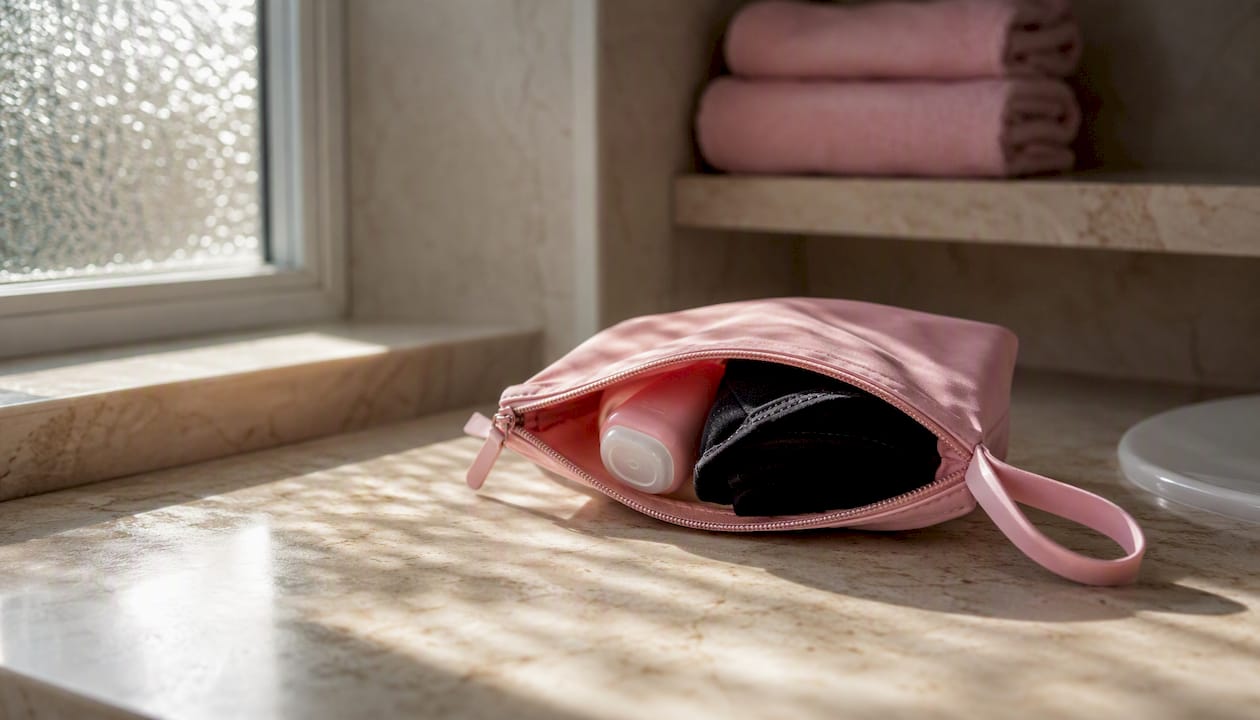
For travel: carry a small silicone travel bottle filled with water to rinse a cup in a public restroom stall. A wet bag (a waterproof zip pouch) holds used cloth pads or underwear discreetly until you can wash them properly.
Lifespan and replacement schedule
| Product | Typical lifespan | Replacement cadence |
|---|---|---|
| Menstrual cup | Up to 10 years | Replace if silicone discolors, develops odor, or shows cracks |
| Menstrual disc (reusable) | Up to 5 years | Replace if shape distorts or silicone degrades |
| Period underwear | 2–5 years | Replace when absorbency noticeably drops |
| Reusable cloth pads | 2–5 years | Replace when fabric thins or absorbency decreases |
How much do reusable period products actually save?
Reusable options cost more upfront and dramatically less over time. The math is straightforward.
Five-year cost example (one person, moderate flow):
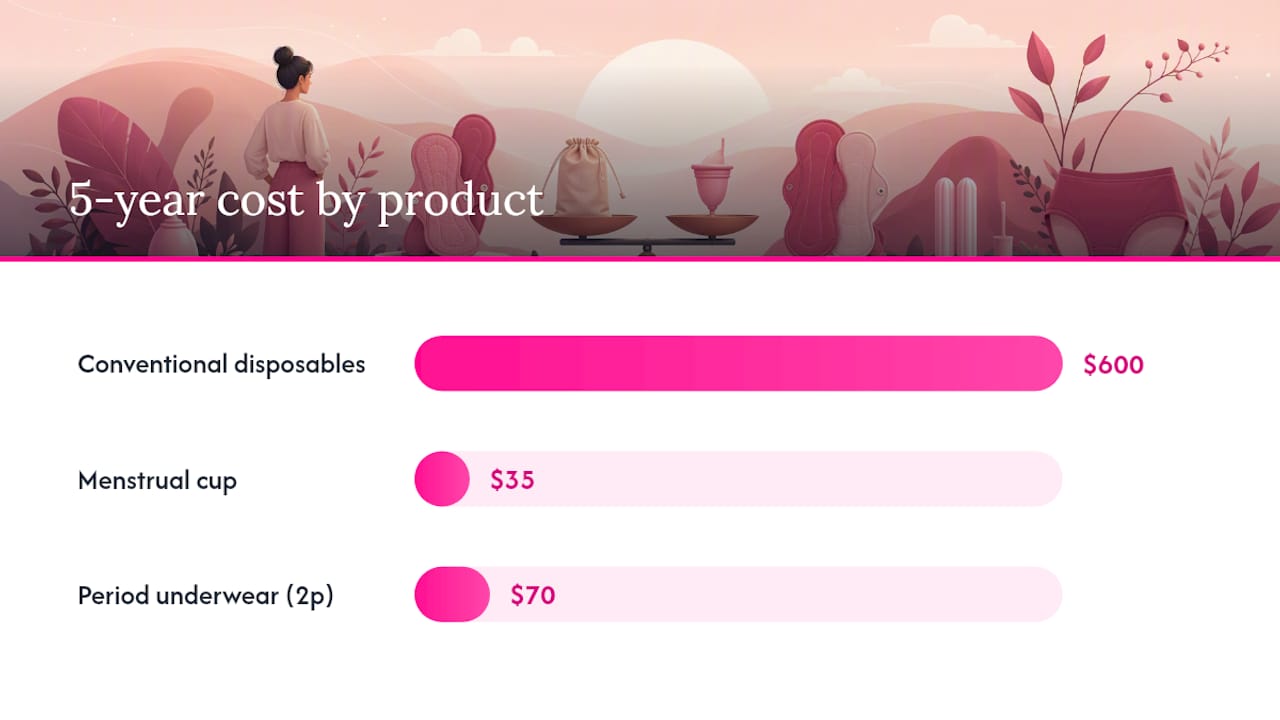
Assume $10/month on disposable pads or tampons. Over five years: $600 spent, plus roughly 1,200 individual products going to landfill.
Now compare:
- One menstrual cup at $35 + two pairs of period underwear at $35 each = $105 total for five years of coverage (cups last a decade; underwear lasts two to five years).
- Even adding a small pack of organic disposables for backup at $8/month for two months per year: $105 + $80 = $185 over five years.
That is a saving of roughly $415 over five years on the conservative end, and the waste reduction is dramatic.
| Product type | Approx. 5-year cost | Approx. annual waste items | Lifespan |
|---|---|---|---|
| Conventional disposables | $600 | ~240 products/year | Single use |
| Menstrual cup | tens of dollars (once) | Near zero | Up to 10 years |
| Period underwear (2 pairs) | tens of dollars (once) | Near zero | 2–5 years |
| Reusable cloth pads (4 pads) | tens of dollars (once) | Near zero | 2–5 years |
| Organic/biodegradable disposables | a significant expense over multiple years | ~240 products/year (lower plastic) | Single use |
A UNEP-LCI meta-analysis confirms that reusable options generally carry lower lifecycle environmental impacts than single-use equivalents, with the caveat that washing habits matter. Washing in cold water and full loads keeps the environmental math firmly in favor of reusables.
One honest variable: if you use a dryer for every wash cycle at high heat, the energy cost narrows the environmental gap. Air drying eliminates that concern entirely.
How do you actually make the switch without it feeling overwhelming?
A phased approach works better than going all-in on day one. Try one new product per cycle, keep your usual disposables as backup, and give yourself two to three cycles before drawing conclusions.
Cycle-by-cycle trial plan:
- Cycle 1: Introduce one pair of period underwear for light days or overnight. Keep disposables for heavier days. Notice comfort and absorbency.
- Cycle 2: Add a second pair of period underwear or try a reusable cloth pad. Reduce disposable use by half.
- Cycle 3: If you want to try a cup, start on a lighter day at home where you have easy bathroom access. Use period underwear as backup while you get the hang of insertion.
- Cycle 4+: Adjust the mix based on what worked. Most people settle into a combination rather than one product for every situation.
Troubleshooting common issues:
- Leaks with a cup: The seal is not fully formed. Try rotating the cup a full 360 degrees after insertion, or try a different fold technique (punch-down fold vs. C-fold). A cup that is too small for your flow or anatomy will leak regardless of technique.
- Leaks with period underwear: You may need a higher absorbency level, or the underwear is overdue for replacement.
- Discomfort with a cup: Try a softer cup (firmness varies by brand) or a smaller size. Some anatomies do better with a disc.
- Cloth pad shifting: The wings are not snapping tightly enough around the gusset of your underwear. Thinner underwear works better with snap-closure pads.
- Public restroom care for cups: Carry a small water bottle in your bag. Rinse the cup over the toilet, wipe with unscented toilet paper, reinsert, and do a proper rinse when you reach a sink.
Most people feel comfortable with a cup or period underwear within two to three cycles. The first cycle is always the steepest part of the learning curve. For a detailed walkthrough of cup use specifically, this complete cup guide covers sizing, insertion, and troubleshooting in depth.
Pro Tip: Pack a small wet bag when you are out. It holds a used cup, damp cloth pad, or worn period underwear discreetly until you get home. Wet bags are waterproof, washable, and take up almost no space in a purse or backpack. They are the single most useful accessory for anyone transitioning to reusables.
Why period underwear works for most people
Period underwear is the most accessible entry point into reusable menstrual care. No insertion, no learning curve, no special bathroom access required. You wear it, rinse it, wash it, and repeat.
Sweeteebeauty’s period underwear is built around a multilayer leak-proof design that handles light spotting through heavy flow, depending on the style. The absorbent gusset wicks moisture away from skin, a leak-resistant layer prevents bleed-through, and the outer fabric looks and feels like regular underwear.
What makes Sweeteebeauty a practical choice:
- Multiple absorbency levels: Light, moderate, heavy, and postpartum options mean you can match the underwear to the day rather than compromising.
- Seamless and high-waist styles: Designed to sit flat under clothing without visible lines or bulk.
- Irritation-free fabrics: Suited for sensitive skin; no synthetic fragrances or harsh dyes.
- Reusable and eco-friendly: Each pair replaces dozens of disposables per cycle.
- Chic designs: Functional does not mean clinical; the range includes styles that feel like regular lingerie.
When Sweeteebeauty underwear is the strongest choice:
- Heavy flow days when you want backup protection alongside a cup.
- Sports and active use, where a cup alone may feel uncertain.
- Teen users who are new to period products and want something familiar and easy.
- Postpartum recovery, where high-absorbency and comfortable fit matter most.
- Travel, where laundry access is limited and you want a reliable, low-maintenance option.
Customers consistently highlight comfort and the absence of leaks as the two things that surprised them most. The underwear is designed to feel like nothing is there, which is exactly what you want on a heavy day.
Balancing sustainability with what actually works for you
The sustainability conversation around period products can tip into all-or-nothing thinking, and that framing does more harm than good. Switching every person to a menstrual cup overnight is not realistic, and it should not be the goal.
What actually matters is directional progress. If you replace half your disposable use with a couple pairs of period underwear and a cup for heavier days, you have cut your period waste by more than half. That is a meaningful outcome, even if you still reach for an organic tampon on a travel day or a particularly unpredictable cycle.
Accessibility matters too. Not everyone has reliable hot water, a private bathroom, or the budget to buy three products at once. Respecting those constraints is part of taking this topic seriously. The UNICEF guidance on menstrual hygiene makes clear that infrastructure and education are as important as product availability in determining what people can realistically use.
The best sustainable choice is the one you will actually stick with. Trial and error is not a failure; it is the process.
Sweeteebeauty period underwear: where to start
If period underwear is where you want to begin, the simplest starting point is picking one pair at the absorbency level that matches your average flow day, wearing it at home first, and going from there.
Sweeteebeauty’s full period underwear collection covers every absorbency level from light to heavy, including postpartum styles. For teen users, the Teen Brief and Teen Cheeky styles are cut specifically for younger bodies. If you want to cover a full cycle without running laundry every day, the Variety Bundle gives you multiple styles and absorbency levels at once, which is the most cost-effective way to start. Size guidance is available on each product page; when in doubt, size up for the first pair.
Sources
- Empowering change: Sustainable menstrual solutions to end period poverty - PMC
- Study: Elevated levels of toxic chemicals found in menstrual pads and disposable products — EWG
- Facts and figures about materials, waste and recycling — EPA
This article is general information, not a substitute for advice from a qualified doctor. Consult a qualified healthcare professional about your own circumstances before acting on anything here.
Recommended
- What to Pack in Your Period Kit — The Complete List | SweeTee Beauty | SweeTee Beauty
- Best Period Underwear for Teens: A Parent’s Guide | SweeTee Beauty | SweeTee Beauty
- Period Underwear vs. Pads: Which Is Better? | SweeTee Beauty | SweeTee Beauty
- How to Wash Period Underwear & Make It Last | SweeTee Beauty | SweeTee Beauty


