
Pad Rash: How to Soothe It and Stop It Coming Back

If you’re dealing with redness, itching, or bumps along the edges of your pad, this is most likely pad rash — a form of contact dermatitis caused by friction, trapped moisture, or a reaction to product ingredients. The single most important first action: remove the pad, gently clean the area, and let the skin breathe.
What to do in the next hour:
- Remove the pad and switch to a clean, breathable option or go without temporarily
- Rinse the affected area with lukewarm water and a fragrance-free, gentle cleanser
- Pat dry completely — do not rub
- Apply a thin layer of petroleum jelly or a plain barrier cream to the outer vulva
- Put on loose, cotton underwear and avoid tight pants or synthetic fabrics
Do not apply antifungal cream, insert anything into the vagina, or keep the same pad on while you wait to see if it gets better.
Key Takeaways
Pad rash is contact dermatitis — remove the irritant first, then treat the skin; most mild cases clear within a few days, but recurring or allergic reactions need a different product strategy and sometimes medical evaluation.
| Point | Details |
|---|---|
| Remove the irritant first | Stop using the suspected pad immediately — this single step drives most of the early improvement. |
| Mild cases resolve quickly | Friction-based rashes typically ease within 48–72 hours with barrier cream and breathable underwear. |
| Allergic reactions need patch testing | Recurring cycle-linked rashes that don’t respond to fragrance-free swaps may require a clinician’s patch test to identify the exact allergen. |
| See a doctor for red flags | Fever, spreading redness, purulent discharge, or no improvement after 5–7 days all warrant prompt evaluation. |
| Sweeteebeauty period underwear | Removes adhesive and synthetic top-sheet contact — a practical alternative for women with recurrent pad-related irritation. |
Table of Contents
- What does pad rash look like and where does it appear?
- What causes pad rash — friction, moisture, and product ingredients
- How clinicians tell pad rash apart from yeast, bacterial infection, or chronic dermatoses
- Stepwise treatment: safe first-line self-care, OTC options, and when prescriptions are needed
- How long does pad rash take to heal?
- How to prevent pad rash: product, habit, and clothing fixes
- When should you contact a clinician?
- Period underwear as a pad rash alternative
- Sources
What does pad rash look like and where does it appear?
Classic pad rash symptoms show up as a localized redness, itching, or swelling exactly where the pad contacts skin. The distribution is the first clue: it follows the pad’s footprint rather than spreading randomly.
Common signs include:
- Redness and warmth along the vulva, inner thighs, perineum, or buttocks
- Itching or burning that worsens during or after wearing a pad
- Small bumps or papules, sometimes with a slightly raised border
- Blisters or vesicles in more reactive cases, particularly with allergic reactions
- Flaking or dry, cracked skin after repeated exposure
- Oozing or weeping in severe cases, which can signal secondary infection
The inner thighs and perineum are especially vulnerable because skin-on-skin contact and pad friction combine in those areas. The vulva itself is more reactive than most skin on the body — thinner, more permeable, and exposed to both heat and moisture throughout the day.
Mild irritation looks like a faint pink flush that fades within a day of removing the pad. A more pronounced allergic reaction tends to produce vesicles (tiny fluid-filled blisters) and oozing, and it recurs predictably every time that specific pad is used.
What causes pad rash — friction, moisture, and product ingredients
Pad rash is almost always contact dermatitis: either an irritant reaction driven by physical and chemical exposure, or a true allergic reaction triggered by a specific ingredient. Both types can look similar, but the mechanism and the fix differ.
The four main cause categories:
- Friction and chafing: The pad’s edges rub against skin during movement, especially with longer wear or physical activity. This is the most common cause of mild, localized redness.
- Trapped heat and moisture: Pads create a warm, occluded environment. Prolonged moisture softens skin (maceration), making it far more vulnerable to irritation and breakdown.
- Irritant contact dermatitis: Chemicals in the pad — adhesives, bleaching agents, synthetic fiber coatings — damage the skin barrier directly without an immune response. No prior sensitization needed.
- Allergic contact dermatitis: A true immune reaction to a specific ingredient. Fragrances, preservatives, and colophonium (a pine-resin derivative used in some adhesives) are among the most documented culprits. Case reports confirm that colophonium in pad adhesives can trigger recurrent, provoked dermatitis.
What’s actually in most pads?
A published product analysis found that most pantiliners and maxi pads contain multiple chemical compounds, and only a small proportion had no known allergens. Common allergen groups identified:

| Allergen Category | Examples Found in Products |
|---|---|
| Adhesives | Colophonium derivatives, acrylates |
| Fragrances | Synthetic perfumes, masking agents |
| PEG derivatives | Polyethylene glycol-based coatings |
| Pigments | Dyes used in colored or printed layers |
| Synthetic fibers | Rayon, polyester top-sheet materials |
Clues that point to an allergic cause rather than simple friction:
- Symptoms appear consistently with one specific pad brand but not others
- Vesicles or oozing are present (not just redness)
- The rash takes a few hours to peak after pad contact, not immediately
- You have a history of reactions to fragrances or adhesives elsewhere on your body
How clinicians tell pad rash apart from yeast, bacterial infection, or chronic dermatoses
Clinicians use timing, lesion distribution, and basic exam findings to separate pad rash from other common conditions. The pattern matters more than any single symptom.
Key diagnostic clues:
- Onset tied to pad use: Symptoms start or worsen during menstruation and improve when pads are removed — a strong indicator of contact dermatitis
- Contact-site distribution: Rash confined to where the pad sits, not inside the vaginal canal
- Lesion type: Redness and papules suggest irritant dermatitis; vesicles and oozing suggest allergic contact dermatitis; thick white discharge with intense internal itching points toward yeast infection
- No abnormal vaginal discharge: Pad rash stays external; a yeast or bacterial infection typically involves discharge with odor or texture changes
- Response to removing the pad: Improvement within 48–72 hours of stopping pad use strongly supports a contact cause
Clinicians may order a skin swab to rule out bacterial infection, a fungal culture to exclude candidiasis, or patch testing when an allergic cause is suspected and the specific allergen needs to be identified. NIH case reports document recurrent pad dermatitis where patch testing confirmed the allergen and guided product switching.
What to tell your clinician to speed diagnosis:
- The exact pad brand and type (scented, overnight, with wings)
- When symptoms first appeared relative to your cycle
- Whether you’ve had similar reactions to other products
- Any hygiene products used in the area (wipes, sprays, soaps)
Stepwise treatment: safe first-line self-care, OTC options, and when prescriptions are needed
Stop using the suspected pad immediately. That single step often produces noticeable improvement within a day or two. From there, Verywell Health’s clinical overview and dermatology guidance support this stepwise approach:
- Cleanse gently. Use lukewarm water and a fragrance-free, pH-balanced wash. Avoid scrubbing. Pat dry with a soft cloth.
- Cool compress or sitz bath. A 10–15 minute sitz bath in plain warm water soothes inflammation and removes residue. Repeat twice daily during the acute phase.
- Apply a barrier emollient. Plain petroleum jelly (Vaseline) or a fragrance-free zinc oxide cream on the outer vulva protects raw skin and reduces further friction.
- Short course of low-strength topical hydrocortisone. Over-the-counter 1% hydrocortisone cream applied to the outer vulva (not inside the vagina) can reduce inflammation. Use for no more than 7 days without medical guidance.
- Oral antihistamines for itch. If itching is severe, a non-drowsy antihistamine like cetirizine (Zyrtec) can help, particularly when an allergic reaction is suspected.
- Switch to breathable underwear. Loose, 100% cotton underwear reduces friction and allows airflow while skin heals.
Healthline’s clinical review notes that mild cases often improve within 2–3 days of switching to unscented pads and applying a low-strength topical steroid to the outer vulva.
When prescription treatment is appropriate:
- Stronger topical steroids (e.g., triamcinolone) when OTC hydrocortisone fails after 7 days
- Topical calcineurin inhibitors (tacrolimus, pimecrolimus) for chronic or recurrent vulvar dermatitis where long-term steroid use is a concern
- Topical or oral antimicrobials if a secondary bacterial infection is confirmed by swab
Pro Tip: When switching pad brands, try one new product at a time and use it for a full cycle before judging. Ingredient disclosure on pad packaging is often incomplete, so Planned Parenthood’s menstrual hygiene guidance recommends looking for products explicitly labeled “fragrance-free” and “hypoallergenic” rather than simply “unscented” — the latter can still contain masking fragrances.
How long does pad rash take to heal?
Most friction-based rashes improve within 48–72 hours once the irritant is removed and basic care starts. Allergic contact dermatitis takes longer, especially if the allergen was present across multiple cycles before the reaction was recognized.
Typical timelines:
- Mild irritant rash: Soreness and redness ease within 1–3 days of removing the pad and applying barrier cream
- Moderate irritant or allergic rash: Itching and swelling may persist 5–7 days; vesicles take longer to fully resolve
- Chronic or repeatedly exposed rash: Skin may take 2–4 weeks to fully heal if the allergen remained in contact across multiple periods
Timeline red flags that warrant evaluation:
- No meaningful improvement after 3–5 days of consistent self-care
- Rash returns every cycle in the same location
- Symptoms are getting worse, not better, despite removing the pad
- New signs of infection appear (see the red flags section below)
How to prevent pad rash: product, habit, and clothing fixes
Prevention comes down to two levers: removing the materials that irritate your skin, and reducing the physical conditions (friction, moisture, heat) that make irritation worse.
Product choices:
- Choose pads labeled fragrance-free (not just unscented) and hypoallergenic
- Look for a cotton or organic cotton top sheet rather than synthetic rayon or polyester
- Avoid pads with colored layers, printed designs, or “odor-neutralizing” technology — these often contain additional chemical compounds
- Try natural ingredient-focused products for sensitive skin when selecting soothing topicals post-rash
Behavioral habits:
- Change pads every 3–4 hours, even on lighter flow days — prolonged contact is a primary driver of irritant reactions
- Pat the area dry after showering before putting on a fresh pad
- Avoid tight synthetic underwear or leggings during your period
- Sleep without a pad when flow allows, to give skin a break overnight
What to look for on a label (quick checklist):
- ✓ Fragrance-free
- ✓ Cotton or organic cotton top layer
- ✓ No dyes or printed patterns on the absorbent layer
- ✗ Avoid: “fresh scent,” “odor control,” “aloe-infused” (unless you’ve confirmed no reaction)
- ✗ Avoid: synthetic fiber top sheets if you’ve had prior reactions
When should you contact a clinician?
Contact a doctor, gynecologist, or dermatologist promptly if any of the following appear:
- Fever alongside the rash — suggests systemic infection
- Purulent (pus-like) or foul-smelling discharge from the affected area
- Rapidly spreading redness beyond the pad contact zone
- Severe swelling, intense pain, or open sores that don’t begin to close within 48 hours
- No improvement after 5–7 days of consistent self-care
- Rash recurs every menstrual cycle in the same location — this pattern warrants patch testing
- Blistering that breaks open and does not dry out within a few days
Bring the pad packaging (or a photo of it), note the exact timing of symptom onset relative to your cycle, and photograph the rash before your appointment if possible. That information cuts the diagnostic visit time significantly.
Pad rash vs. diaper rash vs. yeast infection: quick comparisons
These three conditions overlap in location and some symptoms, but each has a distinguishing pattern:
- Pad rash (contact dermatitis): Redness and irritation confined to the pad’s contact zone; no abnormal discharge; improves when pad is removed; caused by friction, moisture, or product ingredients
- Diaper rash: Mechanically similar to pad rash — friction and moisture on occluded skin — but covers a broader area including the buttocks and perianal region; common in infants but can occur in adults using incontinence products
- Yeast infection (candidiasis): Intense internal itching; thick, white, cottage-cheese-like discharge; redness may extend inside the vaginal opening; CDC guidance notes it does not improve with barrier creams alone and requires antifungal treatment
The critical point: treating contact dermatitis with an antifungal cream can further irritate already-damaged skin. Clinicians recommend soothing care first and testing before reaching for antifungal medication. When the diagnosis is unclear, a swab or culture is the right call — not a guess.
Period underwear as a pad rash alternative
If pad rash keeps coming back, the pad itself may be the problem — and switching the product category entirely is often more effective than endlessly trialing new brands.
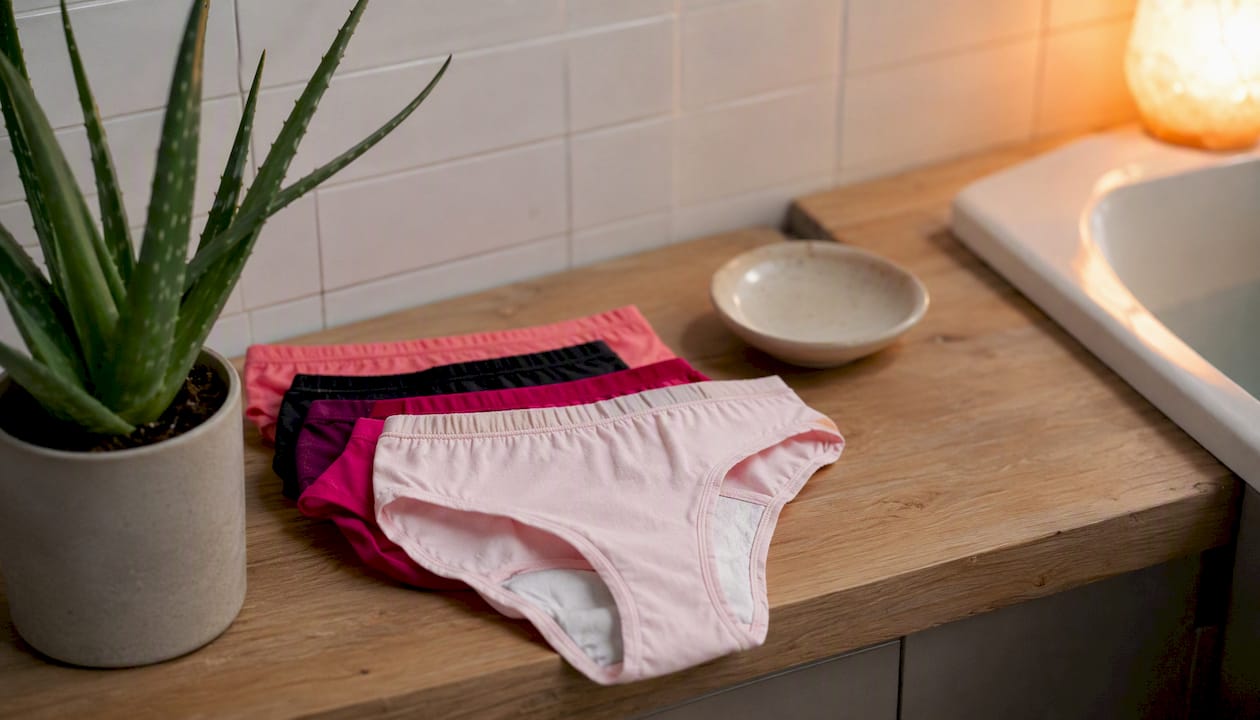
High-quality period underwear removes several of the most common pad rash triggers at once: no adhesive contact with skin, no synthetic top-sheet friction, and a breathable fabric layer that manages moisture without trapping heat the way a plastic-backed pad does. The key is choosing the right construction.
Features that reduce irritation risk:
- Cotton-lined gusset (direct skin contact layer)
- Multiple absorbency levels so you’re not wearing more than you need
- Seamless or flat-stitched edges to eliminate friction points
- Breathable outer layers rather than waterproof plastic backing
Sweeteebeauty’s leak-proof period underwear is built around exactly these priorities: irritation-friendly fabrics, multilayer absorbency from light to heavy flow, and seamless styles that sit flush against skin without rubbing. For teens dealing with their first experiences of pad irritation, the teen brief style offers the same protection in a fit designed for younger bodies. Browse the full collection and find the absorbency level that matches your flow.
An editorial perspective on pad rash and product switching
The conventional advice on pad rash — “switch to unscented pads” — is correct but incomplete. What it misses is the structural problem: most pad packaging does not fully disclose ingredients, which means switching brands is often a blind experiment. You can spend three or four cycles testing products without knowing whether the new one contains the same colophonium adhesive or PEG derivative that caused the reaction in the first place.
The more honest framing is this: if you’ve had recurring pad rash and fragrance-free disposables haven’t solved it, you’re probably not dealing with a fragrance sensitivity. You’re likely reacting to an adhesive, a fiber coating, or a preservative that appears across multiple brands under different names. At that point, the most rational move isn’t another pad swap — it’s changing the product category entirely, or getting patch testing done so you know exactly what to avoid.
Period underwear isn’t a perfect solution for everyone. Fit matters, fabric quality matters, and absorbency has to match your actual flow or you’ll compensate in ways that create new friction points. But for women who’ve cycled through multiple pad brands without relief, it removes the adhesive and synthetic top-sheet variables in one step — which is more than any “hypoallergenic” label on a disposable pad can promise.
Sources
- Potential allergens in feminine hygiene products (DOI:10.1177/17103568251379483)
- Sanitary pad dermatitis — PMC (NIH)
- Causes of contact dermatitis — American Academy of Dermatology (AAD)
This article provides general health information and is not a substitute for professional medical advice. Confirm current treatment guidance with a qualified clinician, particularly for persistent or severe symptoms.
Recommended
- Acne Pimple Patches | Hydrocolloid Blemish Treatment | SweeTee | SweeTee Beauty
- Period Underwear vs. Pads: Which Is Better? | SweeTee Beauty | SweeTee Beauty
- 200-Pack Acne Pimple Patches | Hydrocolloid Stickers | SweeTee | SweeTee Beauty
- What to Pack in Your Period Kit — The Complete List | SweeTee Beauty | SweeTee Beauty


