
How to Use Period Underwear: Easy Steps for Beginners

Wear period underwear exactly like regular underwear. Put them on, go about your day, and change them every 8–12 hours depending on your flow, according to New Jersey Department of Health guidance. That’s the short version. Here’s what you need to know before your first wear:
- Choose the right absorbency for your flow (light, moderate, heavy, or overnight).
- Wear them like normal underwear with the absorbent panel positioned front to back.
- Rinse in cold water after use, then machine wash on a gentle cycle and air-dry.
- Test at home first on a light day before relying on them at work or while traveling.
- Carry a spare pair and a waterproof wet bag when you’re out so used pairs stay contained.
Key Takeaways
Period underwear works best when you match absorbency to your flow, change on a consistent schedule, and rinse in cold water immediately after every wear.
| Point | Details |
|---|---|
| Wear like regular underwear | Put them on with the absorbent panel flat against your body; no special technique needed. |
| Change every 8–12 hours | Adjust based on flow; check sooner on heavy days and change if you notice dampness or odor. |
| Rinse cold, wash gentle | Cold water rinse immediately after removing, then gentle machine wash with mild detergent and air-dry. |
| Own five to seven pairs | A rotation of 5–7 pairs covers a full cycle while pairs wash and dry between uses. |
| Sweeteebeauty for beginners | The HipHugger Bundle and heavy-flow styles give first-time users a practical, well-fitted starting point. |
Table of Contents
- How does period underwear work?
- How do you choose the right size, style, and absorbency?
- Step-by-step: how to put on period underwear and when to change them
- How to rinse, wash, and dry period underwear so they last
- Fixing leaks, odors, and fit problems
- What doctors and health agencies say about safety and hygiene
- How Sweeteebeauty makes getting started easier
- What actually changed when I switched
- Ready to try Sweeteebeauty period underwear?
- Sources
How does period underwear work?
Period underwear is reusable, leak-resistant underwear built to absorb menstrual blood without a pad or tampon. The technology that makes this possible is a layered construction, and Healthline’s breakdown explains it clearly:
- Moisture-wicking top layer pulls fluid away from your skin so you stay dry.
- Absorbent middle core locks in blood and fluid. This is the workhorse layer, typically made from microfiber polyester or bamboo blends.
- Leakproof backing (often a PUL or polyurethane laminate layer) stops moisture from passing through to your clothes.
Absorbency claims vary by brand and style, but most pairs are rated to hold the equivalent of one to three tampons’ worth of fluid. Heavy-flow and overnight styles hold more. Reusable period underwear also reduces the single-use plastic waste common in disposable pads and tampons, which is a real environmental upside for anyone trying to cut down on disposables.
How do you choose the right size, style, and absorbency?
Getting the right pair comes down to three decisions: size, cut, and absorbency level. Nail all three and you won’t think about them again all day.
Size: Follow the brand’s size chart using your hip measurement, not your usual clothing size. When you’re between sizes, go up. A pair that gaps at the leg or waistband will leak regardless of how absorbent it is.
Style: Different cuts work better for different activities.
- Briefs and hiphuggers offer the most coverage and are the best starting point for beginners.
- High-waist styles are popular for overnight use and postpartum recovery.
- Bikini cuts work well for lighter days or as backup protection.
- Thongs are available in light-absorbency versions for spotting or discharge days.
- Teen sizes are cut shorter in the rise and narrower in the hip for younger bodies.
Absorbency: Match the level to your actual flow.
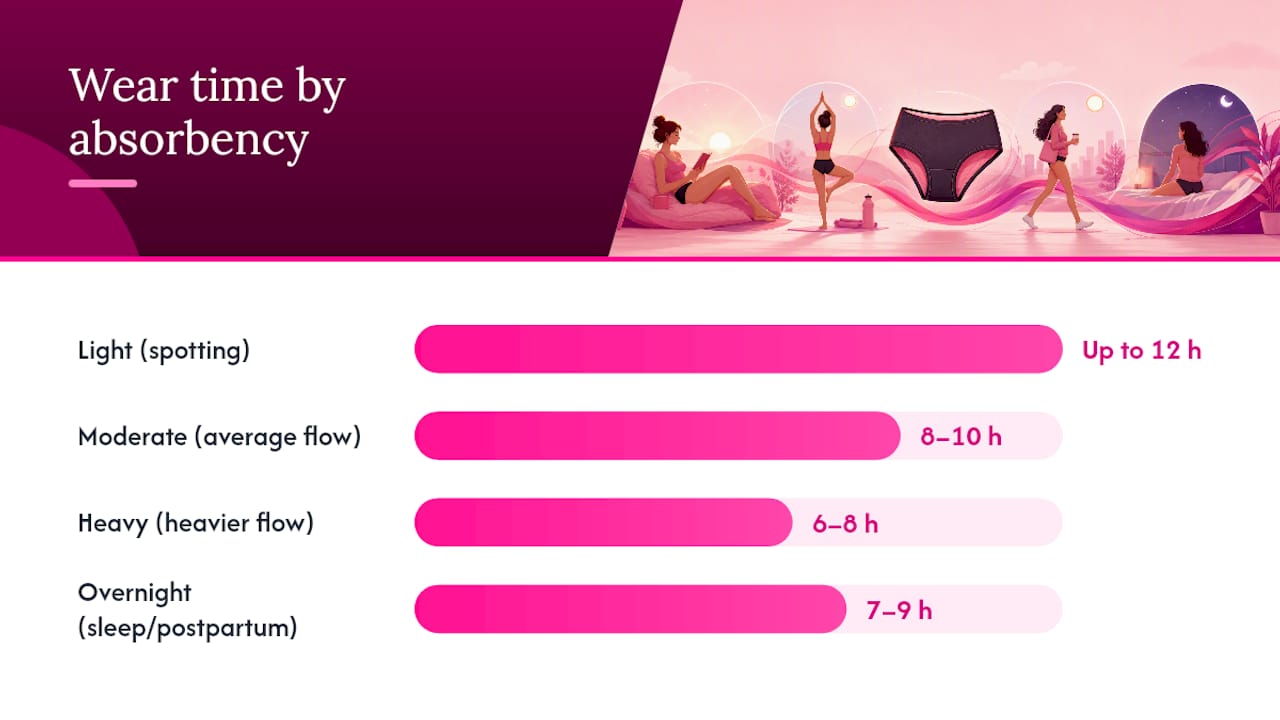
| Absorbency Level | Best For | Typical Wear Time |
|---|---|---|
| Light | Spotting, end of period, discharge | Up to 12 hours |
| Moderate | Average flow days | 8–10 hours |
| Heavy | Heavier flow days | 6–8 hours |
| Overnight | Sleeping, postpartum, very heavy flow | Full night (7–9 hrs) |
Cleveland Clinic recommends owning multiple pairs to maintain a practical rotation that accounts for wear, rinse, wash, and air-dry time. That’s enough to get through a full cycle without running out.
Pro Tip: Try one pair at home on a weekend or light day before you wear them to work or on a trip. This lets you check fit and absorbency without any pressure.
Step-by-step: how to put on period underwear and when to change them
Using period underwear correctly is straightforward, but a few details matter.
- Put them on like regular underwear. Pull them up so the absorbent panel sits flat against your body from front to back, covering the full area where flow lands.
- Check the fit. The waistband should sit comfortably without digging in, and the leg openings should lie flat with no gaps. Gaps at the legs are the most common cause of leaks.
- Wear them for the appropriate amount of time. Light to moderate flow: up to 8–12 hours. Heavy flow days: check sooner, around 4–6 hours. Change immediately if you feel dampness, notice an odor, or spot any leaking.
- Change when needed. Remove them the same way you’d remove regular underwear, then rinse immediately in cold water before storing or washing.
- Store used pairs in a wet bag until you can rinse and wash them properly.
Specific use cases worth knowing:
- Overnight: Use heavy or overnight absorbency styles. High-waist cuts add extra back coverage for side sleepers.
- Sports: Choose a snug-fitting brief or hiphugger in moderate to heavy absorbency. Movement shifts the underwear slightly, so a secure fit matters more here than in everyday wear.
- Swimming: Only use period underwear specifically labeled as swim-safe. Standard absorbent styles compress when wet and won’t hold effectively in water, per NJ Department of Health guidance.
- Postpartum: High-absorbency or overnight styles work well for postpartum bleeding. Many people also combine them with a pad during the heaviest days.
Pro Tip: Pack a spare pair and a small wet bag in your purse or gym bag. Changing on the go is easy when you have somewhere clean to put the used pair.
How to rinse, wash, and dry period underwear so they last
Proper care keeps the absorbent layers working and prevents odor from building up. Skip this step and even the best pair will degrade faster than it should.
Immediate rinse (do this first, every time):
- Hold the underwear under cold running water immediately after removing.
- Gently press the absorbent area. Do not wring or twist.
- Continue until the rinse water runs noticeably clearer.
Cold water is non-negotiable here. Hot water sets stains and can damage the absorbent fibers before the underwear even reaches the washing machine.
Machine washing:
- Use a mild, fragrance-free detergent.
- Wash on a cold or cool, gentle cycle.
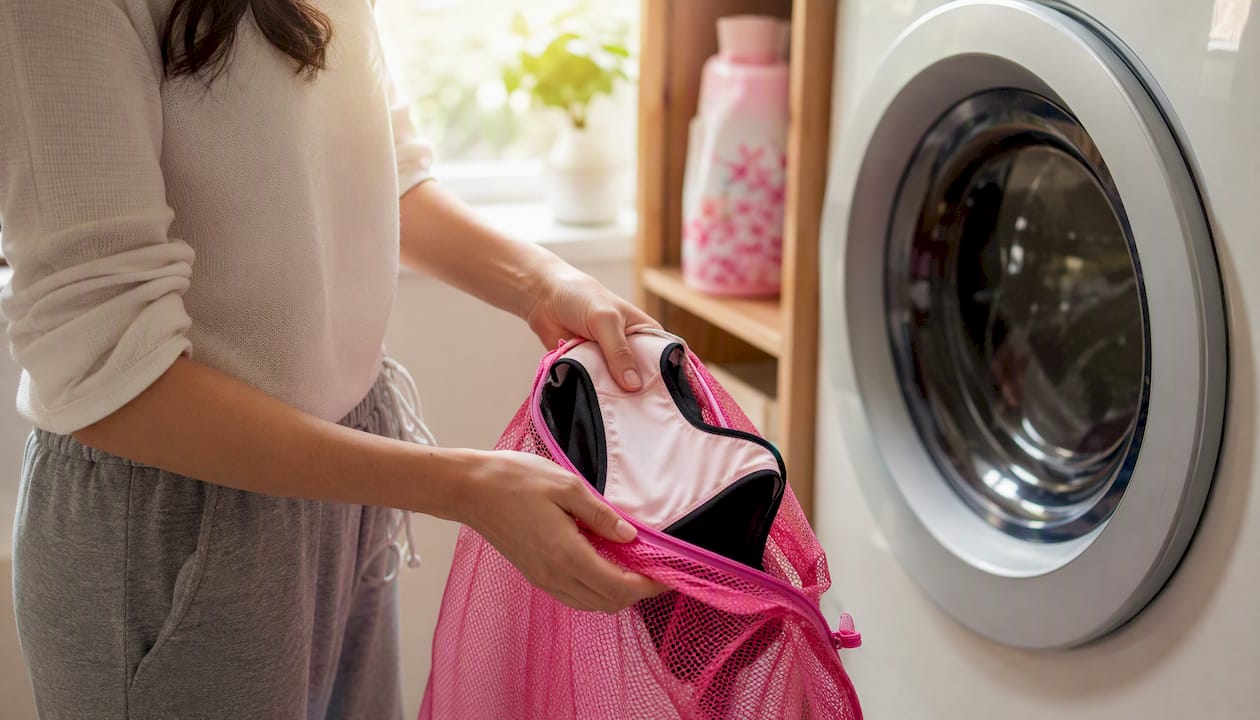
- Place them in a mesh laundry bag to protect the elastic and layers.
- Avoid fabric softeners and bleach entirely. Both coat or break down the absorbent fibers, reducing how well the underwear holds fluid over time.
- Run an extra rinse cycle if detergent residue is a concern.
Drying and storage:
| Step | Method | Notes |
|---|---|---|
| Rinse | Cold running water, gentle press | Do immediately after removing |
| Wash | Cold/gentle cycle, mild detergent | Mesh bag recommended |
| Dry | Air-dry flat or hang | Low-heat dryer only if manufacturer permits |
| Store | Fully dry, breathable drawer or bag | Never store damp |
Air-drying is the safest option for every brand. High heat damages the leakproof backing and elastic. If your brand’s care label permits a dryer, use the lowest heat setting only, as noted in Sweeteebeauty’s care guidance.
Pro Tip: For stubborn stains, soak the underwear in cold water for 20–30 minutes before washing. Avoid hot water soaks — they lock stains in rather than lifting them.
Fixing leaks, odors, and fit problems
Most issues with period underwear trace back to one of three causes: wrong size, wrong absorbency, or skipped rinsing. Here’s how to diagnose and fix each one.
Leaks:
- Leg or waistband gaps almost always mean the size is too large. Size down or try a different cut with a higher leg.
- Leaking through the fabric usually means the absorbency level is too low for your flow. Move up one level.
- Leaking at the back is common for side sleepers or people with heavier flow. Switch to a high-waist overnight style.
Odor:
- Odor builds when used underwear sits without rinsing. Rinse immediately after removing, every time.
- Detergent residue left in the fabric can also cause odor. Add an extra rinse cycle to your wash.
- Make sure the underwear is fully dry before storing. Damp fabric in a closed drawer is a reliable way to develop mildew smell.
When to combine with other products:
Using period underwear as backup with a tampon or menstrual cup is a smart strategy on heavy days or while you’re still learning your flow. Sweeteebeauty’s journal recommends this layered approach until you’re confident in how much your chosen pair can handle.
Pro Tip: Always test a new pair during a low-stakes time, like a weekend at home. If something feels off with fit or absorbency, you’ll catch it before it matters.
What doctors and health agencies say about safety and hygiene
Period underwear is safe when used and washed correctly. The key variables are wear time, rinsing, and full drying before reuse.
- Change period underwear every 8–12 hours, or sooner on heavier flow days.
- Rinse in cold water immediately after removing to reduce bacterial buildup.
- Wash with mild, fragrance-free detergent and air-dry completely before wearing again.
- Never store damp underwear in a closed bag or drawer.
- If you notice persistent irritation, unusual discharge, or signs of infection, stop use and see a clinician.
The NCBI/PubMed Central review on menstrual product materials provides clinical context supporting the importance of proper cleaning and handling for reusable menstrual products. The takeaway is consistent: hygiene risk is low when care instructions are followed.
How Sweeteebeauty makes getting started easier
Sweeteebeauty’s period underwear is built around the same multilayer design described above, with a few features that specifically help first-time users get it right.
- Multiple absorbency levels (light, moderate, heavy, and postpartum) so you can match the pair to your actual flow rather than guessing.
- Seamless and high-waist styles that reduce gap risk and add coverage for overnight and postpartum use.
- Teen sizing in brief and cheeky cuts for younger bodies that standard adult sizing doesn’t fit well.
- Irritation-free fabrics designed for sensitive skin, which matters if you’re switching from pads that caused chafing.
- Accessories like portable mini washing machines for travel, so care on the road doesn’t require improvising.
Pro Tip: If you’re new to period underwear, start with a hiphugger or heavy-flow style from Sweeteebeauty. The hiphugger fits most body types well and gives you enough coverage to feel confident on moderate flow days.
What actually changed when I switched
The adjustment period is real, but shorter than most people expect.
The first time you wear period underwear, you’ll probably check it more than you need to. That’s normal. Within a cycle or two, you stop thinking about it. The bigger shift is realizing how much mental energy disposables required: running out mid-period, carrying extras, dealing with adhesive that never quite stuck right. Period underwear removes most of that friction. The learning curve is just one weekend at home and a rotation of five to seven pairs. That’s it.
Ready to try Sweeteebeauty period underwear?
Fewer disposables, less waste, and a lot less running to the store mid-cycle. Sweeteebeauty’s leak-proof period underwear comes in every absorbency level from light to postpartum, with styles built for everyday wear, overnight protection, and active use.
New to period underwear? The HipHugger Bundle gives you multiple pairs to start a full rotation right away. Shopping for a teen? The Teen Brief and Teen Cheeky are cut specifically for younger bodies. For the heaviest days, the heavy flow collection has overnight-rated styles that hold up through the night. Browse the full line at Sweeteebeauty and find the pair that fits your flow.
Sources
- How to Use Menstrual Hygiene Products — Planned Parenthood
- Does Period Underwear Work? — Cleveland Clinic Health Essentials
- Period underwear — New Jersey Department of Health
- What Is Period Underwear? — Healthline
- NCBI / PubMed Central article
Recommended
- How Period Underwear Works | The SweeTee Journal | SweeTee Beauty
- How to Wash Period Underwear & Make It Last | SweeTee Beauty | SweeTee Beauty
- Best Period Underwear for Teens: A Parent’s Guide | SweeTee Beauty | SweeTee Beauty
- Are Period Underwear Worth It? The Honest Answer | SweeTee | SweeTee Beauty


