
Period Underwear Cost: What to Budget and Where to Save

Period underwear typically retails in a broad price range, with most solid options clustering in the mid-range. If you’re buying your first set, get a 3 to 6 pair starter bundle in a moderate absorbency and treat that as your baseline before upgrading for heavy flow or overnight coverage. Pairs that are washed the way the manufacturer instructs typically hold up for 6 months to 2 years, so the sticker price is only half the story. A pair that costs twice as much but lasts three times longer is the cheaper option in year two.
Key Takeaways
Period underwear typically costs $8 to $60 per pair, and pairing a moderate absorbency starter set with proper cold-wash care delivers the lowest real cost per period over time.
| Point | Details |
|---|---|
| Know your price band | Budget options run $12–$20 per pair, mid-range $20–$35, and premium or overnight styles $28–$35. |
| Buy for your flow, not just your budget | Most people need 4 to 6 pairs for a full cycle without daily laundry. |
| Lifespan drives real cost | A pair lasting 2 years can cost half as much per year as one lasting 6 months. |
| Bundles cut per-pair price | Buying 5 or 6 pairs together often saves 15 to 25 percent per pair versus single purchases. |
| Match SweeTee bundles to budget | The Teen Brief and Seamless Bikini suit tight budgets, the HipHugger Bundle suits full rotations, and the Lace HipHugger suits shoppers wanting style plus performance. |
Table of Contents
- How Much Does Period Underwear Cost Per Pair?
- How Many Pairs Do You Actually Need?
- How Long Does Period Underwear Actually Last?
- Why Do Similar-Looking Brands Charge Such Different Prices?
- What Does It Cost to Care for Period Underwear?
- Does Period Underwear Pay for Itself Compared to Pads or Tampons?
- Where Should You Buy Period Underwear and How Do You Find Deals?
- Is Period Underwear Safe, and What Do Clinicians Say?
- How Can You Get Affordable Period Underwear Without Cutting Corners?
- What Does SweeTee Beauty Cost Across Its Product Lineup?
- Why Sweeteebeauty Prioritizes Clear Pricing Over Guesswork
- Ready to Build Your Period Underwear Rotation?
- Frequently Asked Questions
- Sources
How Much Does Period Underwear Cost Per Pair?
Price depends almost entirely on absorbency and style, not brand hype. A light-flow bikini brief for backup protection sits near the bottom of the market. A heavy-flow or overnight boxer brief with a thicker absorbent core sits near the top.
Wholesale data helps explain the spread. Ex-factory costs for period underwear typically run $3.70 to $12.00 per pair, and most direct-to-consumer brands price retail at four to six times that cost to cover fabric testing, shipping, marketing, and returns. That’s why a $28 pair isn’t necessarily overpriced. It’s covering a supply chain most shoppers never see.
| Style & absorbency | Typical retail price | Per-pair price in a 3 to 5 pack |
|---|---|---|
| Bikini, light flow | $12–$20 | $10–$15 |
| Brief, moderate flow | $18–$28 | $15–$24 |
| High-waist/hipster, heavy flow | $24–$30 | $20–$30 |
| Boxer or overnight, heavy to overnight | $28–$35 | $24–$30 |
| Postpartum specialty briefs | $22–$35 | $19–$35 |
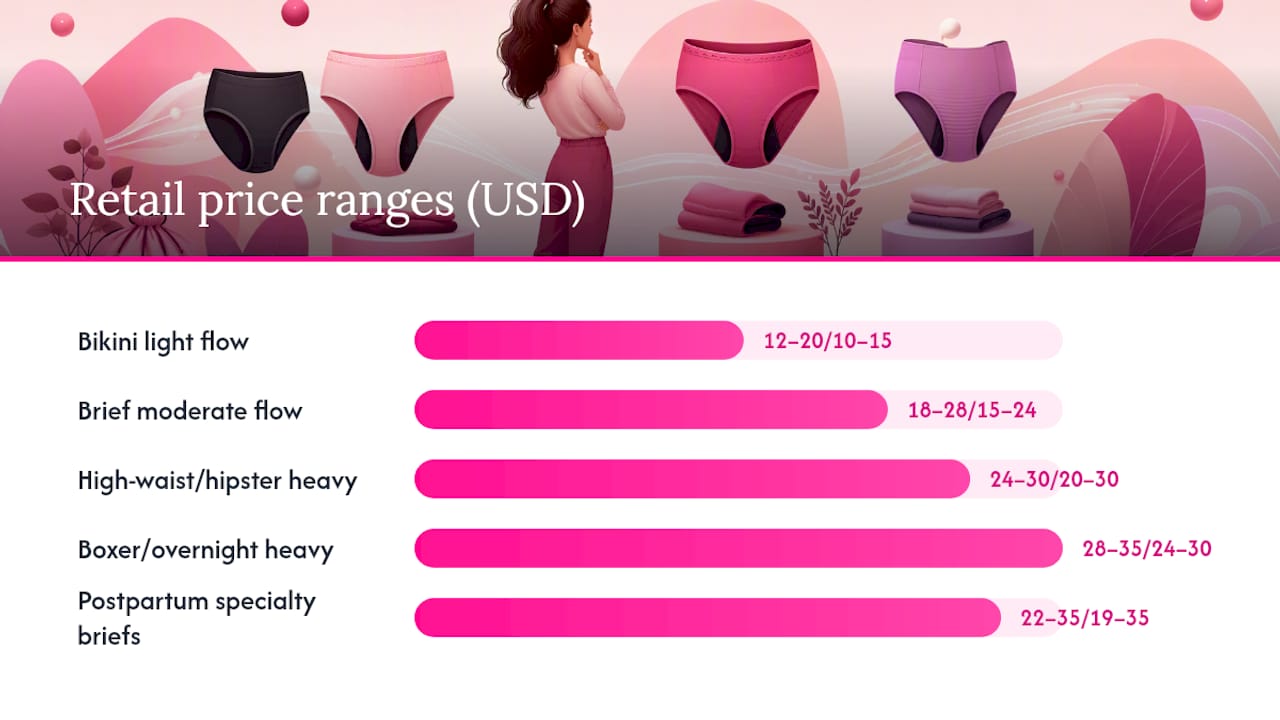
Buying in a pack changes the math fast. A single pair at $30 often drops to $24 or less per pair once you buy a 5 pack, since brands pass along part of the shipping and packaging savings. Mainstream retailers reflect this pattern too. Product listings from stores like Victoria’s Secret show per-pair prices in the low $20s once multi-packs are factored in, which lines up with what specialty brands charge for comparable coverage.
Higher price tiers usually buy more absorbent layers, a wider gusset, and better-tested moisture-wicking fabric. Below $15, expect thinner cores meant for light spotting or backup use only, not as your primary protection on a heavy day.
How Many Pairs Do You Actually Need?
Most shoppers underestimate this number, then end up doing laundry every single night of their period. The right pair count depends on your flow and how often you’re willing to run a wash.
- Light flow, wash every 2 to 3 days: 3 to 4 pairs covers a 5 day cycle comfortably. Upfront cost at $18 average: roughly $54–$72.
- Average flow, wash every other day: 4 to 6 pairs lets you rotate without scrambling for clean underwear. Upfront cost at $24 average: roughly $96–$144.
- Heavy flow or overnight reliance, wash daily or every 2 days: 6 to 8 pairs, mixing daytime and overnight styles. Upfront cost at $30 average: roughly $180–$240.
Some retail roundups suggest going even further if you rely on underwear as your only method, recommending 2 to 4 pairs per day so you’re never caught without a clean option. That’s the upper end, and it makes sense for heavy flow days or travel, but most people land comfortably in the ranges above.
To get your real cost-per-period, divide your total upfront spend by the number of cycles you expect that set to last. A $150 set of 6 pairs that survives 18 months of monthly cycles works out to roughly $8.33 per period, not $150. Stretch that across a year of periods and you’re looking at around $100, before you factor in that the underwear is still usable the following year.
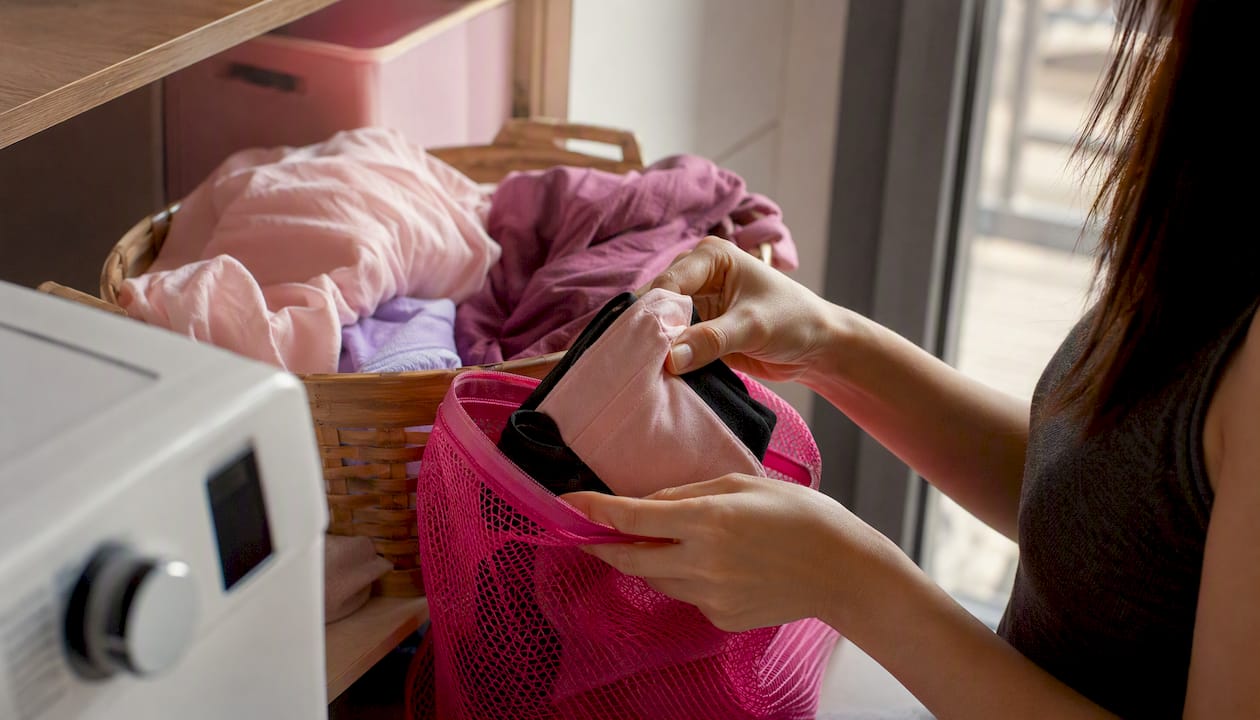
Laundry frequency isn’t just a hygiene question, it’s a budgeting lever. Washing every other day instead of daily means you can get by with two fewer pairs, which can save $40 to $60 upfront on a moderate-flow set.
How Long Does Period Underwear Actually Last?
Manufacturers generally state a lifespan of 6 months to 2 years with proper care, and real-world durability tracks closely with that range as long as you’re not tossing pairs in the dryer on high heat. Elastic and absorbent layers degrade faster under heat, which is the single biggest reason a $35 pair dies in four months instead of lasting through two full years.
| Warranty term | What it usually covers | What it typically excludes |
|---|---|---|
| Fabric defect guarantee | Stitching failure, seam separation within a set window | Damage from dryer heat or bleach |
| Leak-proof guarantee | Absorbent core failure under normal use | Overloading beyond stated absorbency level |
| Delamination coverage | Layers separating with normal washing | Wear after stated wash-count limit |
| Fit/sizing exchange | Wrong size ordered, unworn condition | Worn or washed items |
Here’s how lifespan changes your real cost per year on a $28 pair:
- Lasting 6 months: two replacements a year, roughly $56 annually.
- Lasting 1 year: one pair covers you, roughly $28 annually.
- Lasting 2 years: cost drops to roughly $14 per year averaged out.
Durability, not sticker price, is what actually determines value here.
Why Do Similar-Looking Brands Charge Such Different Prices?
Two pairs of period underwear can look nearly identical and still be $15 apart. The differences are usually invisible until you’re several washes in.
- Absorbent-core complexity: More layers, or layers designed to wick moisture away from skin instead of just holding it, cost more to manufacture and justify a higher retail price.
- Materials: Organic cotton and OEKO-TEX certified fabrics cost the factory more per yard than generic synthetic blends, and that difference passes straight to you.
- Seam construction: Seamless or bonded seams reduce chafing but require different machinery than a standard sewn seam, which raises manufacturing cost.
- Manufacturing origin: Facilities with stricter labor and environmental standards typically charge more per unit than the lowest-cost overseas options.
- Certification and chemical testing: Third-party testing for PFAS and other chemicals adds real cost per batch, which is part of why untested bargain brands can undercut on price.
- Warranty and brand overhead: A brand that replaces defective pairs and staffs real customer support bakes that cost into the price you pay upfront.
Pro Tip: Before paying a premium, check whether the brand discloses its absorbency rating in milliliters, lists specific fabric certifications, and publishes a real warranty policy. If a listing only says “super absorbent” with no numbers or testing claims, the higher price is probably paying for marketing, not materials.
What Does It Cost to Care for Period Underwear?
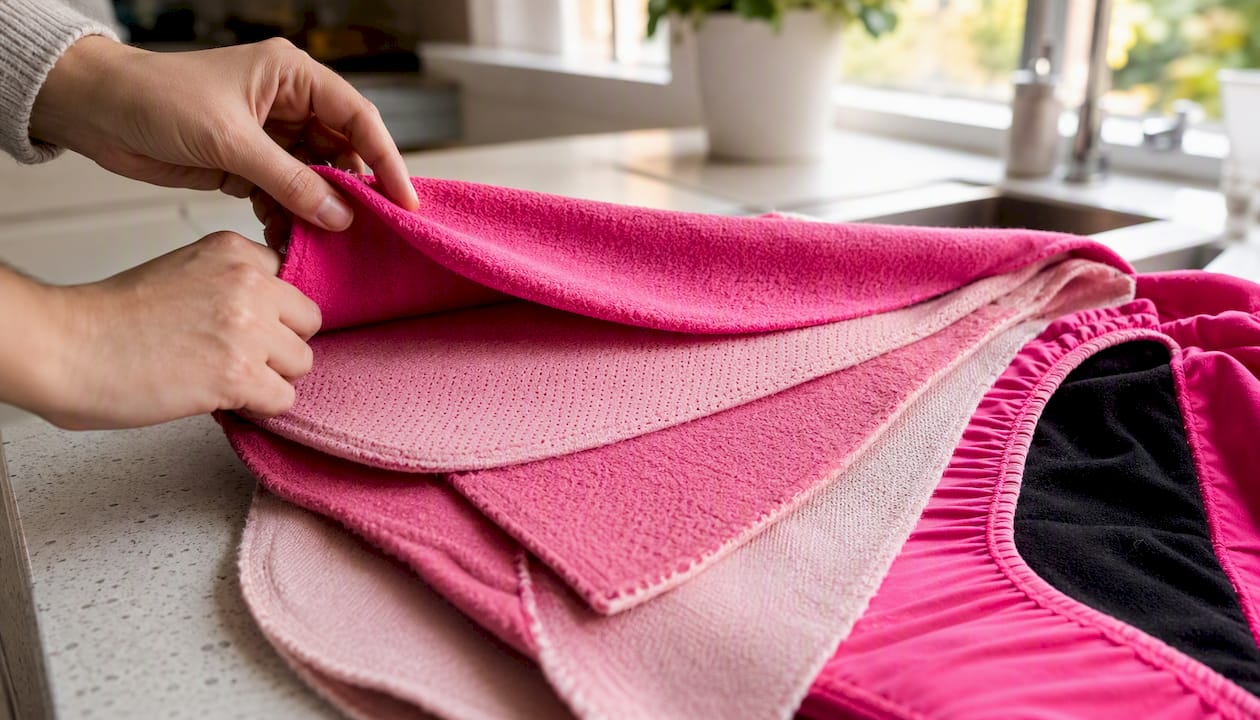
Washing instructions aren’t just a suggestion tucked on a tag. Cold water, no fabric softener, and air drying (or low heat) can add months to a pair’s life, while regular hot-water washing and high-heat drying can cut that lifespan in half.
| Care cost item | Estimated annual cost per pair |
|---|---|
| Detergent (portion per load) | $2–$4 |
| Water and energy per wash cycle | $3–$6 |
| Occasional repairs or early replacement | Up to $15 |
Total recurring care cost typically lands around $5 to $10 per pair per year, small compared to the upfront price but worth factoring into your real cost-per-year math.
A few habits keep that number low and protect your investment. Wash in cold water on a gentle cycle, skip the fabric softener since it clogs absorbent fibers, and air dry instead of using the dryer whenever possible. A mesh wash bag also prevents snagging in a washing machine drum, which is a common cause of premature wear that has nothing to do with the underwear’s actual quality.
Does Period Underwear Pay for Itself Compared to Pads or Tampons?
Yes, for most people, and often faster than expected. The break-even point depends on how much you currently spend monthly on disposables.
If you’re a heavy spender on disposables, that $150 investment pays for itself in about half a year, and every cycle after that is essentially free protection. Beyond the dollar math, period underwear also cuts landfill waste and skips the monthly restocking trip, which is a real convenience factor even for people who aren’t tracking every dollar. For many people, the smartest approach is mixing methods: period underwear for daily wear and overnight, disposables as backup during travel or the heaviest hour of a heavy day, which spreads cost without giving up reliability.
Where Should You Buy Period Underwear and How Do You Find Deals?
Where you shop changes both price and reliability more than most people expect.
- Brand direct-to-consumer sites usually offer the most accurate sizing charts, the clearest warranty terms, and first-order discount codes, often 10 to 20 percent off.
- Major marketplaces like Amazon carry a huge spread of brands and prices, but that variance cuts both ways. Some listings undercut official pricing significantly while quality and return policies vary by seller.
- Mainstream retailers carrying period underwear tend to price near the middle of the market and offer easy in-store returns, which appeals to shoppers who want to try before fully committing.
- Subscription or bundle programs through brand sites often shave another 5 to 15 percent off per-pair cost for repeat buyers.
Watch for unauthorized third-party sellers on marketplaces claiming to sell name-brand underwear at suspiciously low prices. Counterfeit period products skip the fabric testing and quality control that legitimate brands build into their retail price, and a leak on a heavy day is not where you want to discover that.
Is Period Underwear Safe, and What Do Clinicians Say?
Most safety guidance treats period underwear as a reasonable, well-tolerated option for the majority of users, provided it’s washed properly and swapped out at the manufacturer’s recommended lifespan. The bigger conversation right now is chemical safety in textiles generally, not period underwear specifically.
Environmental reporting has flagged that some menstrual products can contain concerning chemical residues, and advises shoppers to look for explicit PFAS-free claims or third-party testing documentation before buying, rather than assuming all brands meet the same standard.
That guidance from the Sierra Club is worth taking seriously if chemical exposure is a priority for you. It doesn’t mean period underwear is unsafe. It means the certification a brand publishes actually matters, not just the marketing copy around it.
Pro Tip: Stop using a pair and check in with a clinician if you notice persistent irritation, an unusual odor that doesn’t resolve after washing, or any signs of an allergic reaction like redness or itching that doesn’t clear up within a day or two.
How Can You Get Affordable Period Underwear Without Cutting Corners?
Lower cost and lower quality aren’t the same thing if you shop smart.
- Buy in bundles of 5 or 6 instead of single pairs. Per-pair savings of 15 to 25 percent are common once you commit to a multi-pack.
- Choose moderate absorbency for daytime wear and save the pricier overnight or heavy-flow styles for the days you actually need them.
- Sign up for brand email lists before checkout. First-order discounts of 10 to 20 percent are standard practice across most direct-to-consumer period underwear brands.
- Look at gently discounted factory-second listings when a brand offers them, since cosmetic imperfections rarely affect absorbency or fit.
Avoid the false bargains, though. A no-name marketplace seller with no visible testing claims, no clear washing instructions, and reviews that all read suspiciously similar is a red flag regardless of price. And remember that buy-more-save-more bundles genuinely change your math. A brand charging $30 per single pair might drop to $22 per pair on a 6 pack, which turns a $180 order into $132 for the same protection.
What Does SweeTee Beauty Cost Across Its Product Lineup?
Sweeteebeauty builds its lineup around one core idea: you shouldn’t need a chemistry degree to know what you’re paying for or how long it’ll last. Every style uses a multilayer, leak-proof design, and the absorbency level is stated clearly instead of buried in vague marketing language, which matters given how much brands can vary on that front.
| Product | Per-pair price (approx.) | Estimated cost per year |
|---|---|---|
| Seamless Bikini Period Underwear | Budget to mid-range | Lower end for light to moderate flow days |
| HipHugger Period Underwear Bundle | Mid-range, discounted per pair in bundle form | Strong value for average to heavy flow |
| Teen Brief Period Underwear | Budget-friendly | Ideal for teens starting with a smaller rotation |
| Lace HipHugger Period Underwear | Premium tier | Higher upfront cost for style plus performance |
If you’re on a tight budget, the Seamless Bikini or Teen Brief lines give you dependable coverage without paying for extras you don’t need. If you’re outfitting a full weekly rotation, the HipHugger Bundle brings per-pair cost down through multi-pack pricing. And if you want something that doesn’t look purely functional, the Lace HipHugger delivers the same leak protection with a design you’d actually want to be seen in. Every style ships with clear washing instructions and a stated lifespan expectation, so you know exactly what you’re amortizing your purchase against.
Why Sweeteebeauty Prioritizes Clear Pricing Over Guesswork
I think the period underwear market has a transparency problem, and it’s not really about whether a $40 pair or an $18 pair is “better.” It’s that most brands make you guess what you’re actually paying for. Sweeteebeauty’s approach is to state absorbency levels plainly, publish real washing instructions instead of a generic care label, and stand behind fit and sizing with a straightforward return process, because a pair that doesn’t fit right is money wasted no matter how good the fabric is.
If you’re unsure about sizing or absorbency for your flow, reach out before you buy rather than after. Sweeteebeauty also maintains educational resources for first-time buyers who are still working out how many pairs they’ll need or which absorbency level matches their cycle, because that decision shouldn’t be a guessing game.
Ready to Build Your Period Underwear Rotation?
You’ve seen the price ranges, the break-even math against disposables, and the durability numbers that actually determine long-term value. The next step is picking a starting set that matches your flow and budget instead of guessing at checkout.
Sweeteebeauty’s period underwear collection covers light to overnight absorbency across bikini, hipster, and brief styles, with bundle pricing that brings per-pair cost down the more you buy. If cramps or general discomfort are part of your period routine too, a complementary option like REBIRE covers the relief side while your underwear handles protection. Every Sweeteebeauty order comes with a clear returns policy and sizing support, so a fit issue doesn’t mean you’re stuck. Browse the HipHugger Bundle if you want the best per-pair value, or start with a single Seamless Bikini pair to test fit and absorbency before committing to a full rotation.
Frequently Asked Questions
How much is period underwear on average? Most pairs cost $20 to $35 at retail, though prices span roughly $8 to $60 depending on absorbency, materials, and brand.
How much are period underwear bundles compared to single pairs? Bundles of 5 or 6 pairs typically bring per-pair cost down by 15 to 25 percent versus buying individually.
Is period underwear cheaper than pads and tampons long term? Yes, for most spending levels. Someone spending $15 a month on disposables typically breaks even on a $150 underwear set within about 10 months.
How long does a pair of period underwear actually last? Manufacturers generally state 6 months to 2 years with proper cold-wash, air-dry care, and real-world use tracks closely with that range.
Where’s the best place to buy period underwear online? Brand direct-to-consumer sites usually offer the clearest sizing guidance, warranty terms, and first-order discounts, while marketplaces offer more variety at the cost of more variance in quality.
This article provides general educational information about period underwear pricing and care, not medical advice. Check with a clinician for any persistent irritation or health concerns related to menstrual products.
Sources
- Period Underwear
- Period Underwear Wholesale Cost Breakdown 2026 Guide
- My menstrual underwear has toxic chemicals in it — Ask Ms. Green | Sierra Club
Recommended
- Are Period Underwear Worth It? The Honest Answer | SweeTee | SweeTee Beauty
- Period Underwear vs. Pads: Which Is Better? | SweeTee Beauty | SweeTee Beauty
- How Many Pairs of Period Underwear Do You Need? | SweeTee | SweeTee Beauty
- Best Period Underwear for Teens: A Parent’s Guide | SweeTee Beauty | SweeTee Beauty


