
Fix Waistband Rolling Underwear for Good

The fastest fix for waistband rolling underwear is switching to a mid or high-rise style with a wide, bonded waistband, at least 1.5 inches, and retiring any pair where the elastic no longer snaps back after a stretch test. If you need a bridge until your next order arrives, two tricks work in a pinch:
- Silicone grip tape, ironed or stitched along the inside edge of the band, keeps it anchored against skin.
- A no-roll safety short or snug boxer brief worn underneath acts as a second layer that holds the outer waistband in place.
To know if you’re dealing with a fit problem or a dead elastic, pinch the waistband and stretch it four to five inches. If it springs back to its original shape instantly, the fit is off. If it stays loose, stretched, or wavy, the elastic has lost its recovery and the pair belongs in the donation pile, not another wash cycle.
Key Takeaways
Waistband rolling almost always comes down to band width, rise placement, and elastic condition, and fixing those three variables solves the problem for most men without any DIY workaround.
| Point | Details |
|---|---|
| Test elastic recovery | Stretch the band four to five inches; if it doesn’t snap back instantly, it’s time to replace the pair. |
| Prioritize band width and bonding | Look for bonded waistbands at least 1.5 inches wide over thin sewn-through elastic. |
| Match rise to your shape | Measure waist and hips separately; a contoured band or different rise beats sizing up. |
| Protect elastic in the wash | Skip fabric softener and high heat drying to extend waistband recovery life. |
| Choose construction built to hold | Sweeteebeauty’s high-waist styles use contoured, multilayer construction designed around the same anti-roll mechanics covered in this guide. |
Table of Contents
- Why Does Waistband Rolling Underwear Happen in the First Place?
- How to Choose Underwear That Won’t Roll
- Quick Fixes You Can Try on Underwear You Already Own
- Laundry Habits That Keep Waistbands From Rolling Sooner
- When Is It Time to Retire a Pair?
- How SweeTee Beauty’s Design Choices Address Waistband Roll
- Do Fabric Blends Affect Whether a Waistband Rolls?
- Does Body Shape Change How Waistbands Roll?
- Which Underwear Styles Are Known for Staying Put?
- Is Paying More for a Non-Roll Waistband Worth It?
- What the Research Actually Tells You About Fixing This
- Where to Find Waistbands Built to Handle Real Days
- Frequently Asked Questions
- Sources
Why Does Waistband Rolling Underwear Happen in the First Place?
Rolling almost always traces back to one of four culprits: waistband width, rise placement, elastic condition, or a fabric mismatch between the band and the body of the underwear.
- Narrow, sewn-through bands fold easier. A thin strip of elastic fed through a casing has less surface area to resist bending, so it curls the moment you sit, bend, or walk a few blocks. Wider bonded bands, heat-sealed rather than stitched, distribute pressure across more fabric and resist that fold.
- Rise placement fights your torso geometry. A low-rise brief sitting below the natural waist has nothing to grip onto except soft tissue that moves. A mid or high-rise style that sits at your narrowest point uses your actual waist curve as an anchor.
- Elastic degrades with every wash cycle. Spandex and elastane fibers lose recovery over time, and once that happens no amount of correct sizing saves the waistband.
- Fabric stretch mismatch creates friction and slippage. If the body fabric stretches more than the band, the two fight each other during movement, and the band loses the battle.
Designers have known about the width problem for decades. Wider or non-roll elastic, sometimes topstitched in multiple rows, is a standard technique for avoiding twisting and rolling in garment construction, and the same logic applies directly to underwear.
How to Choose Underwear That Won’t Roll
Buying your way out of this problem is simpler than most guys assume. Look for four specific things, in this order of importance.
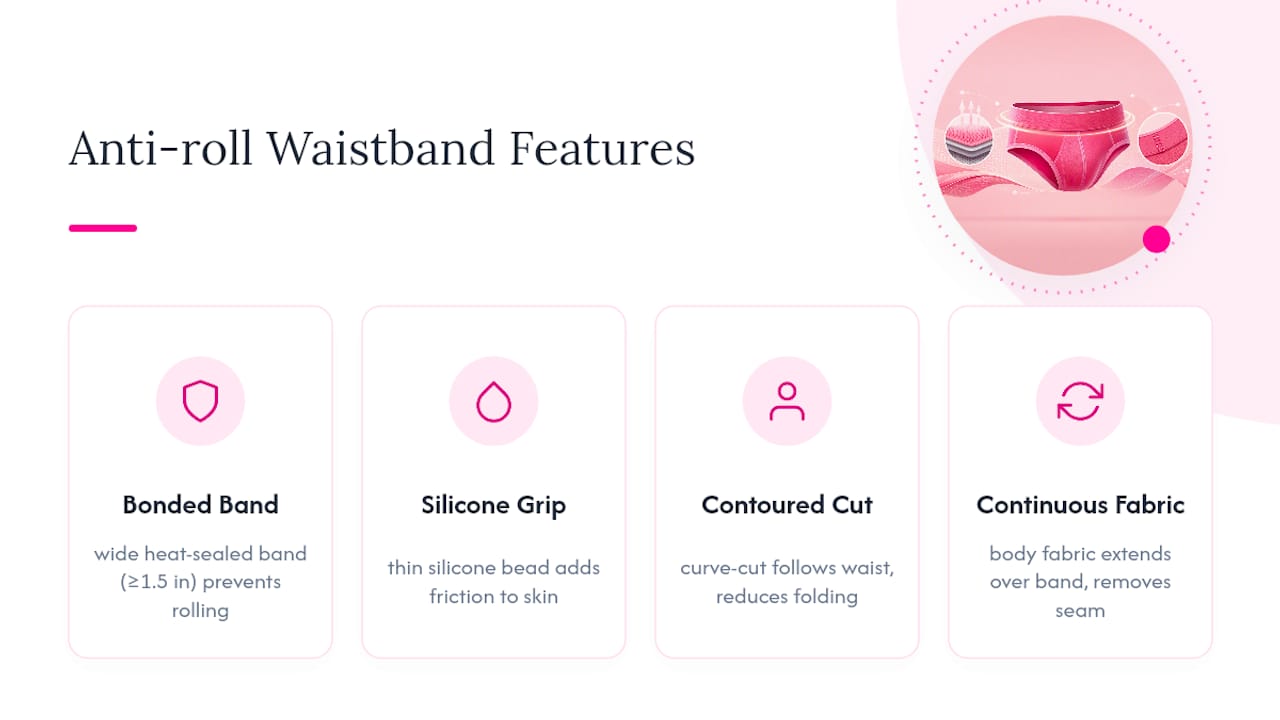
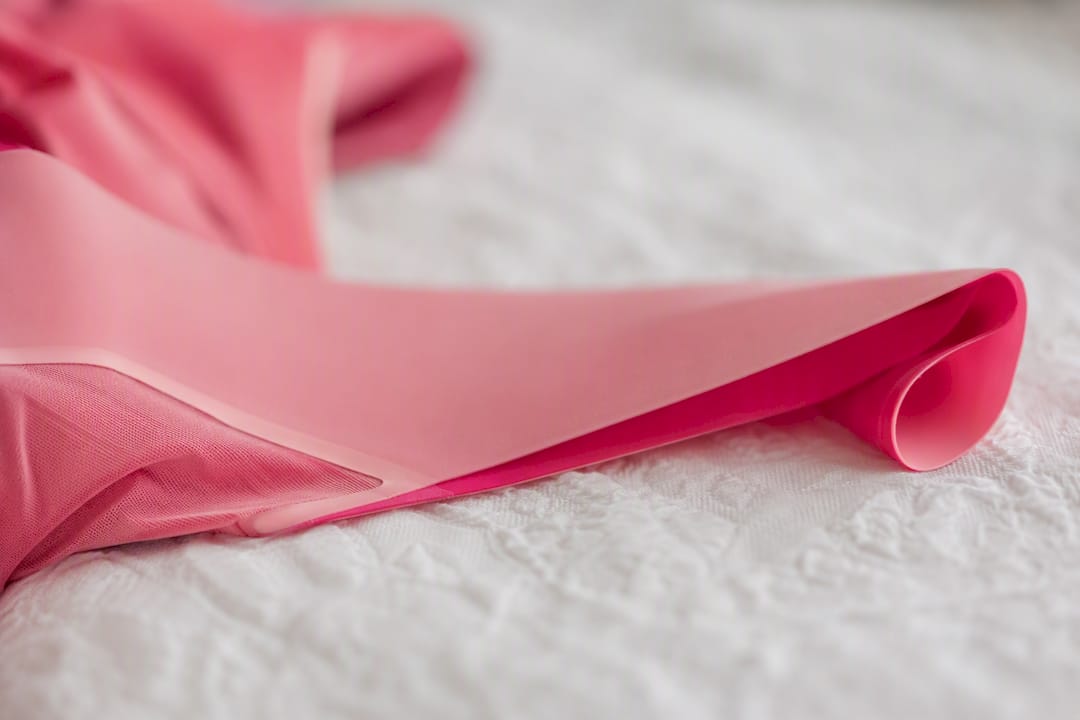
Waistband construction. A wide bonded band, roughly 1.5 inches or wider, heat-sealed rather than sewn, is the single biggest predictor of stay-put performance. Bonded and silicone-gripped waistbands consistently outperform thin sewn elastics in everyday wear, according to product design analysis focused on this exact complaint.
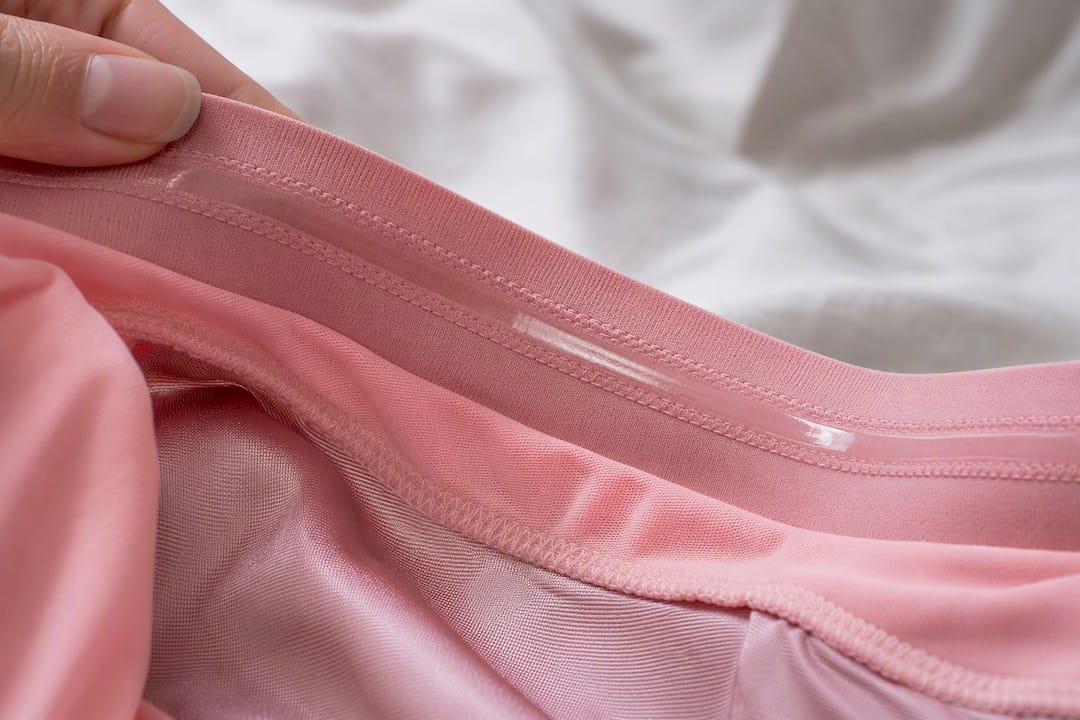
Silicone grip strips. A thin bead of silicone printed along the inside of the band adds friction against skin without adding bulk. It’s the same principle used in no-slip socks and cycling shorts.
Contoured or curve-cut waistbands. Instead of a straight band that has to bend uniformly around your whole midsection, a contoured cut is shaped to follow your waist curve, so it doesn’t need to fold to fit.
Continuous fabric construction. Some boxer briefs skip a separate waistband entirely and extend the body fabric up and over, eliminating the seam that tends to roll in the first place.
On sizing: measure your waist and your hips separately. If the two numbers point to different sizes on a brand’s chart, a contoured waistband or a different rise usually solves the problem better than just sizing up, which can leave the band loose everywhere except where it’s actually digging in.
Pro Tip: Buy one size in two different rise heights before committing to a dozen pairs. A mid-rise that fits your waist and a high-rise that fits your hips will tell you in one wear which geometry actually holds still on your body.
Fabric matters too. Look for a blend that lists spandex or elastane content of at least 5%, sew-through or topstitched anchor points where the band meets the body, and balanced stretch across front and back panels. Heavily compressive bands feel secure in the store but can dig in during long sitting sessions, so match your rise and compression level to how you’ll actually spend the day, not how the pair feels standing in front of a mirror.
Quick Fixes You Can Try on Underwear You Already Own
Before you toss a drawer full of pairs, try these fixes in order of effort.
No-sew options, five minutes each:
- Iron on a strip of silicone waistband tape along the inside edge, sold at most fabric and craft stores.
- Apply non-slip moleskin to the same spot for a softer, more breathable grip.
- Layer a safety short or fitted boxer brief underneath as a backup anchor.
- Add small waistband snaps at the hip seams to cinch a stretched-out band slightly tighter.
Temporary layering trick: if you’re wearing low-rise pants that pull your underwear down with them, a thin belt worn slightly higher than usual can keep the outer pants from tugging the waistband along for the ride.
Basic sewing fix, for pairs worth saving: a concealed elastic and understitch method works well and doesn’t require advanced skills. Sewing tutorials on this exact technique confirm that anchoring the elastic with understitching, rather than letting it float in a casing, is what stops the fold.
- Remove the old elastic or cut just inside the existing casing.
- Measure and cut replacement elastic to roughly 90% of your waist measurement.
- Pin at the center front, center back, and both sides.
- Zigzag stitch in place while stretching the elastic to meet the fabric.
If a pair needs this kind of surgery and you’re not comfortable with a sewing machine, a tailor can usually do it for less than the cost of a new three-pack, but at that point, weigh the ten or fifteen dollars in repair labor against a new pair with a bonded band that never needed the fix at all.
Laundry Habits That Keep Waistbands From Rolling Sooner
Heat is the enemy of elastic. High-heat drying and fabric softener both degrade the elastic fibers that give a waistband its snap-back, and the damage compounds with every cycle.
- Wash in cold or warm water, never hot.
- Skip fabric softener. It coats fibers in a residue that reduces elastic recovery over time.
- Air-dry when you can, or use the lowest heat setting your dryer offers.
- Rotate through your full drawer instead of grabbing the same three pairs every week, so no single pair takes the brunt of daily stretch and heat exposure.
Run the snap-back test every few months: stretch the band, let go, and watch how fast it returns to shape. A slow, wavy return is your early warning sign, well before visible rolling shows up.
When Is It Time to Retire a Pair?
Three signs mean it’s time to stop fighting the waistband and start shopping: the elastic no longer snaps back after a stretch, you can see visible crimping or waviness in the band even when it’s flat on a table, or rolling keeps happening after you’ve already fixed sizing and rise.
- Frequent wearers, five or more days a week, should expect to replace underwear roughly every six to twelve months.
- Occasional wearers can often stretch that to twelve to eighteen months.
- Pairs with bonded, wider bands and quality elastic tend to hold their recovery longer than thin sewn-elastic budget pairs, which often show rolling within the first few months.
Paying more upfront for correct rise placement and a stable band usually costs less per wear than replacing cheap pairs every few months.
How SweeTee Beauty’s Design Choices Address Waistband Roll
We built our high-waist styles around the same mechanical principles that solve rolling in any underwear category. A structured, contoured waistband that sits at the natural waist has less reason to fold than a straight band riding below the hip, and multilayer construction across the front panel keeps the fabric stable during movement instead of letting it bunch against a thin elastic edge.
- High-waist cuts anchor at the narrowest point of the torso, the same principle recommended earlier for reducing fold.
- Multilayer fabric construction distributes tension instead of concentrating it on one seam.
- Fabric selection prioritizes recovery and skin comfort over the cheapest available elastic blend.
The same design logic that keeps a waistband from rolling during a workday, a wide anchor point, balanced stretch, and a rise that matches real body geometry, is exactly what we look for when developing every new style.
These choices map directly to the buying criteria covered earlier: width, contour, and fabric balance aren’t abstract specs. They’re the difference between a waistband that holds and one you’re adjusting every twenty minutes.
Do Fabric Blends Affect Whether a Waistband Rolls?
Fabric blend affects waistband stability more than most guys expect. A band made from a blend with too little spandex or elastane loses shape retention fast, while a blend with too much rigid cotton and too little stretch fights against the body’s movement instead of following it.
Moisture-wicking fabrics, usually polyester or nylon blended with a smaller percentage of spandex, add another variable. These synthetic fibers handle sweat well, but if the wicking fabric in the body of the underwear stretches at a different rate than the elastic in the band, you get friction between the two materials during motion. That mismatch is often what causes a waistband that felt fine at 8 a.m. to be rolled halfway down by noon, especially during workouts or long walks.
The fix isn’t avoiding moisture-wicking fabric. It’s making sure the band and body fabric are engineered as a matched system rather than two separate components stitched together as an afterthought. Cotton blends with 5 to 8% spandex tend to hold recovery better over repeated wear than 100% cotton bands, which stretch out permanently after enough washes. Synthetic moisture-wicking blends need a comparable stretch percentage in the waistband itself, not just the body fabric, or the two pull against each other every time you sit down or climb stairs.
Sweat also changes how fabric behaves against skin. A band that grips well when dry can slip when damp, which is part of why silicone grip strips matter more for anyone who’s active during the day than for someone sitting at a desk.
Does Body Shape Change How Waistbands Roll?
Body shape changes where and how often a waistband rolls, and it’s one of the most overlooked variables in this whole conversation. Men carrying more weight around the midsection often see rolling concentrated at the front, where the band has to stretch over a curve instead of sitting flat. Men with a narrower waist relative to their hips sometimes see the opposite problem: the band sits fine at rest but rolls at the sides during walking or sitting because there’s less surface area holding it in place.
Movement patterns matter as much as static shape. Sitting for long stretches, the classic desk-job scenario, folds the waistband against itself repeatedly, which is exactly the motion that breaks down thin elastic fastest. Athletic movement, running, cycling, deep squats, puts lateral stress on the band that a straight-cut waistband isn’t built to handle, while a contoured or curve-cut design flexes with the motion instead of against it.
This is part of why a single “best” underwear style doesn’t exist across all body types. A guy with a flatter midsection and a mostly sedentary day might do fine with a mid-rise and a moderately wide band. A guy who sits for eight hours and then hits the gym needs a higher rise, a wider bonded band, and probably a contoured cut to handle both the sitting fold and the movement stress in the same pair. Matching the waistband style to your actual daily motion, not just your waist measurement, solves more rolling complaints than sizing alone ever will.
Which Underwear Styles Are Known for Staying Put?
Across the men’s underwear category, a few construction patterns show up consistently in styles that resist rolling, regardless of brand. Look for these traits when you’re shopping rather than chasing a specific label:
Wide bonded waistbands, heat-sealed instead of sewn through a casing, appear in most higher-end athletic and everyday brief and boxer brief lines built specifically to address this complaint. Silicone grip strips, often a thin printed bead along the inside edge, show up in athletic-focused lines aimed at runners and cyclists who complained about rolling during motion. Contoured, curve-cut waistbands that follow the natural waist rather than sitting as a straight band are common in higher-rise boxer briefs marketed specifically as anti-roll or “no-ride” styles.
Continuous fabric construction, where the body fabric extends up and over instead of meeting a separate waistband seam, tends to show up in seamless or “second-skin” style briefs, which trade some structure for the complete absence of a seam that could roll in the first place.
The pattern across all of these: manufacturers solving this problem converge on the same handful of techniques, wider bands, added grip, contoured cuts, or seamless construction, because those are the only approaches that actually address the mechanics rather than masking the symptom.
Is Paying More for a Non-Roll Waistband Worth It?
A wide bonded waistband with silicone grip typically costs a bit more per pair than a basic sewn-elastic brief, and that gap closes quickly once you consider how often each type needs replacing.
Budget pairs with thin sewn elastic often show visible rolling and lost recovery within a few months of regular wear, which means replacing cheap pairs several times a year to maintain comfortable underwear. A pair built with bonded construction and quality elastic, tested for recovery rather than just initial feel, tends to hold its shape for a year or more under the same wear conditions.
Run the math over twelve months: three cheap pairs at a lower price point each usually lands close to the cost of one premium pair, and the premium pair is still working at the end of the year while the cheap pairs are in the donation bag by month four. The real cost isn’t the sticker price. It’s how many times you have to solve the same problem again.
What the Research Actually Tells You About Fixing This
Most advice on waistband rolling treats it like a mystery when it’s really a mechanics problem with a short list of causes. The conventional wisdom, “just buy a bigger size,” is often wrong, and it’s the fix guys try first because it feels intuitive. Sizing up loosens the whole waistband instead of addressing the actual mismatch between hip and waist measurements, which usually makes rolling worse, not better.
What the evidence actually supports is prioritizing construction over comfort-feel in the store. A band that feels slightly firmer on day one but holds its shape for a year beats a softer band that feels great for a week and then folds every time you sit down. That’s a hard sell to guys who equate “soft” with “comfortable,” but soft elastic with poor recovery is the single biggest reason drawers fill up with underwear nobody wants to wear.
If you take one thing from this guide, prioritize the width and construction of the band before anything else, then fix sizing second. Most rolling complaints trace back to a band that was never built to hold its shape, not a size that’s technically wrong.
Where to Find Waistbands Built to Handle Real Days
Sweeteebeauty built its high-waist styles around the exact mechanics this article just walked through: a contoured band that sits at your natural waist, multilayer construction that keeps fabric stable during movement, and material choices that prioritize recovery over the cheapest available elastic. If you’ve been cycling through pairs that roll by lunch, the fix isn’t another size up. It’s a band engineered to stay anchored in the first place.

Sweeteebeauty’s high-waist period underwear styles apply the same construction logic used in performance underwear design, wide contoured bands, layered fabric panels, and fit built around real body movement rather than a flat mannequin shape. Whether you’re shopping for comfort during long workdays or active wear, the same principles that stop a waistband from folding at your desk apply here too. Check the current sizing chart and pick the rise that matches your waist and hip measurements before you order, since getting that part right solves more problems than any grip strip or safety short ever will.
Frequently Asked Questions
Why does my underwear waistband keep rolling down during the day? It’s usually one of three things: the band is too narrow to resist folding, the elastic has lost its recovery from age or heat damage, or the rise sits too low to anchor against your natural waist curve.
What’s the fastest way to stop underwear from rolling without buying new pairs? Apply silicone waistband tape along the inside edge of the band, or layer a snug boxer brief or safety short underneath as a second anchor point.
Does sizing up always fix waistband rolling? Not usually. If your hip and waist measurements point to different sizes, a contoured waistband or different rise fixes the problem more reliably than a bigger size, which just loosens the whole band.
How often should I replace underwear to avoid rolling waistbands? Frequent wearers should plan on replacing pairs every six to twelve months; occasional wearers can often stretch that to twelve to eighteen months, depending on elastic quality.
Can washing habits really cause a waistband to roll? Yes. High-heat drying and fabric softener both degrade the elastic fibers that give a waistband its snap-back, which speeds up rolling well before the fabric itself wears out.
Sources
- A perfect non-roll waistband — Jalie sewing tutorials
- The great elastic waistband — Threads Magazine
- Underwear that doesn’t roll down: How to fix the waistband problem — Wear Livra
- Underwear fit problems: Digging, rolling & riding up — Bra-Calculator


