
Does Period Underwear Smell? The Fast Fix

Period underwear shouldn’t hold onto odor if you rinse and wash it correctly. A faint metallic smell during your period is normal; anything sour, fishy, or musty means bacteria are winning, not that the fabric is defective.
Two moves fix most cases fast:
- Rinse cold, wring, and hang to dry within an hour of taking them off.
- If odor’s already set in, soak in cold water with a splash of white vinegar for 15 to 30 minutes before machine washing.
SweeTee Beauty’s own washing guidance backs this up: rinse promptly, wash cold, skip the fabric softener.
Key Takeaways
Period underwear odor almost always comes down to trapped moisture and bacterial growth, not defective fabric, and it responds directly to how quickly you rinse, wash, and dry each pair.
| Point | Details |
|---|---|
| Rinse fast | Cold rinse within an hour of wearing prevents blood and bacteria from setting into fabric. |
| Skip softener | Fabric softener and heavy fragrance detergents trap odor instead of removing it. |
| Vinegar soak works | A 1 part vinegar to 3 parts water soak for 15 to 30 minutes clears most moderate odor before washing. |
| Watch for infection signs | Foul odor right after changing, paired with discharge or irritation, warrants a doctor visit, not another wash cycle. |
| Follow brand care instructions | SweeTee Beauty’s multilayer period underwear is designed to reduce trapped moisture, and its official care guidance covers rinsing, cold washing, and air-drying to keep pairs fresh. |
Table of Contents
- What Causes Period Underwear Odor In the First Place
- The Daily Routine That Prevents Odor Before It Starts
- How To Remove Odor Once It’s Already There
- Do Fabric and Design Actually Change Odor Risk
- SweeTee Beauty’s Care Routine, Straight From the Brand
- How Long You Wear a Pair Changes What You’re Dealing With
- When Odor Means More Than Fabric Care
- How Often You Should Change To Keep Odor Away
- Everyday Habits That Quietly Affect Odor
- What Actually Matters Once You Cut the Noise
- Where To Find Period Underwear Built To Resist Odor
- Common Questions About Period Underwear Odor
- Sources
What Causes Period Underwear Odor In the First Place
Blood itself doesn’t smell much. It’s got a faint, metallic edge, similar to what you notice on a fresh scrape, because of the iron in hemoglobin. That smell fades fast once the blood is exposed to air and washed out. The odor problem you’re actually fighting is bacteria feeding on organic material trapped in damp fabric, mixed with sweat from a warm, enclosed area of your body.
Three conditions turn faint into foul:
- Slow drying, which gives bacteria hours instead of minutes to multiply in warm, moist fibers.
- Damp storage, like tossing worn underwear into a sealed bag or hamper before it’s fully dry.
- Detergent or fabric softener buildup, which coats fibers and traps odor-causing residue instead of rinsing it away.
Fabric matters too. A FlowCup breakdown of period underwear odor notes that persistent smell after washing is often detergent residue or softener film rather than anything wrong with the underwear itself, and that switching to an enzyme detergent resolves a lot of these cases on its own. Gusset treatments like zinc infusions or antimicrobial finishes can lower bacterial load, but they change the odds, not the outcome. Skip the drying step and even a treated gusset will eventually smell.
The Daily Routine That Prevents Odor Before It Starts
Most odor complaints trace back to one missed step, not a defective product. Build this routine and you’ll rarely deal with smell at all.
- Rinse immediately in cold water. Hot water sets blood proteins into the fabric, which makes stains and odor harder to remove later. Cold water flushes it out while it’s still fresh.
- Wash with an enzyme detergent. Enzymes break down the proteins in blood far more effectively than standard detergent, which is why FlowCup’s care advice specifically calls out enzyme-based presoaks and detergents as a fix for lingering smell.
- Skip fabric softener entirely. Softener leaves a coating on fibers that traps odor and can reduce the fabric’s absorbency over time.
- Machine wash on a gentle, cold or warm cycle, then run an extra spin to pull out excess water before drying.
- Dry fast, in open air. A ventilated spot, a fan, or a few minutes in direct sun all work. Sun exposure specifically helps because UV light and airflow both slow bacterial growth in damp fabric.
Own at least three or four pairs so you’re never forced to rewear a damp pair the next day because laundry didn’t finish in time. Rotation also means you’re not just tossing wet underwear from a rinse into your gym bag before your workout.
Pro Tip: Store clean pairs in a breathable cotton bag or open drawer, not a zipped plastic pouch in a steamy bathroom. Trapped humidity is exactly what odor-causing bacteria want, even on underwear that’s already clean.
How To Remove Odor Once It’s Already There
If a pair already smells musty, work through these steps in order, starting with the least aggressive.
- Cold rinse and air-dry first. Squeeze out water, don’t wring aggressively, and hang somewhere ventilated. Sun-drying for even 20 to 30 minutes can knock out mild odor on its own.
- Vinegar soak for moderate smell. Mix one part white vinegar to three parts cold water and soak for 15 to 30 minutes before running a normal wash cycle. This ratio, recommended by FlowCup, breaks down bacterial buildup without damaging most fabrics.
- Enzyme presoak as an alternative. Dissolve enzyme detergent in cold water and soak for 30 minutes if vinegar isn’t cutting it, then wash as usual.
- Deep clean for stubborn odor. Repeat the enzyme soak, then wash with an oxygen-based detergent booster. Check the manufacturer’s tag first since bleach and some boosters can degrade absorbent layers or gusset treatments.
A few things to avoid along the way:
- Never dry on high heat before the smell is fully gone. Heat sets whatever’s left in the fibers.
- Don’t mask odor with extra fragrance or dryer sheets. That covers the problem instead of solving it.
- If a pair still smells after two or three full deep-clean attempts, it’s likely past its usable life and worth retiring.
Do Fabric and Design Actually Change Odor Risk
Material choice sets your starting odds before you ever wash a single pair. Bamboo and cotton blends breathe better than most synthetics, which means less trapped moisture and, in bamboo’s case, a naturally occurring resistance to bacterial growth that some manufacturers highlight as a selling point. Fully synthetic layers can wick moisture away from the skin efficiently, but if the outer shell doesn’t breathe, that moisture just gets trapped one layer over instead of evaporating.
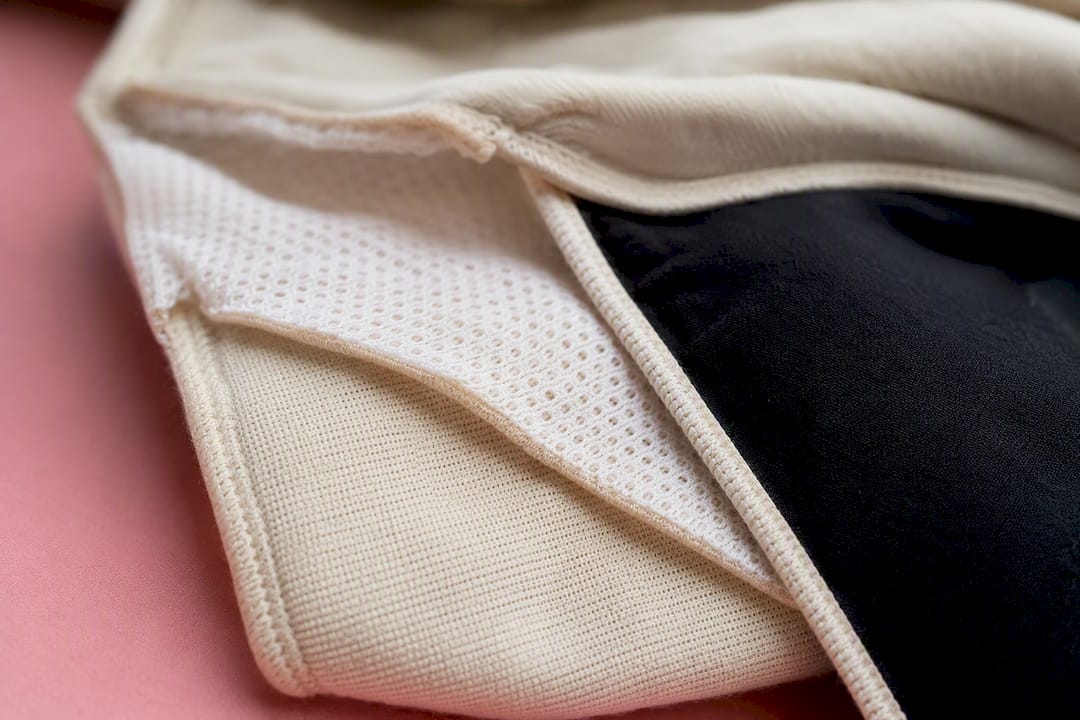
Gusset treatments are where marketing tends to outpace reality. Zinc-infused and other antimicrobial gusset finishes do reduce bacterial growth under test conditions, and that’s a real, useful feature. But it’s an assist, not a replacement for rinsing and drying correctly. Treat antimicrobial claims as a bonus layer of protection, not a reason to skip a wash cycle or let a damp pair sit overnight.
When you’re shopping, look past the antimicrobial buzzwords and check three things: a breathable outer fabric, layered absorbency that matches your flow, and clear washing instructions on the tag. Underwear that’s honest about its care requirements is usually more honest about everything else, too.
SweeTee Beauty’s Care Routine, Straight From the Brand
SweeTee Beauty built its care instructions around the same logic independent guides recommend, because it’s the routine that actually works across fabric types.
- Rinse in cold water right after wearing, before any blood has a chance to dry into the layers.
- Machine wash cold with a mild, enzyme-friendly detergent.
- Skip fabric softener and bleach unless the product tag says otherwise.
- Hang to dry rather than tumble dry on high heat, which protects the absorbent core and keeps performance consistent wash after wash.
Pro Tip: Traveling? Pack a small squeeze bottle or travel-size wash for a quick rinse in a hotel sink. It keeps a worn pair from sitting damp in your bag for hours, which is exactly the scenario that breeds odor.
The multilayer design in SweeTee Beauty’s underwear, with separate wicking, absorbent, and leak-proof layers, is built to minimize the moisture that reaches the outer fabric in the first place. That construction does a lot of the odor-prevention work automatically, but it still depends on you finishing the job with a proper rinse and dry.
How Long You Wear a Pair Changes What You’re Dealing With
Odor risk climbs the longer a pair stays on your body, and it’s not linear. In the first several hours, you’re mostly dealing with the mild metallic scent of blood meeting air. Past that window, especially on a warm day or during exercise, sweat mixes in and bacteria start multiplying in a way that’s much harder to rinse out later.
Heavy-flow days compress that timeline. More fluid means more organic material for bacteria to feed on, and it means the absorbent layers stay wetter for longer even if you’re not consciously sweating. This is where pair rotation earns its keep. A single pair worn for 10 or 12 hours straight is going to smell different than the same pair swapped out every 6 to 8 hours, even if you wash both identically afterward.
Sleep is the other blind spot. A full night in the same pair, especially under blankets that trap heat, gives bacteria roughly the same conditions as a warm, humid room. If you wake up and notice more odor than usual, that’s less about the underwear and more about eight hours in a warm, low-airflow environment. Changing right when you wake up, rather than hours later, cuts down significantly on how much bacterial buildup you’re rinsing out.
When Odor Means More Than Fabric Care
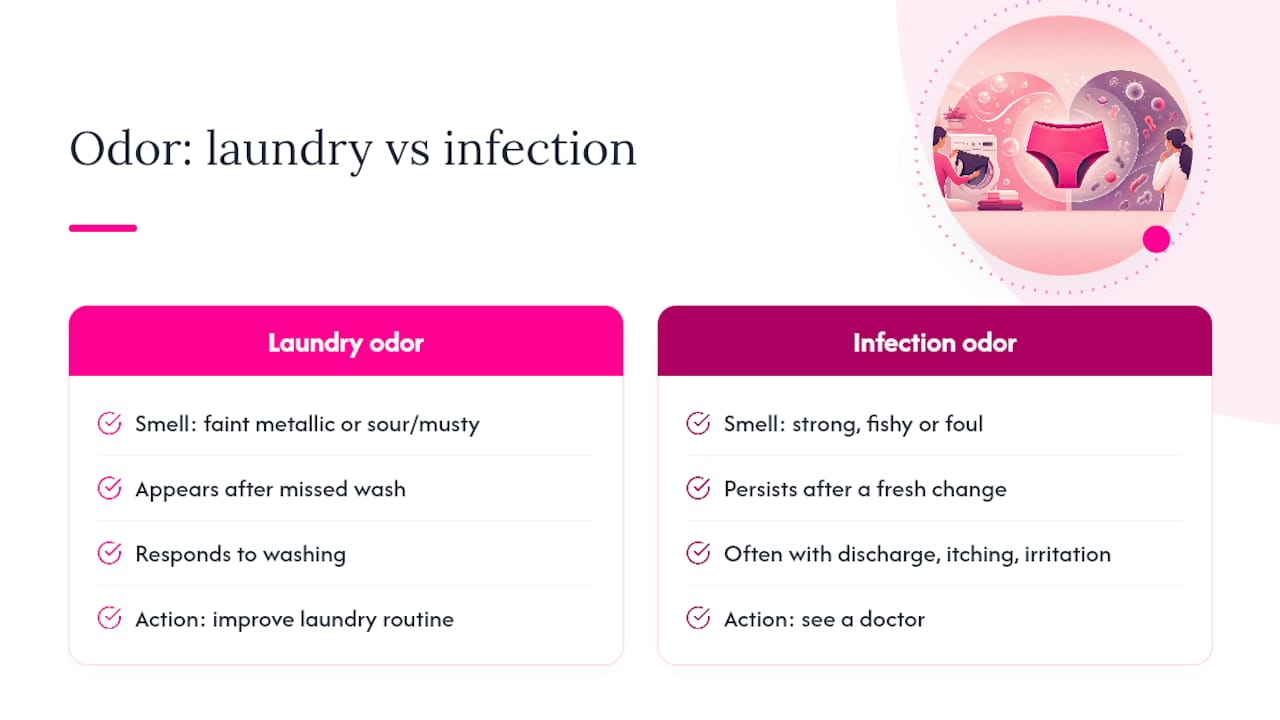
Most odor is a laundry problem, not a health problem. But there’s a real line between “I skipped a rinse” and “something’s off,” and it’s worth knowing where it sits.
A normal, faint metallic smell during your period is expected. A sour or musty smell after a missed wash is a care issue, not a medical one. What’s different is a strong, persistent fishy or foul odor that shows up even right after you change into a clean pair, especially if it comes with unusual discharge, itching, irritation, or discomfort. That combination points toward something like bacterial vaginosis or another infection rather than anything related to your underwear.
The distinction that matters: odor from underwear responds to washing. Odor from an infection doesn’t go away no matter how well you rinse, wash, or dry the fabric, because the source isn’t the fabric at all. If you’ve tightened up your laundry routine, you’re changing on schedule, and the smell is still there right after a fresh change, that’s a signal to talk to a doctor rather than try another vinegar soak. It’s a small but important checkpoint, and one FlowCup’s guide on period underwear odor also flags as worth taking seriously rather than brushing off as “just the underwear.”
How Often You Should Change To Keep Odor Away
There’s no single universal number, but a practical range works for most people: every 6 to 8 hours on light to moderate flow, and every 4 to 6 hours on heavy flow days. That’s roughly in line with how often you’d change a pad or empty a cup, and for the same reason: it’s about how long fluid sits against skin and fabric, not a fixed rule about the product itself.
Overnight is the exception, since an 8 to 10 hour stretch in one pair is normal as long as you change promptly in the morning. The goal isn’t to hit an exact number every day. It’s to avoid the two extremes that cause problems: changing so rarely that fluid and bacteria have hours to build up, or being so infrequent with laundry that you’re forced to rewear a pair before it’s actually clean and dry.
If you notice odor creeping in well before your usual change time, that’s useful information, not a failure. It usually means either your flow that day is heavier than the absorbency level you’re wearing, or your last wash cycle didn’t fully clear detergent residue. Either way, it’s solvable without buying anything new.
Everyday Habits That Quietly Affect Odor
Underwear care gets most of the attention, but a few personal habits shape how much odor you’re dealing with before laundry even enters the picture.
Basic rinsing with water during a shower, even without soap inside the area, helps reduce the buildup that mixes with sweat and blood to create stronger smells later. Breathable outer clothing matters too. Tight, non-breathable pants or leggings worn for long stretches trap heat and moisture right where your period underwear already is, which compounds the conditions that let bacteria multiply.
Diet and hydration have a smaller, but real, effect. Staying hydrated keeps bodily fluids less concentrated, which some people notice translates to a milder odor overall. And if you’re already prone to bacterial imbalances, skipping scented soaps or douches in that area matters more than any laundry tweak, since fragrance products can disrupt natural bacterial balance and make odor worse, not better.
None of this replaces the washing routine covered earlier. But it explains why two people can follow the exact same care instructions and still notice different results. Hygiene habits and underwear care work together, not separately.
What Actually Matters Once You Cut the Noise
Most advice on this topic overcomplicates a simple problem. Brands lean hard on antimicrobial gussets and bamboo fibers as if fabric alone solves odor, and independent guides sometimes swing the other way, treating every smell as a five-step chemistry project. Neither extreme holds up. The washing and drying routine does almost all the work; fabric treatments just shift the odds slightly in your favor.
Where conventional advice really falls short is drying. Everyone talks about detergent choice, but a damp pair left in a gym bag for six hours will out-smell a poorly washed one dried properly within the hour. Airflow and speed beat product choice almost every time.
If you take one thing from this guide, prioritize the rinse-and-dry habit before you spend money chasing a “better” fabric. Get that right first, and odor stops being something you have to think about. Get it wrong, and no zinc gusset or bamboo blend will fully compensate.
Where To Find Period Underwear Built To Resist Odor
If you’re tired of guessing whether a pair will hold up between washes, the fix starts with underwear designed to keep moisture away from the outer layers in the first place. SweeTee Beauty’s multilayer period underwear separates wicking, absorbent, and leak-proof layers so less moisture ever reaches the fabric touching your skin, which means less for bacteria to feed on between changes.

That construction matters most on the days odor risk is highest. If you deal with heavy flow, the heavy flow protection collection is built with higher absorbency specifically to reduce the saturation that leads to fast bacterial buildup. And if you’re newer to period underwear or shopping for a teen, the teen brief style gives a simple, comfortable entry point paired with the same care-friendly fabric. Pick the absorbency level that matches your flow, follow the cold-rinse routine covered above, and check out the current styles to find the pair that fits your day.
Common Questions About Period Underwear Odor
Does period underwear smell worse than pads or tampons? Not when it’s cared for correctly. The fabric holds fluid closer to your body for longer than a pad, so it depends more heavily on prompt washing than disposable products do.
Can I use regular laundry detergent instead of enzyme detergent? You can, but enzyme detergents break down blood proteins more thoroughly, which is why they show up so often in odor-prevention advice. Regular detergent works fine if you’re washing promptly and not letting stains set.
Is it normal for new period underwear to smell like fabric right out of the package? Yes, a faint manufacturing or dye smell is common and usually fades after the first one or two washes. That’s different from the sour or musty smell tied to bacterial buildup.
How many pairs of period underwear should I own to avoid odor issues? Three to four pairs gives you enough rotation to always have a clean, fully dry pair ready, which removes the temptation to rewear something before it’s finished drying.
Can I put period underwear in the dryer? Check the tag first. Many brands, including SweeTee Beauty, recommend air-drying to protect the absorbent core, since high heat can degrade elastic and absorbent layers over repeated cycles.
Sources
For deeper detail beyond this guide: SweeTee Beauty’s full washing and care instructions, and FlowCup’s breakdown of causes and fixes for period underwear odor.
- Do period pants smell? – FlowCup Menstrual Cup
- Period Underwear – DIVA US
- antibacterial bamboo period underwear | Seamless | Heavy Flow
Recommended
- Are Period Underwear Worth It? The Honest Answer | SweeTee | SweeTee Beauty
- How to Wash Period Underwear & Make It Last | SweeTee Beauty | SweeTee Beauty
- How Period Underwear Works | The SweeTee Journal | SweeTee Beauty
- Best Period Underwear for Teens: A Parent’s Guide | SweeTee Beauty | SweeTee Beauty


