
Fix Tight Period Underwear Without Losing Leak Protection

Snug is the goal. Painful is not. If your period underwear digs in, leaves red marks, goes numb against your skin, or traps heat instead of breathing, it’s too tight, and the fix is usually a size up or a different cut, not toughing it out. Before you do anything else, sit down, squat, and walk a few steps in them right now. If the fabric pinches or rolls, that’s your answer.
TL;DR:
- If your period underwear causes numbness, red marks, or excessive heat, size up or try a different cut to improve comfort and airflow.
- For hiphugger and boyshort styles, rely on hip measurements, and for high-waist briefs, depend on waist measurements to find the best fit.
- Wear time should generally not exceed 8 to 12 hours, and a poor fit that pinches or leaves marks likely reduces wear time and increases irritation risk.
- Choose styles with softer waistbands and more room in the hips to prevent digging in, especially when dealing with heavy flow or postpartum needs.
- Always perform quick fit tests like sitting, squatting, and walking before using new underwear for full-day wear, and adjust size or style accordingly.
Table of Contents
- Is Period Underwear Supposed to Be Tight? The Snug-But-Not-Compressive Rule
- Signs Your Period Underwear Is Too Tight
- How to Fix a Too-Tight Fit: Sizing, Styles, and Quick Adjustments
- Materials, Breathability, and Health: Why Fit Matters for Vaginal Health
- Quick Movement and Fit Tests You Can Do in Five Minutes
- SweeTee Beauty’s Approach to Fit and Comfort
- A Word on Sizing Frustration
- Finding a Fit That Actually Works for You
- Sources
- FAQ
Is Period Underwear Supposed to Be Tight? The Snug-But-Not-Compressive Rule
Yes, period underwear should feel closer to the body than regular underwear. That’s not a design flaw. It’s a leak-protection feature. But there’s a real line between “snug enough to hold the gusset flat against your body” and “so tight it leaves a groove in your thigh.”
The gusset, the absorbent panel sewn into the crotch, is built from several layers: a moisture-wicking top layer, an absorbent core, and a leak-proof barrier. That stack doesn’t stretch the way a single layer of cotton does. So when you try on a pair and the gusset area feels stiffer than the rest of the underwear, that’s normal construction, not a sizing failure. Confusing “less stretchy” with “too small” is the single most common reason women size down when they should size up.
Fit cues that actually matter:
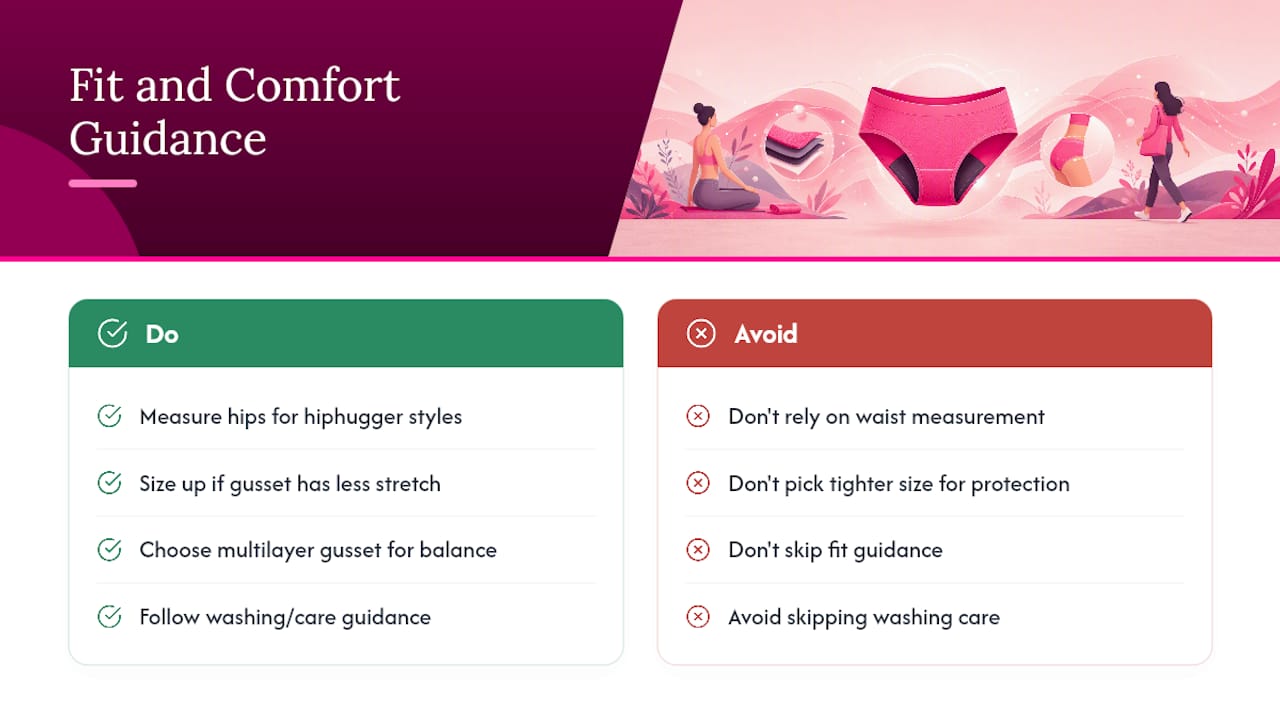
- For hiphugger and boyshort styles, your hip measurement at the widest point is the number to trust, not your usual clothing size.
- For high-waist briefs, waist measurement matters more, since the fabric sits higher and the gusset placement shifts.
- When you’re between two sizes, testing outlets that review period underwear consistently recommend sizing up, especially for styles with a dense, low-stretch gusset.
- A properly fitted pair should sit flat against your skin with no pulling, bunching, or waistband roll when you bend forward.
Fit also determines how long you can safely wear a pair. Most brands and health sources recommend an 8 to 12 hour wear window depending on flow, but that window shrinks fast if the fit is compressing your skin or blocking airflow. A too-tight pair that’s uncomfortable at hour four isn’t going to make it to hour ten.
Signs Your Period Underwear Is Too Tight
Your body tells you before your brain catches up. Learn to read the signals early because ignoring them for a few cycles can turn a minor annoyance into a recurring skin problem.
Watch for these:
- Indentation marks or red lines around your legs or waist that last more than a few minutes after you take the underwear off.
- Numbness or tingling in your groin or upper thighs, which signals the fabric is compressing nerves or blood vessels, not just fabric.
- Chafing or soreness at the leg openings or side seams, especially if it shows up in the same spot every cycle.
- Trapped heat, dampness, or odor, because a too-tight fit blocks the airflow that wicking fabrics are designed to create.
- Leaks despite “heavy flow” absorbency, which sounds backward but happens when a pinched gusset can’t lie flat against your body to catch flow where it lands.
Gynecologists have flagged breathability as a real concern with tight-fitting period underwear, noting that trapped moisture and reduced airflow raise the risk of irritation and bacterial growth, particularly when a snug pair is worn for the full recommended wear window. That’s not a reason to avoid period underwear. It’s a reason to get the fit right before you commit to a full day in them.
How to Fix a Too-Tight Fit: Sizing, Styles, and Quick Adjustments
Fixing tightness rarely means giving up leak protection. It usually means adjusting one of three things: size, style, or absorbency.
- Remeasure before you reorder. Wrap a soft tape around the widest part of your hips, not your waist, unless you’re buying a high-rise brief. Compare that number to the brand’s own size chart rather than your jeans size, since gusset construction runs differently than everyday underwear.
- Size up if the gusset has little give. Heavy-flow and postpartum styles pack in more absorbent layers, which means less stretch. If you’re between sizes, go up rather than down.
- Try a roomier cut. Hiphugger, boyshort, and high-waist briefs with a softer waistband typically distribute pressure more evenly than high-compression styles, which can dig in at the leg openings.
- Rotate absorbency levels. A moderate or light-absorbency pair flexes more than a heavy-flow pair, so keeping a mix in rotation lets you match stretch to how heavy your flow is that day.
- Use a temporary workaround if you’re stuck mid-cycle. Pair a snug style with a thin liner instead of relying on it alone, shorten your wear window on heavy days, or swap to a lower-absorbency pair for a few hours until you can size up properly.
When you order a replacement size, don’t just try it on standing still. Sit, squat, and walk in it before you decide it’s a keeper. Most return policies give you a short window to test fit at home, so use it. If a pair still leaves marks after switching sizes, the issue is likely the style itself, not just the number on the tag.
Pro Tip: Buy your replacement size in a lighter absorbency first. Lighter gussets flex more, so they’re a faster, cheaper way to confirm the new size fits before you commit to a full heavy-flow restock.
Materials, Breathability, and Health: Why Fit Matters for Vaginal Health
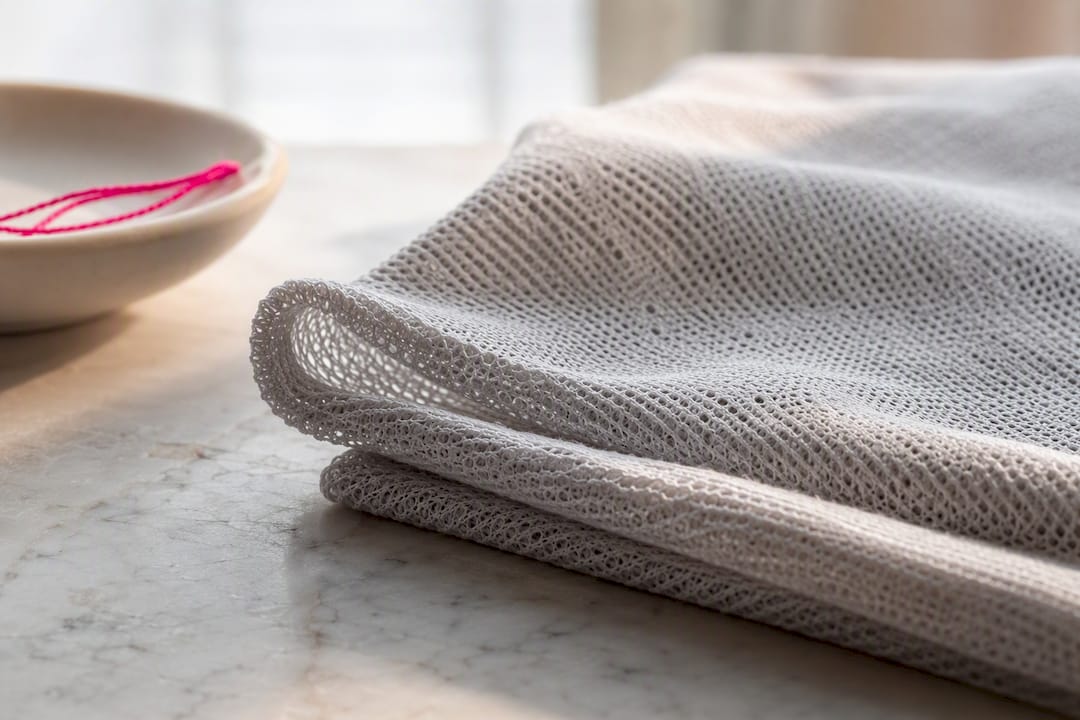
A too-tight pair doesn’t just feel uncomfortable. It works against the fabric’s own job. Wicking layers are designed to pull moisture away from your skin and let air circulate, but compression flattens that airflow path and traps heat and dampness right where you don’t want either.
That matters more than it sounds. Research on the vaginal microbiome shows that prolonged moisture and occlusion can shift local bacterial balance, which raises the risk of irritation. A snug, breathable fit protects against leaks without creating that trapped, humid environment.
Gynecologists interviewed on the topic point out that the most leak-proof underwear in the world isn’t doing you any favors if the fit forces you to sacrifice airflow, because tightness and trapped moisture together are what actually drive irritation risk, not the fabric alone.
If you’re prone to irritation, look for a cotton-lined gusset or a breathable blend over fully synthetic linings, which tend to trap heat more. And don’t skip the wash cycle before first wear: prewashing removes manufacturing finishes that can stiffen fabric and reduce both comfort and stretch. After that, air dry or use low heat. High heat degrades the elastic and leak-proof layers faster, which shortens the life of a good fit.
A few care habits worth keeping:
- Prewash new pairs before first wear to soften fabric and remove finishing residue.
- Skip the dryer’s high-heat setting; it breaks down elastic fibers over time.
- Stick to the 8 to 12 hour change window, and change sooner if you notice heat, odor, or irritation building.
- See a clinician if redness, itching, or discomfort continues after you’ve switched to a better-fitting pair.
Quick Movement and Fit Tests You Can Do in Five Minutes
Before you trust a new pair for a full workday, run it through five simple movements. This takes less time than folding laundry.
- Sit for a full minute. Check your waistband and leg openings for rolling or digging.
- Squat like you’re picking something off the floor. Watch whether the gusset pulls to one side or wrinkles instead of lying flat.
- Jump lightly in place a few times. This reveals whether the gusset shifts out of position, which signals a fit that’s too loose in the wrong spot or too tight in another.
- Cross your legs and hold for 30 seconds. Numbness or tingling here is an immediate stop signal.
- Take a brisk walk around the room. Note any chafing at the inner thigh or waistband slipping.
If any test fails, don’t wait for symptoms to build. A pair that pinches during a squat will pinch worse after six hours of sitting at a desk. Size up, switch styles, or set the pair aside for a lighter-flow day.
SweeTee Beauty’s Approach to Fit and Comfort
Some period underwear brands build multilayer gussets to hold leak protection and comfort in balance, so a properly sized pair shouldn’t force you to choose one over the other. The sizing guidance echoed throughout this article, hip measurement first for hiphugger styles, sizing up when the gusset has less stretch, comes directly from fit principles applied across various absorbency ranges, from light to postpartum.
If you want a deeper walk-through of how the layers work together to wick moisture while holding shape, the full breakdown of how period underwear functions covers the mechanics in more detail. And if you’re new to period underwear entirely, the beginner’s guide to wearing and washing them walks through the first-wear and care steps that protect both fit and fabric life over time.
A Word on Sizing Frustration
Sizing across period underwear brands is inconsistent, and your body changes cycle to cycle anyway, so don’t treat one bad-fitting pair as proof you’ve failed at this. Buy a single test pair or a mixed-absorbency bundle before committing to bulk. And if any pair leaves you numb, bruised, or chafed, stop wearing it immediately. No leak-protection claim is worth ignoring what your body is telling you.
— Tiera
Finding a Fit That Actually Works for You
If a high-compression cut has been the problem, styles built with a softer waistband and a roomier hip fit make a real difference. Sweeteebeauty’s Lace HipHugger design uses a gentler waistband than typical high-compression briefs, which is worth trying if seam-digging or waistband rolling has been your main complaint.
You don’t need to overhaul your entire drawer to solve a tightness problem. Start with one pair, or a small mixed-absorbency bundle, so you can test fit across a light day and a heavy day before deciding what to reorder. If heavy flow is part of what’s pushing you toward a denser, less-stretchy gusset, the heavy flow protection collection is built specifically for that higher absorbency need without requiring you to size down for security. When in doubt, size up, especially in low-stretch styles, and run the five-move test before you trust any new pair for a full day.
Sources
- What is period underwear? — Healthline
- What is period underwear? — WebMD
- Factors that influence the vaginal microbiome — PMC
This article is general information, not a substitute for advice from a qualified doctor. Consult a qualified healthcare professional about your own circumstances before acting on anything here.
FAQ
Is Period Underwear Supposed to Be Tight?
It should feel snug enough that the gusset stays flat against your body, but not so tight that it digs in, causes numbness, or leaves marks after you take it off.
Do Gynecologists Recommend Period Underwear?
Yes, with a caveat: gynecologists note they’re a safe option when the fit is right and you follow recommended change intervals, but a too-tight pair can trap moisture and raise irritation risk.
Should You Size Up or Down for Period Underwear?
Size up if you’re between sizes, especially for heavy-flow or postpartum styles where the thicker gusset has less stretch than the rest of the fabric.
What Should You Do if Your Underwear Is Too Tight?
Run a quick movement test (sit, squat, walk), and if it pinches or leaves marks, size up or switch to a roomier cut like a hiphugger or high-waist brief with a softer waistband; brands like Sweeteebeauty design their hiphugger styles specifically to reduce that compression.
How Often Should You Change Period Underwear?
Most guidance points to every 8 to 12 hours depending on flow, sooner if the fit is causing heat, dampness, or discomfort before that window is up.


