
60 Seconds to Wash New Period Underwear with Maker Backed Care Tips

Yes. Wash new period underwear before you wear it: cold rinse first, then a gentle wash on delicate or by hand, then air dry completely. This primes the absorbent layers and strips out manufacturing residue that can irritate skin or block absorption. Skip bleach and fabric softener entirely. That’s it. The rest is just detail on how to do it right.
TL;DR:
- Pre-wash new period underwear with cold water and mild detergent to remove manufacturing chemicals that hinder absorbency and cause early staining.
- Proper cleaning involves rinsing, handwashing or delicate machine wash, and air drying; avoid bleach, fabric softener, hot water, and dryers that damage waterproof layers.
- Washing routine should be consistent and gentle, with a focus on cold water, minimal detergent, and careful storage when not in use to maintain functionality over time.
- Skipping the initial wash can leave residual chemicals on the fabric, reducing absorbency, increasing odor, and risking leaks during the first wear.
- Some underwear brands designed for heavy flow use durable multilayer construction meant for repeated gentle washes, not high heat or harsh chemicals.
Table of Contents
- How to Wash Period Underwear Before First Use: The Quick Checklist
- Why Pre-Washing Period Underwear Actually Matters
- Step-by-Step: Rinsing, Handwashing, and Machine Washing
- Drying and Storing Period Underwear the Right Way
- Common Washing Mistakes and How to Fix Them
- What SweeTee Beauty Recommends for First-Use Care
- Why First-Use Prep Gets Skipped, and Why That’s a Mistake
- Ready for Period Underwear Built to Handle Real Washing
- Sources
- FAQ
How to Wash Period Underwear Before First Use: The Quick Checklist
If you’ve got 60 seconds and a new pair of period underwear sitting in the package, here’s the order that works:
- Pre-rinse under cold water until the water runs clear, not pink or cloudy.
- Handwash, or drop it in a mesh laundry bag and machine wash on delicate/cold.
- Use a mild, fragrance-free detergent. Skip anything “extra strength.”
- Never use bleach or fabric softener, even a small splash.
- Air dry flat or on a hanger. No dryer, no iron.
- Once fully dry, store it somewhere cool and breathable, not sealed in plastic.
Run through that list once and your underwear is ready to actually do its job on day one instead of leaking through because the fabric never got a chance to open up.
Why Pre-Washing Period Underwear Actually Matters
New period underwear comes off the factory line coated in finishing agents and sizing chemicals that keep fabric looking crisp on a shelf. Those coatings sit on top of the absorbent core, and until they’re washed out, the underwear can’t do what it’s built for. Pre-washing increases absorbency and removes manufacturing residues, which is the whole point of doing it before you ever wear a pair for real.
Think of it like a new bath towel. Straight out of the package, water beads up and rolls off instead of soaking in. Wash it once or twice, and suddenly it actually absorbs. Period underwear works the same way. Washing before first use “primes” the absorbent layers so menstrual fluid moves into the core instead of pooling on the surface, which is exactly the difference between a dry, confident first wear and an unpleasant surprise.
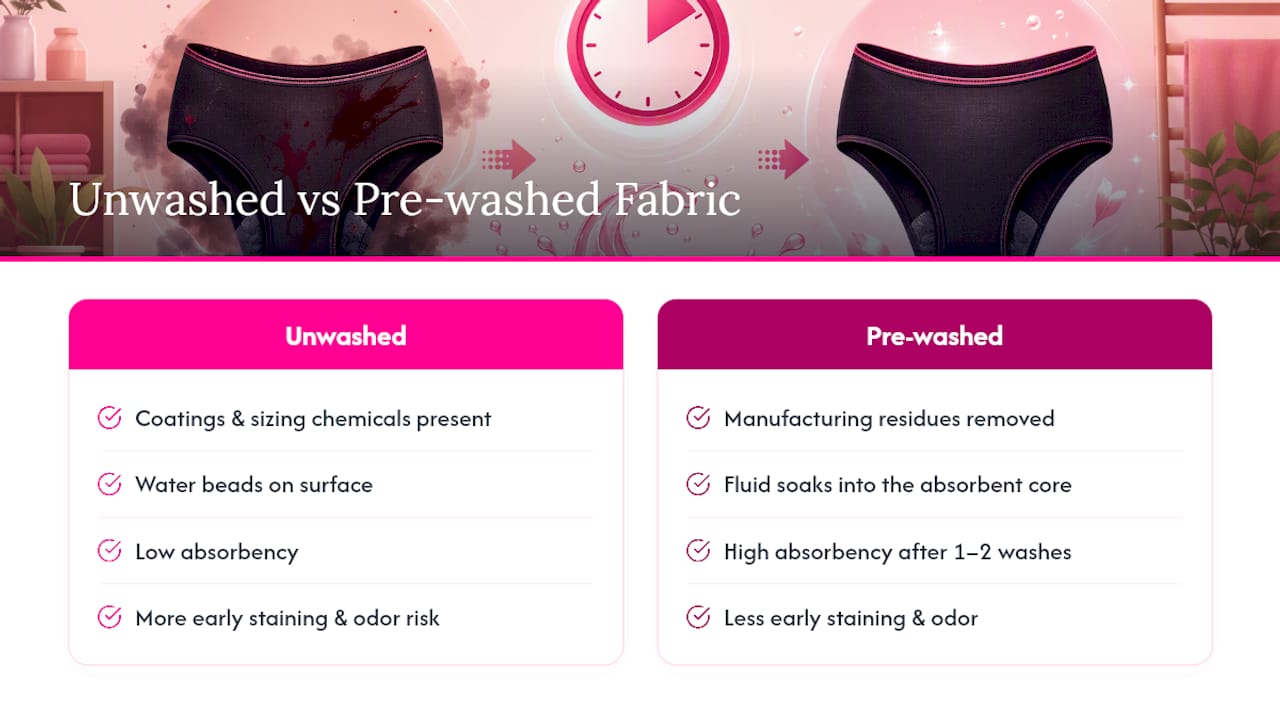
It also cuts down on early staining and odor, since you’re removing residue before it has a chance to interact with anything.
Step-by-Step: Rinsing, Handwashing, and Machine Washing
Here’s the exact sequence, whether you’re prepping one pair or a whole bundle.
- Rinse first, always. Hold the gusset under cold running water and gently squeeze the fabric until the water runs clear. This step matters even for brand new underwear, since it flushes out loose fibers and finishing chemicals before they set into the fabric.
- Handwash if you’re not in a rush. Soak for 10 to 15 minutes in cool water with a small amount of mild detergent. Gently rub the fabric, rinse thoroughly, and press the water out between two towels. Don’t wring or twist. Aggressive wringing can delaminate the waterproof membrane over time, which shortens the underwear’s life long before you’d expect it to wear out.
- Machine wash if that’s easier. Place the underwear in a mesh laundry bag, then wash on cold or delicate with mild detergent, alongside other delicates rather than heavy items like jeans or towels. Skip the high spin setting.
- Pick your detergent carefully. Go mild, fragrance-free, and skip anything with enzymes or bleach. Fabric softener is worse than most people realize. It leaves a film on technical fibers, and that film can permanently cut absorbency, exactly the opposite of what you want from underwear designed to hold fluid.
- Can’t wash right away? Rinse it as soon as you can and store it in a sealed wet bag until laundry day. A quick cold soak beats letting damp underwear sit in a hamper, where bacteria and odor build up fast.
Pro Tip: Cold water isn’t just a gentle suggestion. Hot water can set blood stains permanently and break down the technical layers that make period underwear leak-proof, so once you go cold, stay cold for every wash.
Drying and Storing Period Underwear the Right Way
Air dry flat or hang it up. Skip the dryer completely; high heat warps waterproof membranes and shrinks the outer fabric, which is how a perfectly good pair turns into one that gags at the waistband within a few washes. Skip the iron too, for the same reason.
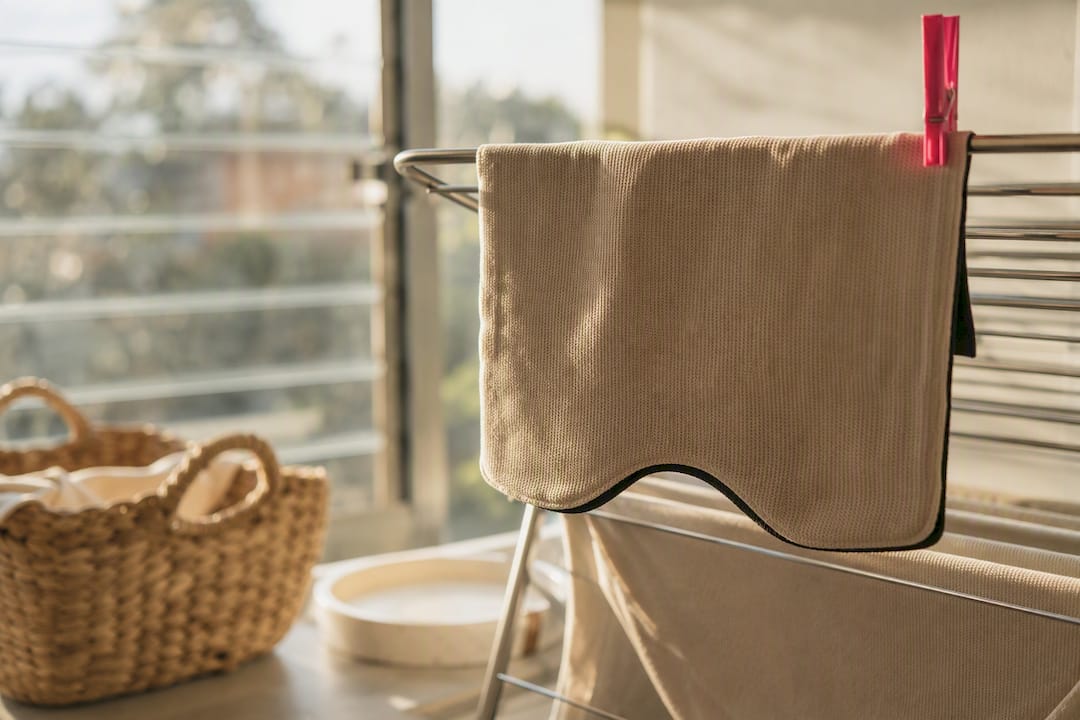
If the care label warns against direct sun, keep it out of prolonged sunlight. UV exposure and heat both degrade elastic and waterproof coatings faster than normal wear does.
Only put it away once it’s completely dry. A slightly damp pair tucked into a drawer is exactly how odor and mildew get started. Store it in a breathable cloth bag or drawer, not a sealed plastic bin, and keep a small wet bag handy for transporting worn pairs when you’re out and need to change.
If the edges curl or the fabric looks stiff after drying, a quick reshape by hand while it’s still slightly damp usually fixes it.
Common Washing Mistakes and How to Fix Them
Most problems with period underwear trace back to three habits: hot water, bleach, and fabric softener. All three attack the same thing, the technical layers that make the underwear leak-proof, and none of them are reversible once the damage is done.
- Stains that won’t budge: Cold soak again, use a small amount of gentle soap, and repeat a cold wash cycle. Skip hot water and hard scrubbing, both of which set stains deeper instead of lifting them.
- Lingering odor: Rinse, rewash gently, and air dry fully. If the smell sticks around, try a longer cold soak and, if the fabric allows sun exposure, a few hours outside to air out.
- When to retire a pair: Watch for reduced absorbency, visible separation between fabric layers, leaks that keep happening despite proper washing, or damaged seams and elastic. At that point, no amount of careful washing brings the underwear back to full function.
For stubborn buildup that a normal wash won’t touch, a deeper stripping method works better than repeated regular washes.
What SweeTee Beauty Recommends for First-Use Care
It is recommended to wash period underwear before wearing it for the first time and after each use. The brand’s own care guide for washing period underwear walks through the full routine in more depth, including which detergents hold up best across repeated cycles.
A few practical habits recommended beyond the basics include:
- Rotate two or three pairs so nothing is ever worn again before it’s fully clean and dry.
- Carry a small wet bag when you’re away from home so a worn pair doesn’t sit exposed in a purse or gym bag.
- Always defer to the care label sewn into the garment over general advice, including this article, since fabric blends can vary slightly between styles.
- Check the detergent guide before buying a new bottle of laundry soap, since some “gentle” formulas still contain softening agents that hurt absorbency.
None of this is complicated. It’s the same five minutes of care, repeated consistently, that keeps the underwear performing the way it did on day one.
Why First-Use Prep Gets Skipped, and Why That’s a Mistake
Most people treat new underwear like any other clothing purchase: unwrap it, wear it, done. Period underwear doesn’t work that way, and the instructions that come with it often get treated as fine print instead of function.
Here’s what the evidence actually supports: the first wash isn’t a formality, it’s the step that determines whether the product works at all on day one. Skip it, and you’re testing unprimed fabric during an actual period, which is the worst possible time to discover an absorbent layer that hasn’t opened up yet.
Where conventional advice falls short is the assumption that “wash before wearing” applies equally to all clothing. It doesn’t. A cotton shirt washes for comfort. Period underwear washes for function, and the wrong wash, hot water, bleach, a scoop of fabric softener, can quietly disable the exact technology you paid for.
If you take one thing from this, prioritize the detergent choice over everything else. People obsess over water temperature and forget that a single wash with fabric softener can undo months of correct care in one cycle.
— Tiera
Ready for Period Underwear Built to Handle Real Washing
Not every pair of period underwear holds up to repeated cold washes and air drying the way it should. Some leak-proof underwear loses absorbency within a few months because the layers weren’t built for the wash routine they actually need. Some brands design their underwear with multilayer construction meant to survive gentle, consistent care rather than degrade after several cycles.
If you deal with heavy flow days and want underwear that holds up wash after wash, the heavy flow protection collection is built for exactly that kind of repeated use. Prefer something with a bit more style built in? The lace HipHugger design pairs the same washable, durable layers with a fit made for everyday wear. Either way, wash it once before you wear it, and it’s ready to go.
Sources
- How to Wash Period Underwear – Boody US
- How to Use Period Underwear: The Ultimate Guide to Period Panties - Going Zero Waste
- How to Use Menstrual Panties – A Beginner-Friendly Guide | Period Factory
- How To Wash Your Period Underwear + Care Guide – Free Bleed®
FAQ
Do Gynecologists Recommend Period Underwear?
Many health providers consider period underwear a reasonable option for menstrual management, particularly for light to moderate flow days or as backup protection alongside other methods. As with any menstrual product, personal fit and comfort matter, so check in with your own provider if you have specific health concerns.
Should You Wash Period Underwear Separately From Other Laundry?
Washing period underwear with other delicates is generally fine as long as you skip heavy items like jeans or towels and avoid high spin cycles. Using a mesh laundry bag protects the seams and waterproof layers from friction damage during the cycle.
Do You Wash Period Underwear or Throw It Away After Use?
You wash it. Period underwear is designed to be rinsed and washed after every use, then reworn for months or years, not discarded like a disposable pad.
Are You Supposed to Free Bleed in Period Underwear?
Period underwear is built to absorb flow directly, so there’s no need to free bleed without protection. The underwear itself handles the fluid, which is the entire reason it replaces pads or tampons for many people.
How Long Should I Soak New Period Underwear Before First Wear?
A cold rinse until the water runs clear, followed by a 10 to 15 minute soak if handwashing, is enough to prep new underwear for its first wear. Longer soaking isn’t necessary and won’t improve absorbency any further.


