
Save Period Underwear with One Extra Rinse for Hard Water Stiffness

Rinse cold, wash gentle, run an extra rinse, and air-dry. That’s the whole routine. Hard water leaves calcium and magnesium behind on fabric fibers, which is what turns soft cotton and elastane blends crunchy and stiff. The fix isn’t a different detergent alone. It’s rinsing more thoroughly than you think you need to, and skipping heat entirely. Period underwear holds up well to this exact method, since the multilayer design responds best to gentle, low-heat care anyway.
TL;DR:
- Extra rinse cycles and a vinegar rinse effectively remove mineral buildup, which causes stiffness and odor in underwear washed with hard water.
- Always rinse in cold water immediately after wear and avoid heat or fabric softeners to protect elastic fibers and leak-proof layers.
- Using a washing soda or borax booster weekly can enhance detergent performance and combat mineral deposits caused by hard water.
- Period underwear benefits from oxygen-based soaks and dedicated care, with high resistance to damage if following the recommended routine carefully.
- Regular descaling of appliances and the use of water softeners can prevent hard water residue from affecting fabric longevity and performance.
Table of Contents
- Quick Checklist for Washing Underwear in Hard Water
- Step-by-Step: Rinse, Wash, and Dry Underwear the Right Way
- How Do You Fix Hard Water Buildup on Underwear?
- Protecting Elastane and Leak-Proof Layers in Hard Water
- How Do You Deep Clean Stiff or Smelly Underwear?
- Sources
- FAQ
Quick Checklist for Washing Underwear in Hard Water
If you only have three minutes, follow this order. Skipping the rinse step is the single most common reason underwear stays crusty no matter how much detergent you use.
- Rinse immediately in cold water right after taking underwear off, before any stain sets.
- Soak or wash on a cold, gentle cycle (or by hand) using a mild, enzyme-free, fragrance-free detergent.
- Add a rinse booster or run one extra rinse cycle. This is the step hard water actually requires.
- Skip fabric softener and heat. Both trap mineral residue instead of releasing it.
- Air dry flat, away from direct sun and away from the dryer.
- Use an oxygen-based soak if odor lingers after a normal wash.
That last point matters more than people expect. A quick wash with the wrong detergent in hard water can leave underwear smelling clean while minerals sit trapped in the fibers, which is why the odor comes back within a day.
Step-by-Step: Rinse, Wash, and Dry Underwear the Right Way
The order of operations protects both hygiene and fabric. Doing steps out of sequence, like washing before rinsing, is how stains set permanently.
- Cold rinse first. Run cool tap water over the fabric immediately after removal, ideally at or below 86°F (30°C). Cold water keeps protein-based stains from bonding to the fibers, while warm or hot water does the opposite.
- Choose hand-wash or machine. For hand-washing, fill a basin with cool water, add a small measured dose of mild detergent, and soak for 5 to 15 minutes. Swish gently. Never scrub or twist elastane.
- Rinse until the water runs clear. This is the step most people cut short. In hard water, one rinse rarely removes all the detergent and mineral residue, so plan on two.
- Machine method. Place underwear in a lingerie bag, select the delicate or gentle cold cycle, and measure detergent carefully. Most machines have an “extra rinse” option. Use it every time you wash in hard water.
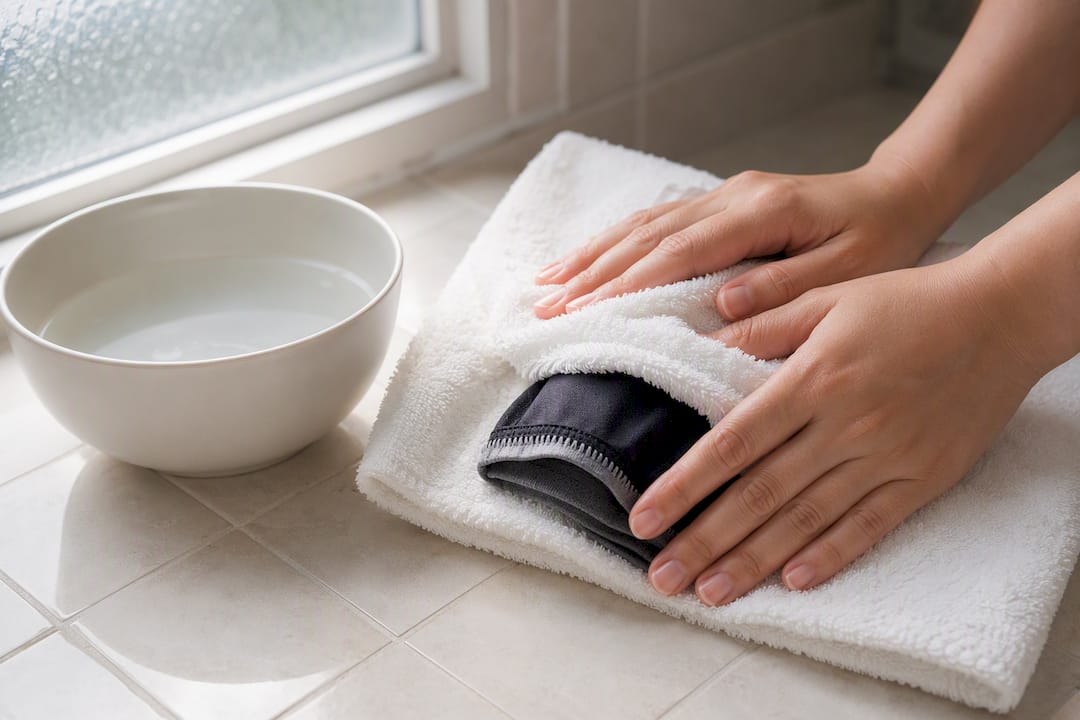
- Press, don’t wring. Roll the garment in a clean towel to squeeze out water. Wringing stretches elastane out of shape.
- Dry flat or on a line, out of direct sunlight. Never put elastane blends or leak-proof period underwear in the dryer. Heat breaks down stretch fibers and can compromise waterproof layers over time.
Pure cotton underwear with no stretch content can occasionally tolerate a slightly warmer wash, but elastane sets the ceiling for the whole garment.
How Do You Fix Hard Water Buildup on Underwear?
Hard water reacts with detergent before it ever touches your clothes, forming a mineral film that coats fibers and leaves them feeling rough. That reaction is also why detergent seems to work less well in hard water areas. The Spruce’s laundry research confirms this residue traps odor and reduces detergent effectiveness on every wash after the first.
A few fixes work well and cost almost nothing:
- White vinegar rinse. Add about half a cup of white vinegar to the final rinse cycle. It’s safe to use every wash and helps dissolve mineral film without damaging fabric.
- Washing soda or borax booster. A tablespoon added to the wash cycle boosts detergent performance in hard water. Use it once or twice a week, not every load.
- Oxygen-based stripping product. For fabric that’s already stiff, an oxygen-based soak lifts embedded minerals and odor without chlorine or heat.
- Extra rinse cycles. Run one or two additional rinses until water runs clear with no soapy residue.
- Long-term fix. Descale your washing machine every few months, and consider a home water softener if hard water is a constant issue in your area.
Never mix vinegar with bleach or ammonia-based products. The combination produces fumes that are dangerous to breathe.
Pro Tip: If you’re not sure whether your water is hard, run a load with just detergent and no vinegar or soda. If clothes still feel stiff after drying, that’s your answer.
Protecting Elastane and Leak-Proof Layers in Hard Water
Elastane is the limiting fiber in almost every pair of underwear, including period underwear with built-in absorbent layers. It only tolerates water at or below 86°F (30°C), and it should never touch bleach or dryer heat. Wringing stretches it permanently out of shape, so pressing with a towel is the only safe way to remove excess water by hand.
Mineral residue does more than stiffen fabric. In layered period underwear, hard water buildup can block the wicking channels that pull moisture into the absorbent core, cutting down on how well the garment actually performs. A film of calcium and magnesium sitting in those layers acts like a barrier between you and the fabric’s job.
The routine for period underwear follows the same core steps as any hard-water wash, with a bit more attention to rinsing:
- Rinse in cold water immediately after each wear.
- Wash with a mild, enzyme-free detergent, either by hand or on a gentle machine cycle.
- Run an oxygen-based soak periodically, even without visible staining, to keep absorbent layers working.
- Always air dry. Heat is the fastest way to shorten the lifespan of a leak-proof garment.
SweeTee Beauty’s detergent guidance and wash-and-care instructions both walk through product-specific steps if you want more detail beyond the general routine here.
How Do You Deep Clean Stiff or Smelly Underwear?
Sometimes a normal wash isn’t enough, and stiffness or odor sticks around no matter how carefully you rinse. That’s when a stripping soak comes in.
- Pre-rinse in cold water to remove any surface staining before soaking. Never use warm or hot water on a stain you haven’t identified.
- Mix an oxygen-based cleaner according to the product’s instructions and soak the garment for 30 to 120 minutes, depending on how much buildup you’re dealing with.
- Check the fabric partway through. Pull the garment out at the halfway point to see how it’s responding, especially with elastane or waterproof layers, so you don’t over-soak.
- Rinse thoroughly until no soap or residue remains, then wash on a normal gentle cycle.
- Confirm the fix. Fabric should feel soft again, and any odor should be gone. For period underwear, absorbency should feel back to normal too.
If underwear stays stiff or smelly even after stripping, and the fabric feels thin or the waterproof layer feels cracked, it’s time to replace it rather than keep treating it. SweeTee Beauty’s stripping guide covers this process specifically for period underwear if you want a version tailored to leak-proof fabric.
Small Habits That Prevent Hard-Water Damage
A weekly cold rinse of newer underwear, even before it looks like it needs one, keeps mineral buildup from ever getting a foothold. Descaling your machine once a month and measuring detergent instead of eyeballing it solves most hard-water complaints before they start. For more on keeping absorbent layers working, SweeTee Beauty’s care journal has additional troubleshooting notes worth a look.
— Tiera
How SweeTee Beauty Fits Into a Hard-Water Wash Routine
SweeTee Beauty’s multilayer period underwear is built to handle exactly the routine this article walks through. The rinse-first, gentle-wash, no-heat approach isn’t a workaround for the fabric. It’s how the leak-proof layers are designed to be cared for from day one, so following it actually extends how long the absorbency holds up. If you’re dealing with heavy flow and want a style that’s forgiving of hard water conditions, the heavy flow protection collection is built with that durability in mind. For anyone doing frequent small washes by hand rather than running a full machine cycle, a compact accessory can make the rinse-and-soak steps easier to keep up with daily. Check the product care pages for specific fabric guidance before your next wash, and browse the collection to find a pair suited to your flow and care routine.
Sources
- 6 Ways Hard Water Is Ruining Your Laundry (and How to Fix It) — The Spruce
- How to Deep Clean Period Underwear: Step-by-Step Guide — CleaningBro
- How to Hand Wash Undergarments (by Fiber and Elastane Content) — NatuClothes
FAQ
Why Is My Underwear Hard After Washing?
Hard water minerals, mainly calcium and magnesium, bond with detergent residue and coat the fabric fibers, leaving them stiff once dry. An extra rinse cycle or a vinegar rinse usually softens fabric back up within one or two washes.
What Is the Most Hygienic Way to Wash Underwear?
Rinse in cold water immediately after wearing, wash with a mild enzyme-free detergent on a gentle cold cycle, and finish with a thorough rinse and full air-dry. This sequence prevents stains from setting and avoids trapping bacteria in leftover residue.
Why Are My Underwear Damp But I Didn’t Sweat or Leak?
Dampness without an obvious cause is often normal discharge, which is healthy and varies through your cycle. If it happens consistently and you want extra protection without changing your laundry routine, moisture-wicking period underwear designs can help manage it day to day.
Can I Use Fabric Softener to Fix Stiff Underwear in Hard Water?
No. Fabric softener coats fibers with a waxy layer that traps mineral residue rather than removing it, making the stiffness worse over repeated washes. A vinegar rinse or washing soda booster addresses the actual cause instead.
How Often Should I Deep Clean Period Underwear in Hard Water?
Most people need a stripping soak every four to six weeks in hard water areas, though heavier use may call for it sooner. Watch for reduced absorbency or lingering odor after a normal wash as your signal to strip early.


