
How to Remove Period Blood Stains: Surface-by-Surface Guide

The fastest way to remove period blood stains is to use cold running water the moment you notice them. Wirecutter’s hands-on testing confirms that most fresh blood stains lift with cold water and basic household products when you act quickly. The key rule that applies to every surface and every fabric: cold water first, no heat until the stain is completely gone.
What to do right now:
- Stop the bleed and remove the garment or bedding if possible.
- Rinse the stained area under cold running water from the back of the fabric to push blood out rather than deeper in.
- Blot with a clean white cloth or paper towel. Do not scrub.
- Apply enzyme laundry detergent directly to the stain, or use 3% hydrogen peroxide on white or colorfast fabrics.
- Launder on a cold cycle, then air-dry and check before putting anything in the dryer.
That kit handles most period blood emergencies before you get home.*
Key Takeaways
Cold water and enzyme detergent resolve most period blood stains when you act fast and keep heat out of the process entirely until the stain is confirmed gone.
| Point | Details |
|---|---|
| Cold water first, always | Rinse immediately in cold water; heat sets blood proteins and makes stains permanent. |
| Enzyme detergent is your baseline | Apply enzyme detergent to fresh and dried stains before escalating to stronger treatments. |
| Peroxide for colorfast fabrics only | Test 3% hydrogen peroxide on a hidden seam before applying to any visible colored area. |
| Never heat until stain is gone | Air-dry and inspect after every wash cycle; repeat treatment before using the dryer. |
| Sweeteebeauty reduces stain risk | Leak-proof multilayer period underwear prevents leaks from reaching clothes, sheets, and mattresses. |
Table of Contents
- What supplies do you need to remove blood stains?
- How do you remove fresh period blood stains from clothes and underwear?
- What’s the best approach for dried or set-in period blood stains?
- How do you safely clean stains from underwear and period underwear?
- How do you remove blood stains from jeans and colored fabrics?
- How do you get period blood out of sheets and bedding?
- How do you remove period blood from a mattress without soaking it?
- What should you do when a stain still won’t come out?
- Colorfastness, safety cautions, and timing rules
- Practical ways to prevent period stains
- How to care for reusable period underwear
- Deep cleaning a mattress: techniques and mold prevention
- How to treat period blood stains on silk and wool
- Common mistakes that set period blood stains permanently
- Period stains are fixable — here’s what actually matters
- Sweeteebeauty period underwear: fewer stains before they start
- Sources
What supplies do you need to remove blood stains?
Having the right items on hand makes the difference between a stain that lifts in five minutes and one that sets permanently. Stock these before your next period:
- Cold water source — the single most important tool; always the first step.
- Enzyme laundry detergent (labeled “enzyme” or “biological”) — enzymes break down blood proteins at the molecular level, which is why they outperform standard detergents on organic stains.
- 3% hydrogen peroxide — oxidizes organic pigment and bubbles away blood; effective on light and colorfast fabrics. Use with caution on colors — it acts like a mild bleach.
- Oxygen-based cleaner (OxiClean or similar) — lifts organic stains through oxidation and is generally safe on colorfast fabrics when used per label instructions.
- Baking soda — absorbs moisture and mild odors; useful as a paste on mattresses and as a gentle abrasive on set stains.
- Salt — draws moisture out of a fresh stain; pour generously on a wet stain and let it sit before rinsing.
- Mild dish soap (Dawn or similar) — gentle enough for delicates; works as a surfactant to lift blood from fibers.
- Clean white cloths or paper towels — for blotting; white prevents dye transfer.
- Soft-bristled brush or old toothbrush — for working detergent into fabric without damaging fibers.
- Small bowl or spray bottle — for mixing solutions and applying them with control.
For travel, decant hydrogen peroxide into a small dark squeeze bottle (light degrades it), pack a travel-size enzyme detergent pod, and toss in a stain pen. That covers you in hotel rooms, at work, or anywhere away from home.
How do you remove fresh period blood stains from clothes and underwear?
Fresh blood is the easiest to remove. University of Georgia Cooperative Extension confirms that cold water and quick treatment are the primary first steps — heat sets blood proteins into fibers and makes stains far harder to remove.
- Rinse immediately under cold running water. Hold the fabric so water runs through the back of the stain, pushing blood out rather than deeper in. This alone often removes most of a fresh stain.
- Blot excess blood with a clean white cloth or paper towel. Work from the outside edge of the stain toward the center.
- Apply enzyme detergent directly to the remaining stain. Work it in gently with your fingers or a soft brush. Let it sit for 5–10 minutes.
- Rinse again with cold water. If the stain is gone, launder on a cold cycle and air-dry.
- For persistent spots on light or colorfast fabrics, pour a small amount of 3% hydrogen peroxide directly on the stain. It will bubble — that’s the oxidation working. Let it sit for 1–2 minutes, then blot and rinse with cold water.
- Launder on a cold cycle. Check the stain before drying. If any trace remains, repeat the pretreat step before putting the garment in the dryer.
If you cannot wash immediately, soak the garment in cold water with a small amount of enzyme detergent for up to several hours. Do not leave it to dry out — a wet stain is always easier to treat than a dried one.
Pro Tip: Work from the back of the fabric whenever possible. Pushing water through from the front drives blood deeper into the weave; from the back, it exits the way it came in.
What’s the best approach for dried or set-in period blood stains?
Dried blood is tougher, but not hopeless. The strategy shifts from “rinse and go” to “rehydrate, soak, and escalate.”
- Rehydrate the stain by soaking the affected area in cold water for at least 30 minutes. This softens the dried proteins and makes them responsive to cleaners.
- Apply enzyme detergent and soak overnight in cold water. Enzymes need time to break down dried protein, so patience here pays off.
- If the stain persists, move to an oxygen-based soak. Dissolve OxiClean (or a similar oxygen-based cleaner) in cold water per label instructions and soak for 1–6 hours. Oxygen-based cleaners lift organic stains through oxidation and are generally safe on colorfast fabrics.
- For light or colorfast fabrics, spot-apply 3% hydrogen peroxide after the enzyme soak if the stain is still visible. Let it bubble for 2 minutes, blot, and rinse.
- Launder cold. Air-dry and inspect. Repeat the enzyme or oxygen soak if needed before ever applying heat.
Key safety rules for dried stains:
- Pretest before peroxide or oxygen bleach. Dab a small amount on an inside seam, wait 2 minutes, rinse, and check for color change.
- Never use hot water at any stage until the stain is completely gone. Heat bonds blood proteins to fibers permanently.
- Do not tumble-dry until you are certain the stain is out. The dryer’s heat will lock in whatever remains.
- For silk, wool, vintage garments, or anything irreplaceable, skip the DIY escalation and take the item to a professional cleaner. These fabrics cannot tolerate peroxide or aggressive soaking without damage.
How do you safely clean stains from underwear and period underwear?
Underwear, especially reusable period underwear, needs a gentler hand than regular laundry. The multilayer construction — absorbent layers plus a waterproof membrane — can be damaged by heat, harsh chemicals, or aggressive wringing.
- Rinse immediately in cold water after removal. This alone removes a significant amount of blood before it sets.
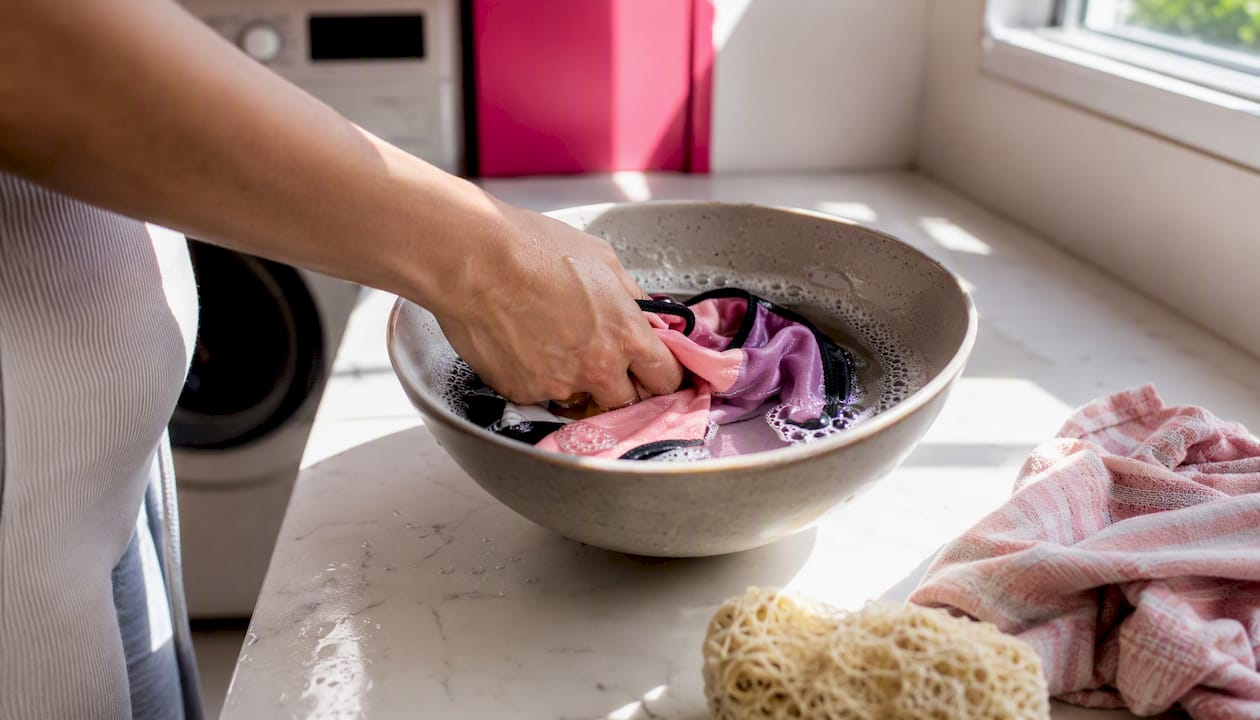
- Hand-wash with a mild enzyme detergent. Work the detergent in gently; do not scrub hard or wring the fabric.
- Machine-wash on cold/delicate if hand-washing is not practical. Use a mesh laundry bag to protect the garment.
- Air-dry flat or hang. Never put period underwear in the dryer — heat degrades absorbent layers and the waterproof membrane over time.
Do not use:
- Chlorine bleach (damages fibers and waterproof layers)
- Fabric softener (coats absorbent fibers and reduces performance)
- Hot water at any stage
- Vigorous scrubbing or wringing
For Sweeteebeauty period underwear specifically, the brand recommends rinsing immediately in cold water, soaking with mild detergent if needed, and always air-drying. Check the garment tag and the Sweeteebeauty care guide for product-specific instructions.
Pro Tip: If a stain persists on colorfast period underwear, try a short enzyme soak (30 minutes) rather than reaching for peroxide. Peroxide can degrade some waterproof membranes — when in doubt, repeat the enzyme soak rather than escalating to stronger oxidizers.
How do you remove blood stains from jeans and colored fabrics?
Colored fabrics add one extra concern: color loss. The stain-removal steps are similar, but you move more carefully and test before applying anything stronger than enzyme detergent.
- Rinse with cold water immediately. For jeans, hold the fabric so water runs through from the back.
- Apply enzyme detergent to the stain, work it in gently, and let it sit for 10–15 minutes.
- Rinse and launder cold. For many fresh stains on denim, this is all you need.
- If the stain remains, do a colorfastness test before using anything stronger. Dab a small amount of 3% hydrogen peroxide or oxygen-based cleaner on an inside hem or waistband seam. Wait 1–2 minutes, rinse, and check. If the color shifts at all, stop and stick with enzyme soaks only.
- If the fabric passes the test, apply the peroxide or oxygen cleaner to the stain, let it sit briefly, blot, and rinse cold.
On denim specifically, avoid hard scrubbing — it creates visible wear and fading that is just as noticeable as the stain. Repeated enzyme soaks over 24–48 hours usually outperform a single aggressive treatment. Patience is the actual technique here.
How do you get period blood out of sheets and bedding?
Sheets are easier to treat than clothes because you can soak a large section without worrying about structure. The process is straightforward.
- Strip the bed immediately and take the sheet to a sink or tub.
- Rinse the stained area under cold running water or submerge and soak in cold water for 30 minutes.
- Apply enzyme detergent directly to the stain and work it in. For older stains, let it soak overnight in cold water with enzyme detergent.
- Add an oxygen-based booster (OxiClean-style) to the soak water for stubborn or dried stains on white or colorfast bedding. This is safe on most modern fabrics when used per label instructions.
- Launder on a cold cycle. Avoid hot water until the stain is confirmed gone.
- Air-dry and inspect. If any trace remains, repeat the enzyme or oxygen soak before drying.
Pro Tip: Blood can wick through to the other side of a sheet. Treat both sides of the stained area, not just the top surface. If you have a mattress protector, strip it and treat it separately — this keeps moisture from reaching the mattress itself.
For white bedding, an oxygen-based soak is your best friend. For colored sheets, pretest on a corner before soaking. The Saatva blog’s guidance on sheets also validates hydrogen peroxide and baking soda as effective options for white or colorfast bedding.
How do you remove period blood from a mattress without soaking it?
A mattress cannot go in the washing machine, and soaking it creates a mold risk. The goal is low-moisture spot treatment followed by rapid drying.
- Remove all bedding and blot up as much liquid as possible with a clean cloth. Press firmly; do not rub.
- Mix a small amount of cold water with enzyme detergent or use a spray bottle of 3% hydrogen peroxide. Apply sparingly — you want the surface damp, not wet.
- Let the cleaner sit for 5–10 minutes, then blot with a clean white cloth. Work from the outside of the stain inward.
- Sprinkle baking soda over the treated area. It absorbs residual moisture and neutralizes odors. Leave it for at least 30 minutes, or up to several hours.
- Vacuum the baking soda thoroughly once the area is dry.
- Fan-dry the mattress with a fan pointed directly at the spot, and open windows if possible. Do not replace bedding until the mattress is completely dry to the touch.
Sleep Foundation’s mattress cleaning guidance specifically recommends low-moisture spot treatments, controlled use of peroxide or enzyme cleaners, and rapid thorough drying to avoid mold and backing damage. That means small amounts of liquid, blotted rather than rubbed, and aggressive drying afterward.
What to avoid on a mattress:
- Pouring liquid directly onto the surface
- Scrubbing, which spreads the stain and pushes it deeper
- Leaving the mattress even slightly damp before replacing bedding
What should you do when a stain still won’t come out?
Some stains need more than one round. Here is the escalation order:
- Repeat the enzyme soak (overnight in cold water with enzyme detergent). This is the safest first repeat step.
- Move to an oxygen-based soak if enzyme alone is not working, but only after a colorfastness test.
- Spot-treat with 3% hydrogen peroxide on colorfast areas only, after testing on a hidden seam.
- Seek professional cleaning for silk, wool, vintage items, or anything with a care label that warns against water or chemical treatment.
Safety lines you should never cross:
- Never mix hydrogen peroxide with chlorine bleach or ammonia. The combination produces toxic fumes.
- Never apply aggressive solvents (acetone, paint thinner) to stretch fabrics or synthetic blends.
- If the fabric shows dye loss, shredded fibers, or visible damage after any treatment, stop immediately.
If the garment is not salvageable, consider repurposing it as a cleaning cloth or period-emergency backup. Keep a photo of the stain and the garment label if you plan to take it to a professional cleaner — it helps them choose the right treatment.
Colorfastness, safety cautions, and timing rules
Cold water is non-negotiable at every stage. University of Georgia Cooperative Extension is clear: heat causes blood proteins to bind to fibers, and once that happens, the stain is essentially permanent. This is backed by historical textile research showing that protein fixation from heat is irreversible at the fiber level.
Timeline to follow:
- Fresh stain: Act within minutes. Rinse, blot, pretreat, and launder cold.
- 30 minutes to several hours: Cold soak with enzyme detergent if you cannot wash immediately.
- Dried or set stain: Enzyme soak overnight, then oxygen-based soak for 1–6 hours, then launder cold.
- Repeat cycles: Repeat as needed. Never apply heat between cycles.
How to pretest for colorfastness:
- Choose an inside seam or hidden hem.
- Apply a small amount of the cleaner you plan to use.
- Wait 1–2 minutes.
- Rinse and inspect. If the color changes or the fabric weakens, do not use that cleaner on the visible area.
Chemical mixing warning: Never combine ammonia, chlorine bleach, and hydrogen peroxide in any combination. Read product labels before mixing anything. When in doubt, use one product at a time, rinse thoroughly between applications, and let the fabric dry before switching to a different cleaner.
Practical ways to prevent period stains
The best stain is the one that never happens. A few habits make a real difference.
- Wear reliable absorbency options matched to your flow: period underwear, pads, tampons, or menstrual cups. On heavy days, double up.
- Use a mattress protector every night during your period. A waterproof protector is far easier to wash than a mattress is to spot-clean.
- Keep an emergency kit in your bag — a small enzyme detergent pod, a few paper towels, and a travel stain pen handle most away-from-home situations.
- Change products frequently on heavy flow days rather than waiting until you feel a leak.
- Rinse as soon as possible after noticing a stain. Even a quick cold-water rinse at the sink before you can fully treat it slows the protein-setting process.
- Choose dark or patterned fabrics for sheets and underwear during your period if visible stains are a concern.
- Use leak-proof period underwear as a backup layer or primary protection to reduce laundry and stain risk significantly.
How to care for reusable period underwear
Proper care preserves both the stain resistance and the absorbency of reusable period underwear. The multilayer design — absorbent inner layers plus a waterproof outer membrane — is durable, but only if you treat it correctly.
- Rinse immediately after use in cold water. This removes most blood before it sets into the fabric.
- Soak in cold water with a small amount of mild enzyme detergent if needed, for up to 30 minutes.
- Machine-wash on cold/delicate with mild enzyme detergent, or hand-wash gently. Use a mesh laundry bag for machine washing.
- Air-dry flat or hang. Never use a dryer — heat degrades the waterproof membrane and reduces absorbency over time.
- Avoid fabric softener entirely. It coats the absorbent fibers and reduces their ability to wick moisture.
- Avoid chlorine bleach. It damages both the fibers and the waterproof layer.
- Do not wring aggressively or iron.
For Sweeteebeauty period underwear, the brand documents that fabric softener and high heat degrade absorbency and waterproofing over time. Periodic oxygen-based soaks are acceptable only if the manufacturer’s care instructions allow it — check the garment tag first.
Pro Tip: Store period underwear completely dry. Even slight residual moisture in the absorbent layers can lead to odor or mildew between uses. If in doubt, hang it for an extra hour before folding.
Deep cleaning a mattress: techniques and mold prevention
When a standard spot treatment is not enough, a deeper clean follows the same low-moisture principle — just with more time and more thorough drying.
For a deeper mattress clean, apply an enzyme cleaner (diluted per label instructions) to the stained area using a spray bottle set to a fine mist. Let it sit for 15–20 minutes. Blot with a clean cloth, working from the outside of the stain inward. Apply a second round of baking soda, covering the entire treated area generously. Leave it for 4–6 hours or overnight.
Vacuum thoroughly. Then run a fan directly on the mattress surface for several hours. If the room allows it, open windows to increase airflow. A mattress that feels dry on the surface may still hold moisture inside — give it more time than you think it needs before replacing bedding.
Mold prevention is the real reason low-moisture technique matters. A wet mattress interior is a mold risk within 24–48 hours in warm conditions. If you ever notice a musty smell after treating a mattress, strip the bedding again, re-apply baking soda, and extend the drying time with a fan. A dehumidifier in the room accelerates the process.
How to treat period blood stains on silk and wool
Silk and wool are protein fibers, which means they share a vulnerability with blood: both are damaged by heat, harsh chemicals, and aggressive mechanical action. That overlap makes stain removal on these fabrics genuinely tricky.
For silk:
- Rinse immediately in cold water, very gently. Do not rub or wring.
- Apply a tiny amount of mild dish soap (Dawn or a silk-safe detergent) to the stain and work it in with your fingertips using the lightest possible pressure.
- Rinse thoroughly in cold water.
- Do not use hydrogen peroxide or oxygen-based cleaners on silk. Both can strip the natural sheen and weaken the fibers.
- Air-dry flat, away from direct sunlight.
- If the stain does not lift after one gentle attempt, take the garment to a professional cleaner. Silk does not tolerate repeated chemical treatment.
For wool:
- Cold water rinse first, handled gently to avoid felting (matting of fibers from agitation).
- Apply a small amount of enzyme detergent formulated for wool or delicates. Standard enzyme detergents can be too aggressive for fine wool.
- Let it sit for 5 minutes, then rinse gently in cold water.
- Do not soak wool for extended periods — prolonged water exposure causes felting and shrinkage.
- Avoid peroxide and oxygen bleach on colored wool; use only on white wool and only after a colorfastness test.
- Air-dry flat to preserve shape.
For both fabrics, the rule is: one careful attempt, then professional cleaning if it does not work. The cost of a professional clean is far lower than replacing a silk blouse or a wool sweater.
Common mistakes that set period blood stains permanently
Most stains that become permanent do so because of one of these errors.
- Using hot water. This is the single most common mistake. Hot water causes blood proteins to bond to fibers irreversibly. Always cold.
- Rubbing instead of blotting. Rubbing spreads the stain outward and pushes blood deeper into the weave. Blot with firm, straight pressure.
- Putting the garment in the dryer before the stain is out. Dryer heat sets whatever remains. Always air-dry and inspect first.
- Skipping the colorfastness test. Applying peroxide or oxygen bleach to a non-colorfast fabric without testing first can leave a bleach spot that is more visible than the original stain.
- Mixing cleaning chemicals. Combining hydrogen peroxide with chlorine bleach or ammonia is dangerous and can damage fabric.
- Waiting too long. A stain that dries and sits for hours is harder to remove than one treated within minutes. Even a quick cold rinse buys time.
- Using chlorine bleach on period underwear. It destroys the waterproof membrane and absorbent layers, ruining the garment’s function.
- Applying heat to speed drying between treatment cycles. Let the fabric air-dry naturally between rounds.
Period stains are fixable — here’s what actually matters
Leaks happen to everyone. A stain on your favorite underwear or your sheets at 3 AM is not a disaster — it is a laundry problem with a clear solution. The steps in this guide work because they follow the biology: blood is a protein, cold water and enzymes break it down, and heat is the only thing that locks it in permanently.
The readers who get the best results are the ones who act fast and stay calm. Cold water first, blot, pretreat, and check before drying. That sequence handles the vast majority of period blood stains on any surface.
Sweeteebeauty period underwear: fewer stains before they start
The most effective stain removal is the one you never have to do. Sweeteebeauty’s leak-proof period underwear is built with a multilayer design — absorbent inner layers that hold flow and a waterproof outer membrane that prevents leaks from reaching your clothes, sheets, or mattress. Styles range from light to heavy flow protection, with seamless and high-waist options in irritation-free fabrics.

Wearing Sweeteebeauty as a backup layer on heavy days, or as your primary protection overnight, cuts the laundry problem at the source. The underwear is reusable, eco-friendly, and designed to last when cared for correctly — cold wash, mild enzyme detergent, air-dry. Browse the full collection and find your fit at Sweeteebeauty.
Sources
- How to Remove Blood Stains | OxiClean
- Stain removal: Blood | University of Georgia Cooperative Extension
- How to Get Blood Out of a Mattress: Step-by-Step | Sleep Foundation
- How to Clean Blood Stains | Reviews by Wirecutter
- Cleaninghow


