
Fit First: Use 5 Filters to Choose Period Underwear That Works

Fit and absorbency decide whether period underwear works, more than any other factor. Pick a cut that mirrors the underwear you already wear, choose an absorbency level one notch above what you think you need, then check the fabric and care instructions before you check out. Run every option through five filters: style, absorbency, fit, materials and safety, and care. Get those right and leaks stop being a guessing game.
TL;DR:
- Choosing a higher absorbency level than you anticipate helps prevent leaks during your first few cycles when you are still learning your flow pattern.
- Fit is more important than absorbency, as proper sizing and sealed leg openings reduce the risk of leaks regardless of the product’s capacity.
- The right style depends on your flow, with high-waist or hiphugger cuts better for overnight and heavier days, and bikini cuts suitable for lighter flow.
- Materials should be breathable, moisture-wicking, and free from harmful chemicals like PFAS, with care routines emphasizing cold washing and air drying to prolong lifespan.
- Most women need between three and seven pairs based on laundry frequency and flow intensity, with proper care ensuring the underwear lasts one to three years.
Table of Contents
- How Do I Choose a Period Underwear Style?
- What Absorbency Level Do You Actually Need?
- How Do I Find the Right Fit for Period Underwear?
- What Materials Should You Look For (and Avoid)?
- How Do You Wash Period Underwear Without Ruining Them?
- How Many Pairs of Period Underwear Do You Need?
- Where Does SweeTee Beauty Fit Into This Checklist?
- What I’d Tell a Friend Buying Her First Pair
- Ready to Try Period Underwear That Fits the Checklist?
- Sources
- FAQ
How Do I Choose a Period Underwear Style?
The cut matters because it decides where the absorbent gusset sits and how much of your body it actually covers. A bikini-cut pair rides at the hip and holds a shorter gusset, which works fine for light-to-moderate days but leaves less margin if you shift positions a lot overnight. A hiphugger, sometimes labeled a boyshort, sits higher on the waist and wraps more fabric around the back, which is why it tends to show up as the go-to for heavier flow and postpartum recovery.
High-rise and high-waist styles pull double duty: they smooth over the stomach and extend gusset coverage further up the back, a detail that matters more than people expect once you’re lying down. Thong-style period underwear exists mainly for very light days or as a backup layer under other protection, since there’s only so much surface area to build an absorbent core into. Boxer and short styles extend down the thigh, which some women prefer for sleep because there’s no leg opening riding up near the seal.
- Bikini: Daily wear, light to moderate flow, low-profile under fitted clothing.
- Hiphugger/boyshort: Heavier flow, postpartum, extra rear coverage.
- High-rise/high-waist: Overnight use, core coverage, tummy support.
- Thong: Light spotting or backup under a cup or tampon.
- Boxer/shorts: Overnight comfort, thigh chafing prevention, longer torso coverage.
Start with whatever cut you reach for on a normal Tuesday. If you live in bikinis, buy a bikini-cut pair first. Matching the new product to a familiar shape removes one variable while you’re still learning how the absorbency performs on your actual cycle, which the New Jersey Department of Health’s guidance on period underwear treats as a basic starting point for new users.
What Absorbency Level Do You Actually Need?
Absorbency labels are not standardized across every brand, but the general tiers hold up: light absorbency handles spotting and the tail end of your period, moderate covers a typical main-flow day, heavy is built for the first day or two of a strong period, and overnight adds both capacity and extended rear coverage for sleeping. Harvard Health frames period underwear as a legitimate, non-invasive alternative for anyone who’d rather skip tampons or cups entirely, not a lesser backup option.
A rough tampon-equivalent way to think about it: light absorbency underwear is doing the work of a light or regular tampon over several hours, moderate is closer to a regular-to-super tampon, and heavy or overnight styles are built to replace changing a super-plus tampon every few hours. One detail trips people up constantly: period underwear is absorbent, not waterproof, so it is not designed for swimming and won’t perform the same way submerged in a pool.
Statistic snapshot: Clinical guidance consistently points to the same fix for new users worried about leaks. Harvard Health recommends sizing up in absorbency the first few cycles you wear period underwear, specifically to avoid leaks while you’re still learning your own timing and flow pattern.
Here’s the practical rule that solves most first-week problems: buy one level higher than you think you need. If you’re usually a “moderate flow” person, start with a heavy pair for day one or two, then downgrade once you know how the fabric actually performs on you.
- Light: spotting, ovulation, end-of-period days.
- Moderate: typical main-flow days, daily driver underwear.
- Heavy: first one to two days, workouts, long workdays without bathroom access.
- Overnight: sleeping, extended rear panel, paired with a higher absorbency rating.
If your flow runs unusually heavy, doubling up, wearing heavy-absorbency underwear alongside a tampon or cup for a few hours, is a normal workaround, not a sign the product failed you.
How Do I Find the Right Fit for Period Underwear?
Fit outperforms the absorbency number printed on the tag. Good Housekeeping’s textile testing consistently found that a well-sealed, properly sized pair with moderate absorbency often outperforms a heavy-absorbency pair that’s the wrong size, because gaps at the leg opening or waistband let flow escape the gusset entirely.
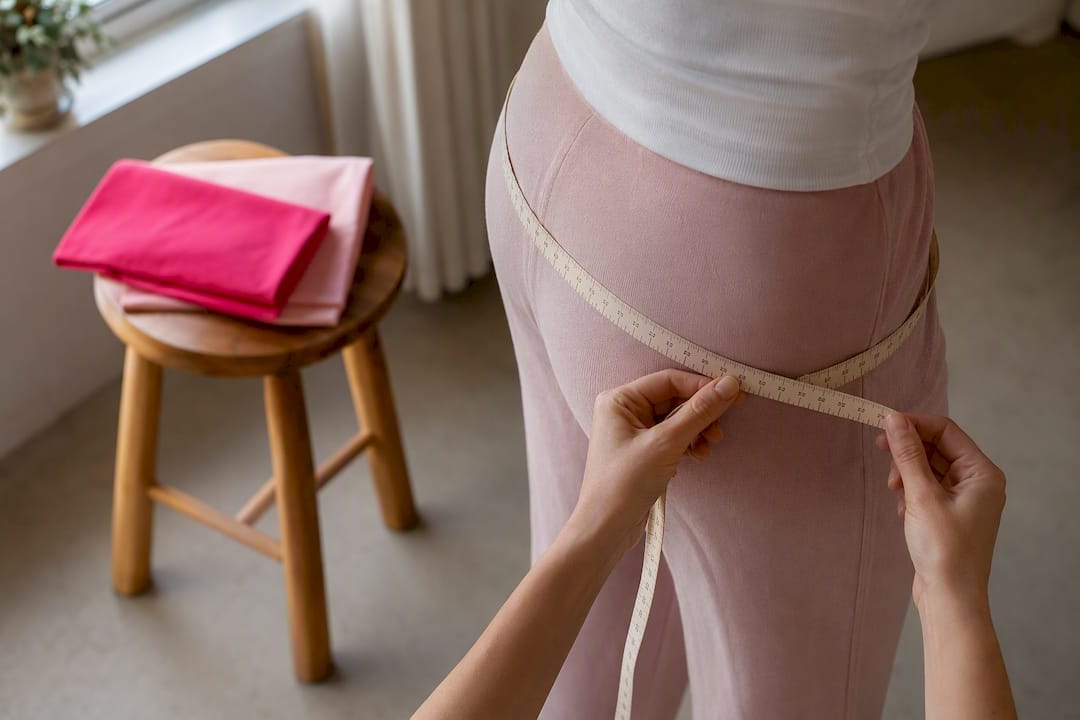
Measuring takes two minutes and saves you a returns’ headache. Follow these steps before you order:
- Measure your natural waist (where you’d wear regular high-rise underwear) and your hips at the widest point.
- Check the brand’s specific size chart. Period underwear sizing runs differently from regular underwear because the gusset needs to sit flush against the body.
- Note your usual underwear size, then compare it against the chart. If you’re between two sizes, size up rather than down.
- After the first wear, check for gaps at the leg opening, bunching at the crotch, or the waistband riding up during normal movement.
- If you spot any of those signs, try one size larger or a different cut entirely, a hiphugger instead of a bikini often solves gaping leg openings for curvier hips.
Pro Tip: If your body shape doesn’t match a standard size chart, order two adjacent sizes in one style before committing to a multipack. It’s a five-dollar experiment that beats guessing wrong on a whole set.
Bodies with a bigger difference between waist and hip measurements tend to do better in a high-waist or hiphugger cut, since those styles have more fabric to work with when smoothing across curves.
What Materials Should You Look For (and Avoid)?
Good period underwear is built in layers, and each layer has a job. The layer against your skin is usually a moisture-wicking fabric, often a cotton blend or a synthetic like modal, designed to pull liquid away from your body fast so you don’t feel damp. Healthline points out that feeling dry is actually the clearest sign the product is doing its job for your flow level; if you feel wet, you’ve likely undersized the absorbency, not the underwear.
Underneath that sits the absorbent core, typically a blend of microfiber and other absorbent textiles that locks fluid in place so it doesn’t shift around. The outer layer is the leakproof barrier, a thin waterproof or water-resistant film that stops everything from soaking through to your clothes.
- Look for fabric content listed clearly on the product page, not buried in a size chart.
- Check for testing or certification claims like OEKO-TEX, which screens textiles for harmful substances.
- Ask, or search the brand’s site, whether the leakproof layer is PFAS-free.
That last point matters more than it used to. The EPA has flagged PFAS chemicals as a genuine consumer health and environmental concern, and some waterproof fabrics have historically relied on PFAS-based coatings for their water resistance.
Material transparency isn’t a marketing nice-to-have. When a brand won’t tell you what the leakproof layer is made from, that’s the question to ask before you ask about the price.
Sustainable textile advocates make a similar case for scrutinizing material sourcing and certifications generally, not just in period care, before trusting a claim on the label. Reading up on which fabrics suit which flow before you buy will save you from picking a cotton-heavy pair when you actually needed something built for heavier absorbency.
How Do You Wash Period Underwear Without Ruining Them?
Care routine decides how long your investment lasts, and it’s simpler than most people expect. Rinse the pair in cold water immediately after wearing to lift out as much blood as possible before it sets into the fabric. Then follow this sequence:
- Rinse in cold water right after removing the underwear, don’t let them sit in a hamper for days.
- Machine wash on a cold or gentle cycle, ideally in a mesh bag to protect the elastic and absorbent layers.
- Use a mild detergent. Skip fabric softener entirely; it coats fibers and blocks absorption.
- Air dry. Skip the dryer, or use the lowest possible heat setting if you must.
- Store dry pairs flat or folded, not balled up, to preserve elastic memory in the waistband.
Heat is the real enemy here. High dryer temperatures and fabric softener both degrade the absorbent core over time, which is exactly why care guidance from testing sources consistently lands on the same combination: cold water, gentle cycle, air dry. If a pair starts leaking despite fitting well and being washed correctly, that’s usually the absorbent core breaking down, and it’s time to retire it.
Traveling complicates the routine, so pack a small wet bag for worn pairs and rinse them in a sink with cold water the moment you get access to one, even before a full wash is possible.
How Many Pairs of Period Underwear Do You Need?
Most women find three to seven pairs realistic for covering a full cycle, with the exact number depending on how often you do laundry and how heavy your flow runs. If you wash every two to three days, five pairs covers a five-to-seven-day period comfortably. If laundry happens weekly, lean toward the higher end, or add extra heavy and overnight pairs specifically for your worst days.
- Light laundry routine (twice weekly): 5 to 7 pairs.
- Frequent laundry (every 2 to 3 days): 3 to 5 pairs.
- Heavy flow or overnight-focused wearers: add 1 to 2 extra heavy/overnight pairs regardless of laundry habit.
The math against disposables is worth doing once. A single pair of period underwear typically lasts one to three years with proper care, while a comparable stretch of disposable pads or tampons gets repurchased every single cycle. Buying a small mixed set first, one light, one moderate, one heavy, lets you learn what actually fits your flow before committing to a full wardrobe. Planning pair count against your own cycle is worth doing before you buy in bulk.
Where Does SweeTee Beauty Fit Into This Checklist?
SweeTee Beauty builds around the exact five criteria this article covers: style, absorbency, fit, material safety, and care. Its multilayer construction pairs a moisture-wicking inner layer with an absorbent core and a leakproof outer barrier, the same three-part structure that testing sources point to as the standard for real leak protection.
The lineup includes options mapped to specific needs rather than a one-size-fits-all pair. Heavy-flow and postpartum-friendly styles use an extended rear panel similar to what overnight testing recommends, while hiphugger and seamless bikini cuts cover the daily-wear and low-profile end of the checklist.
- For overnight or heavy days, a hiphugger or high-waist cut with heavy absorbency lines up with the coverage recommendations above.
- For a first-time purchase, a seamless bikini in moderate absorbency mirrors the “match your usual underwear” advice.
- For care, a gentle, fabric-softener-free detergent protects the absorbent core exactly the way this guide recommends.
- New wearers can walk through step-by-step usage instructions before their first wear to avoid the common early leaks tied to under-sizing absorbency.
What I’d Tell a Friend Buying Her First Pair
If you take one thing from this whole guide, make it this: fit first, absorbency second, everything else third. Buy one moderate or heavy pair in the cut you already wear, wear it for a full cycle, and adjust from there instead of buying a ten-pack in a size and absorbency you’re guessing at. Fabric certifications and washing routines matter, but they matter after you’ve solved the fit-and-flow equation, not before.
— Tiera
Ready to Try Period Underwear That Fits the Checklist?
If you’ve read this far, you already know what to look for: the right cut, honest absorbency labeling, a fit that seals at the leg and waist, and fabric you can trust. Sweeteebeauty builds its collections around exactly that checklist instead of a single generic style, so heavy-flow days and postpartum recovery get dedicated options rather than a compromise pair stretched past its limit.
The Heavy Flow Underwear collection is the practical starting point if your main-flow days run strong, since it’s built with the extended coverage and higher absorbency this guide walks through. Prefer a higher-rise everyday option instead? The Lace HipHugger covers the daily-wear and postpartum use case with the rear coverage that overnight comfort depends on. Pick one pair, wear it through a cycle, and see how it actually performs against your own flow before deciding what else to add to the drawer.
Sources
- How to choose period products - Harvard Health
- What is period underwear? - Healthline
- Best period panties — Good Housekeeping
- PFAS: Our current understanding of the human health and environmental risks - EPA
FAQ
Do Gynecologists Recommend Period Underwear?
Yes. Harvard Health describes period underwear as a legitimate, non-invasive option for anyone who prefers not to use tampons or cups, not a downgrade from other products.
How Do I Know What Size Period Underwear to Get?
Measure your waist and hips and compare them against the specific brand’s size chart, since period underwear sizing runs differently from regular underwear. If you fall between two sizes, testing sources recommend sizing up to keep the gusset sealed.
How Can I Tell If My Period Underwear Is Full?
You’ll typically feel dampness or a heavier, saturated feeling at the gusset before any visible leak appears. Healthline notes that staying dry is the main sign the absorbency level is still working; once that feeling shifts, it’s time to change.
Do You Just Bleed Into Period Underwear?
Yes. You wear them like regular underwear and the built-in layers absorb flow directly, no insertion required, which is the core design NJ.gov’s guidance describes for this product category.
What Absorbency Should a First-Time Buyer Start With?
Start one level higher than you think you need, moderate if you expect light flow, heavy if you expect moderate, since clinical guidance from Harvard Health points to over-sizing absorbency to avoid leaks while you learn your own timing.


