
Avoid Airport Security Flags With 5–7 Travel Friendly Period Underwear

Yes, period underwear can occasionally trigger a false positive on a full-body scanner, but not for the reason most people assume. It has nothing to do with iron in blood. The alert usually comes from padding, fabric thickness, or trapped moisture that reads as a surface anomaly. Keep reading for exactly why it happens, which products carry more risk, and what to do if you get flagged.
TL;DR:
- Thicker, layered, or moisture-absorbing period products increase the likelihood of a surface anomaly that triggers false alarms on millimeter-wave scanners.
- Internal products like tampons and cups rarely cause alerts because the scanners cannot see inside the body, and flags are typically caused by external surface factors.
- Adjusting clothing to avoid bunching, choosing thinner underwear for travel, and packing in loose, breathable layers can significantly reduce the chance of being flagged.
- Requesting private screenings and explaining that period underwear caused the alert helps to handle the situation calmly and efficiently at security.
- The scanners detect surface irregularities caused by fabric thickness, moisture, or metal components, not biological fluids or internal items.
Table of Contents
- Does Airport Security Period Underwear Trigger Body Scanners?
- Which Period Products Are Most Likely to Trigger a Scanner?
- How Can You Avoid Getting Flagged at Airport Security?
- What Happens If You’re Flagged During Screening?
- SweeTee Beauty’s Travel-Tested Advice for Packing and Care
- Packing Period Underwear for Carry-On vs. Checked Luggage
- Preparing Reusable Period Underwear Before You Fly
- A Note From Tiera on Traveling With Confidence
- Travel-Ready Period Underwear From SweeTee Beauty
- Sources
- FAQ
Does Airport Security Period Underwear Trigger Body Scanners?
The scanners TSA uses at U.S. checkpoints, called Advanced Imaging Technology (AIT), don’t look inside your body or test for blood. They build a generic outline of a body and flag anything on the surface that doesn’t match that template, whether it’s a belt buckle, a wallet, or a bulky seam. A travel expert cited by Tyla confirms this directly: millimeter-wave scanners detect surface-level differences like thickness, moisture, and seams. They cannot detect internal items or biological fluids of any kind.
That distinction matters for period underwear specifically. A thicker absorbent core, a layer of waterproof backing, or a seam that bunches at the groin can all register as an anomaly the same way a phone in a pocket would. The scanner isn’t identifying “period underwear.” It’s just noticing that something on your body doesn’t match the expected silhouette, and it wants a human to check.
What actually causes the flag:
- Padding and layered absorbent material. Multiple layers of fabric stacked in one spot create a denser patch than the surrounding clothing.
- Moisture. Sweat or dampness in reusable fabric changes how the scanner’s waves reflect, which can register as an anomaly.
- Bulky or raised seams. A seam that bunches between the thighs reads differently than smooth, flat fabric.
- Metal components. Snaps, underwire, or metal-threaded fabric are an easy, unambiguous trigger.
- Shapewear compression. Anything that presses fabric tightly against skin can create an unusual density profile.
The “iron in blood” theory that circulates on social media has no basis in how this technology functions. Millimeter-wave scanners bounce radio waves off the surface of your clothing and compare the reflection to a standard shape. They don’t perform any kind of chemical or biological analysis, and they’re not sensitive to trace minerals in bodily fluid. Reporting on TSA scanners flagging period products backs this up: the flags traced back to product bulk and moisture, not to any biological marker. If you’ve seen a viral post claiming otherwise, it’s worth treating as anecdote, not fact.
Which Period Products Are Most Likely to Trigger a Scanner?
Risk breaks down fairly cleanly by how much bulk and moisture a product holds against your body, and whether that bulk sits at the surface or inside it.
Higher risk:
- Thick disposable pads, especially overnight or heavy-flow versions with dense absorbent cores
- Some disposable period underwear built with multiple bonded layers and a plastic-like backing
- Any product combined with shapewear that compresses fabric tightly against skin
Medium risk:
- Reusable period underwear that’s damp from wear, sweat, or a long flight delay
- Bulky incontinence-style garments designed for maximum absorbency rather than a low profile
- Underwear with raised or bunched seams at the inner thigh
Lower risk:
- Internal products like menstrual cups or tampons, since they sit inside the body where a surface scanner has no visibility
- Thin, low-profile period underwear with a flat gusset and minimal layering
A Daily Dot report on internal products notes that while a handful of travelers claim tampons or cups set off alarms, experts and TSA statements consistently point out that AIT can’t see inside the body. Most flags tied to internal products are likely coincidental, triggered by something else entirely, like a snap on jeans or an underwire bra.
Construction details push a product up or down this scale fast. A waterproof or leak-resistant backing changes how radio waves reflect off the fabric, and it also traps heat and sweat against skin, compounding the moisture issue. Metal snaps or clasps on any garment are a near-guaranteed flag regardless of what the garment is for. If you’re comparing categories of period protection for a trip, it helps to understand the tradeoffs between period underwear and pads before you pack, since pads generally carry more surface bulk than a well-designed pair of underwear.
How Can You Avoid Getting Flagged at Airport Security?
A few small adjustments before and during screening lower your odds of a false positive without requiring you to change what you wear on your period.
Before you get to the checkpoint:
- Choose breathable, looser outer layers. Tight leggings or shapewear layered over period underwear compress fabric against your body, which increases the chance of an anomaly.
- Cool down if you’ve been rushing. Sweat changes moisture readings on reusable fabric. If you’ve been sprinting through the terminal, give yourself a few minutes to dry off before you walk through the scanner.
- Check clothing for bunching. Adjust your underwear so fabric lies flat rather than gathering at the inner thigh, where seams are most likely to catch attention.
- Consider TSA PreCheck if you’re eligible. PreCheck lanes still use AIT in many airports, but the overall screening process tends to move faster and with less friction if something does get flagged.
- Keep a spare in an easy-to-reach pocket or bag. If you’re pulled aside and need a moment of privacy afterward, having a backup product on hand means you’re not digging through checked luggage.
At the scanner itself:
Travelers who’ve been through this repeatedly report a couple of low-effort habits that seem to help. One tip that circulates widely, and shows up in coverage of a passenger’s pat-down experience, is standing with your feet slightly wider than usual inside the scanner. This keeps fabric from bunching between your thighs, which is one of the more common triggers. A small squat or shift in stance before the machine takes its image can accomplish the same thing.
If you already feel anxious about the possibility of a flag, you can ask for a private screening before you even step into the scanner. You don’t have to wait for an alert to make that request.
Pro Tip: Pack one pair of thin, low-profile period underwear specifically for travel days, even if you’d normally reach for a heavier absorbency style at home. Less bulk against your body means fewer surface irregularities for the scanner to catch, and you can always change into a heavier pair once you land.
None of these steps guarantee you’ll skip a flag entirely. Machines misread all kinds of things, from a folded receipt to a hair clip. But stacking a few of these habits together meaningfully reduces your odds, and it means you’re not caught off guard if it does happen.
What Happens If You’re Flagged During Screening?
Getting pulled aside after a scanner alert follows a fairly predictable sequence, and knowing the steps ahead of time makes the whole thing far less stressful.
First, a Transportation Security Officer (TSO) will tell you that the scanner flagged an area, usually pointing to the general region on a screen or verbally describing where. They’re required to explain what happens next before they touch you. You’ll typically be offered a choice: a pat-down where you stand, or a private screening in a separate room, often with a witness of your choosing present.
You have the right to request a private room, and you can ask for an officer of the same gender to perform the pat-down. If you’d rather explain the situation up front, a short, direct statement works well: “I’m wearing period underwear, that’s likely what triggered the alert.” TSOs encounter this regularly and it’s a completely legitimate explanation that doesn’t require further detail.
What to expect during the process:
- The TSO will explain each step of the pat-down before making contact, including which areas they’ll touch.
- You can ask questions at any point if a step isn’t clear.
- If you request a private screening, you’re entitled to have a companion or witness present.
- You can ask for gloves to be changed if you have any hygiene concerns.
- The process is generally quick, usually a couple of minutes, and officers are trained to handle it professionally.
Coverage of a similar incident, reported by The Travel, shows this is standard procedure for any flagged anomaly, not a punishment or an accusation. The scanner doesn’t know what triggered it. It just knows something didn’t match, and the TSO’s job is to rule out anything concerning as efficiently as possible.
It’s worth remembering that this happens to plenty of travelers for plenty of reasons, not just period products. Underwire bras, cargo pants with heavy stitching, and even certain hairstyles have set off the same alert. Being flagged isn’t a judgment on you. It’s a machine doing exactly what it’s built to do: flag anything unusual and let a person make the final call.
SweeTee Beauty’s Travel-Tested Advice for Packing and Care
Frequent travel with period underwear comes down to two things: packing the right amount and keeping everything clean without access to a full laundry setup. SweeTee Beauty’s own travel-tested packing guide recommends bringing 5 to 7 pairs for a week-long trip, enough to rotate through without needing a mid-trip wash, plus a couple of spares for heavier days or delays.
What to look for in travel-friendly period underwear:
- Thin, multilayer construction that provides real absorbency without adding bulk you’d notice under airport lighting or against a scanner template
- Breathable outer fabric that reduces the sweat buildup that can change how fabric reads on a scan
- No metal hardware, since snaps or clasps are an easy, avoidable trigger
- A flat, seamless gusset that resists bunching during long stretches of sitting on a plane
Quick care matters just as much as what you pack. If you need to rinse a pair between wears, a travel-size wash bag or even a sink and a small amount of soap works in a pinch. Store used pairs in a sealable wet bag until you can properly launder them, which keeps moisture contained and away from the rest of your luggage. For a longer list of items that make gate-side washing easier, SweeTee’s guide on TSA-friendly items for washing underwear on the go covers exactly what fits in a quart-size bag.
If you’re flying somewhere hot or expect to sweat more than usual, skip waterproof-backed styles for that trip. The waterproof layer traps heat and moisture against skin, which can increase both discomfort and scanner reflectivity. A breathable, moderate-absorbency pair paired with a backup product for the flight itself tends to strike a better balance.
Packing Period Underwear for Carry-On vs. Checked Luggage
Neither carry-on nor checked luggage poses a security risk for period underwear. TSA doesn’t restrict the item in either bag, and it won’t draw scrutiny during X-ray screening of your luggage the way liquids or electronics might.
The real question is practical: what do you need access to mid-flight versus what can wait until baggage claim? Pack at least one change of period underwear, along with a spare product or two, in your carry-on. Delays, long layovers, and unpredictable flow days happen, and you don’t want your only backup checked under the plane. A carry-on essentials checklist built specifically for flying on your period covers exactly what to keep within reach.
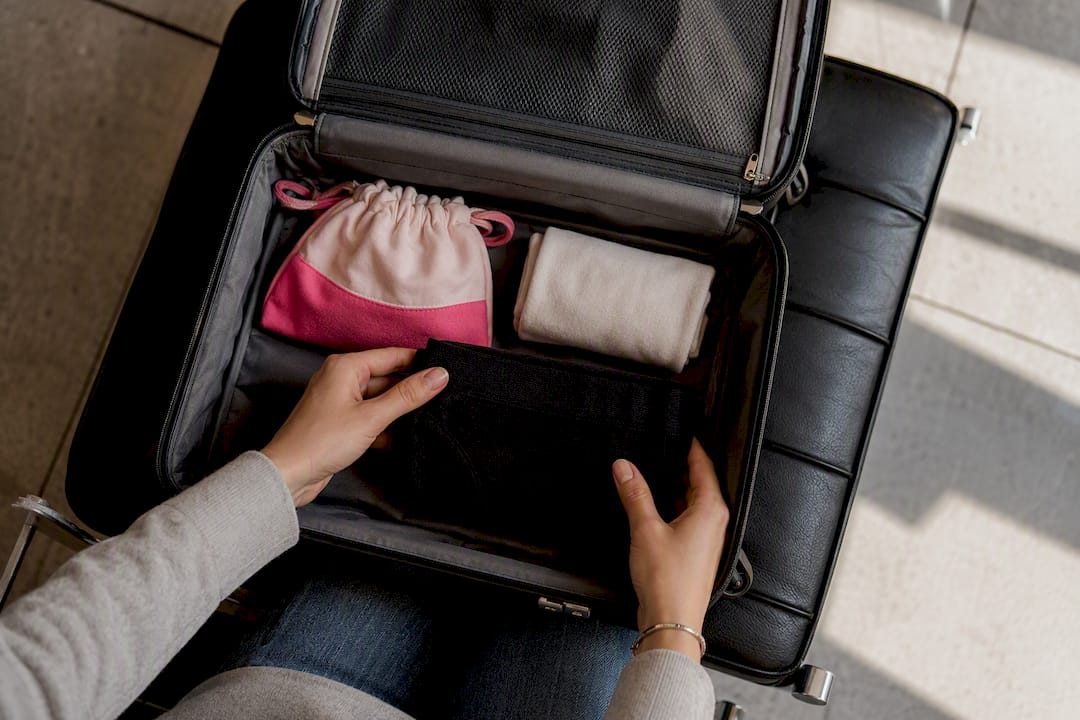
For anything beyond a day or two of travel, split the rest between carry-on and checked bags rather than loading everything into one. If a bag gets lost or delayed, you’re not left without options. A full breakdown of splitting period travel essentials between the two bag types walks through exactly how to divide products, spares, and wash supplies so nothing critical ends up in the wrong place.
One small note: pack products loosely rather than compressed tightly into a packing cube. Compression can flatten and bunch fabric in ways that make it slightly more likely to shift or bunch once you’re wearing it, which circles back to the seam and bunching issue that trips up scanners in the first place.
Preparing Reusable Period Underwear Before You Fly
A clean, fully dry pair of period underwear behaves more predictably at a checkpoint than one that’s damp or still holding residue from a previous wear. Moisture is one of the clearer triggers for a scanner anomaly, so laundering and drying your travel pairs completely before you pack them is worth the extra day of lead time.
Wash reusable pairs according to the care instructions, then let them air dry fully rather than packing them straight from a dryer cycle while still slightly warm and damp. If you’re washing on the road between flights, wring items out thoroughly and give them as much drying time as your schedule allows before wearing them through security again.
It also helps to rotate in a lower-absorbency pair for the actual travel day, even if you’d normally choose something heavier. Less padding means less surface bulk, and a product that hasn’t accumulated moisture during a full day of wear is far less likely to register as unusual. If you’re deciding between reusable and disposable options specifically for flight days, thinner reusable styles generally outperform bulkier disposable alternatives on this front, since disposable products often pack denser absorbent cores into a smaller space.
Check seams and elastic before you leave, too. A worn-out waistband or a seam that’s started to fray can shift and bunch in ways a newer pair won’t, adding one more variable you don’t need at a checkpoint.
A Note From Tiera on Traveling With Confidence
Getting pulled aside at security is awkward no matter what triggers it, and there’s something particularly uncomfortable about having a stranger point to your body and ask questions about it. I won’t pretend that a stance adjustment or a spare pair in your bag erases that feeling entirely. It doesn’t. What it does is give you a little more control over a moment that can otherwise feel completely out of your hands.
Here’s what I’d want any woman to walk away from this article knowing: a scanner flag is a machine noticing fabric density, not a verdict on you or your body. You’re allowed to say plainly what’s going on. You’re allowed to ask for a private room. You’re allowed to request a same-gender officer. None of that is a favor a TSO is doing you. It’s standard, and asking for it doesn’t slow anything down or draw more attention than the flag already did.
If there’s one thing I’d push back on, it’s the instinct to just avoid period underwear on flight days out of fear of a pat-down. That’s overcorrecting for a low-probability event by giving up a product that, for most people, is more comfortable and more reliable than the alternative. The better move is choosing a thinner, lower-bulk pair for travel days specifically, not abandoning the category altogether.
If you want more specifics on what to pack and how to keep everything clean mid-trip, SweeTee’s travel journal covers packing counts, wash routines, and carry-on strategy in more depth than I can fit here. Preparation beats anxiety every time, and most of preparation is just knowing what to expect before you’re standing in that line.
— Tiera
Travel-Ready Period Underwear From SweeTee Beauty
Period underwear exists for exactly the situation this article walks through: needing period protection that holds up under real conditions, including a full day of travel, without adding bulk or bulk-related stress to your trip. Some brands offer multilayer, leak-proof construction designed to stay thin and comfortable regardless of flow level, which matters just as much at 30,000 feet as it does at a checkpoint.
If you’re prone to heavier days, the Heavy Flow Protection collection delivers more absorbency without the dense, bulky core that shows up in a lot of disposable options. For lighter days or the actual flight itself, when a lower profile works in your favor, the Light Flow Days line keeps things minimal. And if you’re not sure what absorbency you’ll need across a multi-day trip, the full Period Underwear collection lets you mix and match by day.
Many styles are designed with irritation-free, breathable fabric and no metal hardware, reducing avoidable variables at a security line. Choosing underwear suited to your flow and trip length can help with travel comfort and convenience.
Sources
- Travel expert weighs in on claims airport scanners can tell you are on your period
- TSA Searches Passenger After Feminine Hygiene Product Sets Off Scanners
- Can TSA body scanners detect tampons?
FAQ
Can TSA Tell If I Have a Tampon In?
No. A tampon sits inside the body, and full-body scanners only read surface-level anomalies on clothing, not internal items. Any flag near that area almost certainly traces back to something else, like a seam, snap, or another surface detail, as experts have confirmed.
Can Airport Security Detect Period Blood?
No, scanners cannot detect blood or any biological fluid. They compare your clothing’s surface against a generic body template and flag physical differences like padding, moisture, or bulk, not chemical or biological content, according to travel security experts.
Will TSA See My Menstrual Cup?
Almost certainly not. A menstrual cup sits internally with no surface profile for a scanner to register, making it one of the lowest-risk menstrual products for airport screening. Most reported flags involving cups turn out to be coincidental, triggered by an unrelated item like a bra clasp or belt.
Why Did My Groin Get Flagged at TSA?
The most common causes are padding thickness, trapped moisture in fabric, bunched seams, or metal components like snaps, all of which can register as a surface anomaly against the scanner’s body template. Thinner, breathable, low-profile period underwear from lines like SweeTee’s Light Flow Days reduces several of these risk factors at once.
What Should I Say If I’m Pulled Aside for a Pat-Down?
A short, direct explanation works well: telling the officer you’re wearing period underwear or a menstrual product is a completely normal thing for a TSO to hear. You can also request a private screening room and a same-gender officer at any point in the process.


