
7 Carry On Essentials for Flying on Your Period: Avoid Midflight Panic

Yes, flying on your period is safe for most people. Travel-related factors like jet lag, dehydration, and sitting still for hours can make cramps and bloating feel worse, and your timing may shift a day or two. The fix is mostly logistical: pack a compact period kit in your carry-on, grab an aisle seat if you can, and take pain relief before you board rather than after the cramps start.
TL;DR:
- Crossing multiple time zones can cause your period to arrive earlier or later due to circadian rhythm disruption, especially when flying east.
- Packing a small, strategic period kit with a primary product, backup, hygiene items, and pain relief ensures you’re prepared for the full travel day.
- Using a seat with easy bathroom access and scheduling medication beforehand can minimize discomfort and hygiene issues during the flight.
- Heavy-flow days may benefit from a combination of menstrual cups and high-absorbency underwear, reducing mid-flight changes and leaks.
- Building routines and trusting reliable products, like leak-proof underwear, helps reduce travel-related anxiety and logistical stress.
Table of Contents
- Why Travel Can Change Your Cycle or Symptoms
- What to Pack and How to Plan Before You Go
- Handling Cramps and Hygiene at 30,000 Feet
- Which Period Products Work Best for Flying
- When to Check With a Doctor Before You Fly
- A Note From Sweeteebeauty on Travel-Tested Comfort
- Bathroom and Disposal Realities in Airports and on Planes
- What to Do About Unexpected Leaks Mid-Flight
- Cutting the Stress Out of Traveling on Your Period
- An Honest Take on Period Travel Advice
- Travel-Ready Protection From Sweeteebeauty
- Sources
Why Travel Can Change Your Cycle or Symptoms
Flying doesn’t cause period problems on its own. Cabin pressure isn’t the culprit. The real triggers are jet lag, stress, dehydration, and hours of sitting still, and they hit your cycle in specific, explainable ways.
Crossing time zones disrupts your circadian rhythm, and that disruption can alter reproductive hormone signaling tied to ovulation timing. That’s part of why a period can arrive a day early or late after a long-haul flight. Travel stress adds another layer. Rushing through security, worrying about connections, and sleeping badly all raise cortisol, and elevated cortisol can throw off your cycle’s regularity. Add a dry cabin and a seat you can’t move in for six hours, and cramps and bloating tend to feel more intense than they would at home.
None of this is cause for alarm. Travel conditions like jet lag and disrupted sleep, rather than flying itself, are the most likely explanation for shifted timing or rougher symptoms.
What tends to happen on a flight:
- Ovulation or period timing can shift slightly after crossing several time zones
- Cramps feel sharper from prolonged sitting and reduced circulation
- Bloating worsens from cabin dehydration and salty airline snacks
- Symptoms settle back to normal within a cycle or two once your routine resets
Pro Tip: If you’re flying east across multiple time zones, expect your period to possibly show up a little early. It’s your body reacting to the shifted light and sleep schedule, not a sign anything is wrong.
What to Pack and How to Plan Before You Go
The goal isn’t packing everything you own. It’s packing the right things where you can reach them fast.
Your carry-on period kit should cover you for a full travel day without digging through checked luggage:
- Your primary product (tampons, a cup, or period underwear) plus one backup type
- A spare pair of underwear, sealed in a small zip bag
- Flushable wipes or a travel pack of unscented wipes
- Small disposal bags for tampons, pads, or wipes
- Ibuprofen or acetaminophen, kept in original packaging
- A stick-on heat patch for cramps
- An empty refillable water bottle to fill after security
For trips longer than a few days, split your supplies. Keep a few days’ worth in your carry-on and the rest in checked luggage, so a delayed bag doesn’t leave you stranded. If you’re on hormonal contraception, set a reminder to adjust dosing times as you cross time zones, since a shifted schedule can affect its effectiveness. Some travelers also use a period-tracking app to anticipate whether their period will land mid-flight.
Booking matters more than people think. An aisle seat gives you easier access to the lavatory without climbing over a stranger, and it’s worth requesting even if it means paying a small fee. Note where the lavatories are relative to your seat when you board, and build in extra buffer time at security, since liquids and medications sometimes get a second look.
Pro Tip: Screenshot your seat map before boarding. If you’re stuck in a middle seat, ask a flight attendant early if there’s an open aisle seat you can move to. Cabin crew shuffle passengers more often than you’d expect.
Handling Cramps and Hygiene at 30,000 Feet
Timing matters as much as the product itself. Taking pain relief before boarding, rather than after cramps set in, allows the medication time to work before you’re stuck in a seat with no easy way to pace around. Keep any medication in its original packaging in your carry-on, since loose pills can raise questions at security.
Once you’re airborne, a few small habits go a long way:
- Sip water steadily instead of relying on the one drink cart pass
- Flex your ankles and shift your seated position every 30 to 45 minutes to keep blood flowing
- Press a heat patch against your lower abdomen under your clothes for hands-free relief
- Wear dark-colored bottoms or add a light layer as backup protection against unexpected leaks
Lavatories are tight, and turbulence makes fine motor tasks harder, so plan your bathroom visits around calmer moments in flight when you can. If you use a menstrual cup, bring a small bottle of water or unscented wipes since airplane sinks aren’t built for rinsing a cup properly. A wet bag or a few disposal bags keep used products contained until you can throw them away properly. If turbulence hits mid-change, sit back down, buckle in, and finish once the seatbelt sign turns off. There’s no rush that’s worth ignoring a flight attendant’s instructions.
Pro Tip: Pack your heat patches in your under-seat bag, not your overhead bin. You don’t want to be unbuckling and standing up during a bumpy climb just to reach a patch.
Which Period Products Work Best for Flying
Every product has a different travel trade-off, and the right pick depends on flight length, bathroom access, and how heavy your flow runs.
- Tampons are the most familiar option and easy to change quickly, but they need changing every four to eight hours, which can mean a lavatory visit mid-flight on longer routes.
- Menstrual cups hold more and mean fewer changes overall, which suits long-haul flights. The catch is cleaning one in a cramped airplane sink, where a water bottle and wipes work better than trying to rinse under a faucet with a line forming outside.
- Period underwear removes the change-and-dispose cycle entirely for hours at a stretch. Higher-absorbency styles are built for exactly the kind of unpredictable, hard-to-manage flow that makes flying stressful, and they double as backup protection even when you’re using another product as your primary method.
- Pads work fine for shorter flights but can shift during long stretches of sitting, especially through turbulence or when you’re dozing.
For long-haul flights or heavy-flow days, combining a cup with a pair of period underwear as backup covers both capacity and peace of mind. If you’d rather skip the mid-flight lavatory trip altogether, a high-absorbency pair alone can carry you through a transcontinental flight without a single change.
When to Check With a Doctor Before You Fly
Most period symptoms are manageable with the tips above. Some situations deserve a conversation with a clinician before you book.
- Bleeding so heavy you’re soaking through a pad or tampon in under two hours
- Pain that over-the-counter medication doesn’t touch
- Endometriosis, PCOS, or a condition where flare-ups are unpredictable
- Anticoagulant medication, which can affect flow volume and needs its own travel plan
Ask your doctor about a prescription refill or a travel letter if you’re on regular medication, and keep everything in its original packaging for security. A short conversation before departure beats scrambling for a pharmacy in an unfamiliar airport.
A Note From Sweeteebeauty on Travel-Tested Comfort
I’ve watched too many travelers plan entire trips around bathroom access instead of the destination. That logistical worry, not the cramping itself, is often what makes flying on your period exhausting. Sweeteebeauty built its multilayer, leak-proof underwear specifically for that problem: fewer changes, fewer disposal scrambles, more hours of not thinking about it.
Bathroom and Disposal Realities in Airports and on Planes
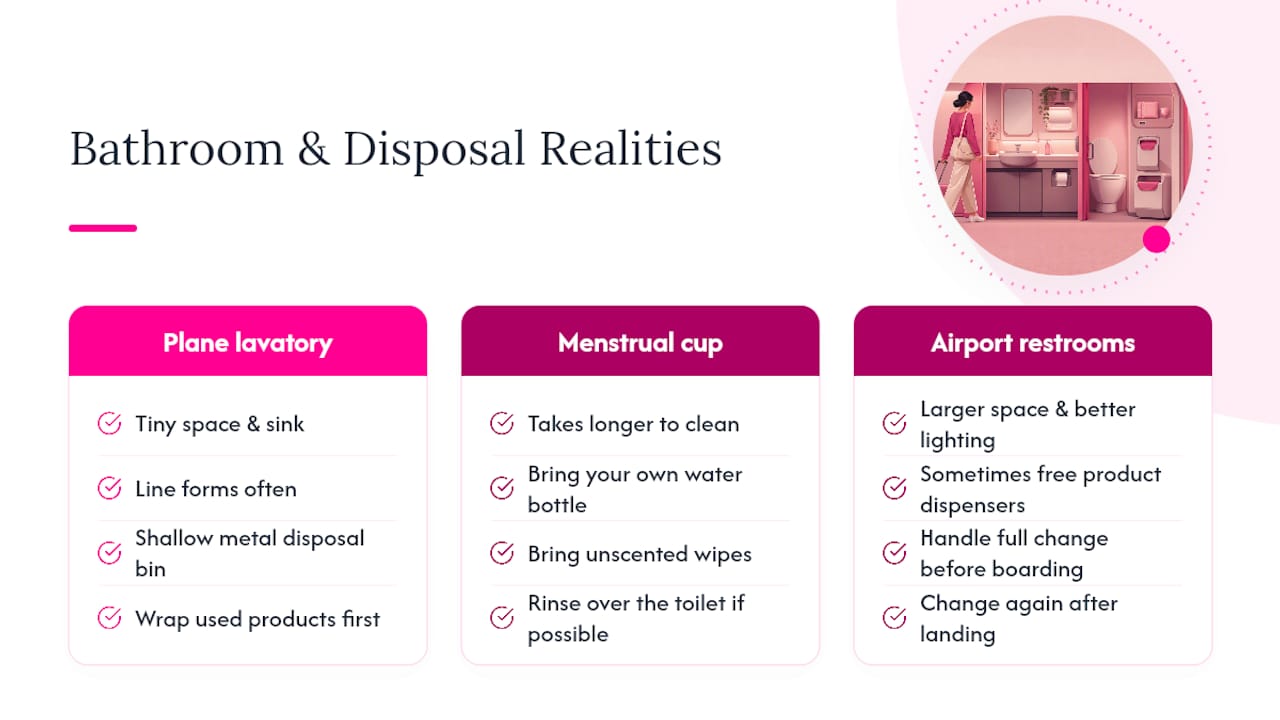
Airplane lavatories are small, the sink barely fits two hands, and there’s usually a line forming outside before you’ve even finished. That’s the honest starting point for planning disposal on a flight.
Most lavatories have a small metal disposal bin next to the toilet, which works fine for wrapped pads or tampons. Wrap used products in toilet paper or a small disposal bag before dropping them in, since the bins are shallow and get emptied only between flights. Never flush tampons, applicators, or wipes. Airplane plumbing runs a tight vacuum system, and anything beyond toilet paper risks a clog that grounds the whole lavatory for the rest of the flight.
If you’re using a menstrual cup, timing your bathroom visit matters more than the product itself. Cleaning a cup properly requires more than a splash of tap water, so bring your own water bottle and unscented wipes rather than relying on the sink. Rinse over the toilet if you can, wipe with your own supplies, and reinsert. It takes longer than a tampon change, so pick a quieter stretch of the flight rather than right after the drink service, when the line forms.
Airport terminals are more forgiving. Larger restrooms, better lighting, and sometimes free product dispensers in the departure lounge make it worth handling a full product change before boarding rather than mid-flight. Building that habit into your routine, changing right before you board and again right after landing, cuts down how often you need the airplane lavatory at all.
What to Do About Unexpected Leaks Mid-Flight
A leak on a plane feels bigger than it is, mostly because there’s nowhere to disappear to. Knowing your next three moves in advance makes it far less stressful when it happens.
First, stay calm and get to the lavatory when it’s safe to move. If the seatbelt sign is on, a leak can wait a few more minutes. Once you’re in the lavatory, use your spare underwear and wipes to clean up, and change your product. A dark cardigan or a jacket tied around your waist covers any visible mark on clothing until you can fully change.
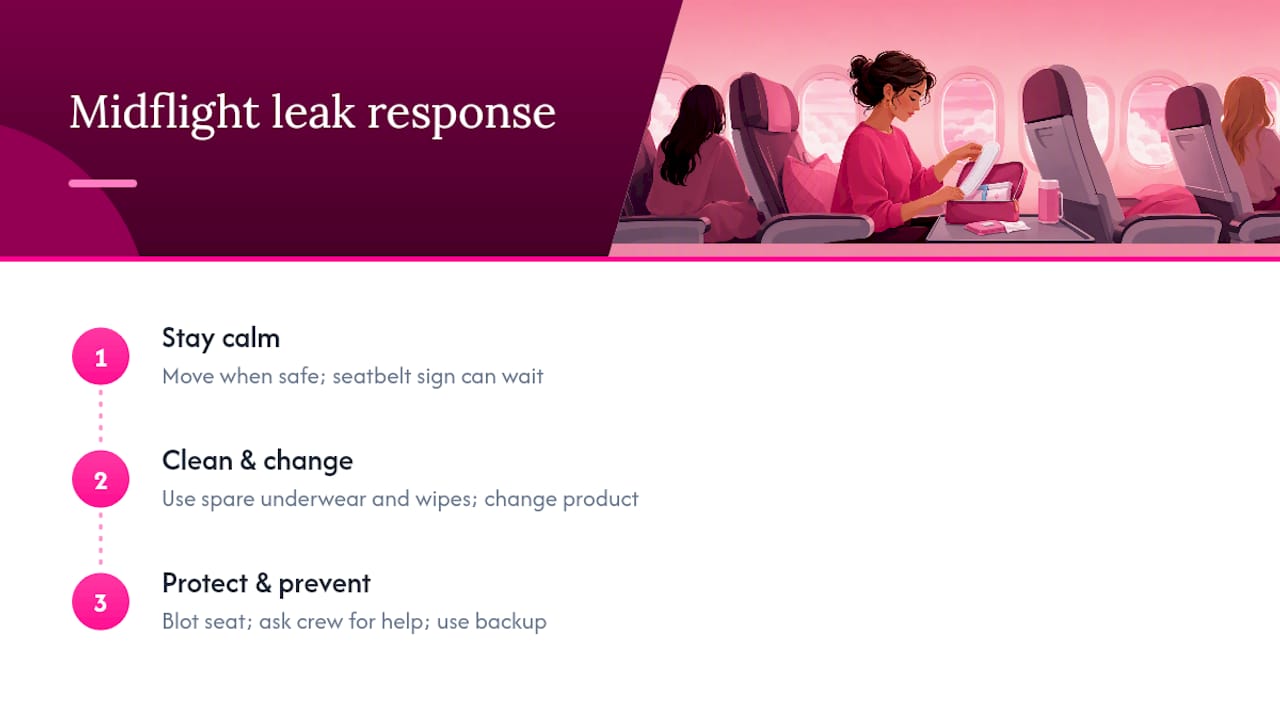
Second, address the seat. A small microfiber cloth or a few tissues can handle a minor spot on fabric seating; flight attendants also carry cleaning supplies if you need more help, and asking is routine for them, not embarrassing. Airlines deal with spilled coffee and worse on every flight.
Third, prevent a repeat for the rest of the flight. Switch to your higher-capacity backup product, whether that’s a cup, a heavier tampon, or a pair of absorbent period underwear you packed for exactly this scenario. If you’re on a heavy-flow day, wearing that backup from takeoff rather than switching to it after a leak already happened is the smarter sequence. The math is simple: prevention costs you nothing, but a mid-flight scramble costs you comfort and a chunk of your patience.
Cutting the Stress Out of Traveling on Your Period
The physical symptoms of a period rarely cause as much travel anxiety as the mental math around them. Worrying about running out of supplies, not knowing where the bathroom is, or wondering if anyone can tell tends to eat more energy than the cramps themselves. Reducing that logistical friction, not just treating the symptoms, is what actually calms the nerves.
Start by removing decisions before you’re at the gate. Pack your kit the night before, not the morning of, and lay out exactly what goes in your carry-on versus checked bag. A little structure here removes a dozen small stress points later.
Give yourself more buffer time than usual. Rushing through security while managing cramps is a recipe for a bad mood, so build in an extra 20 to 30 minutes beyond your normal arrival window. Reproductive health specialists generally frame travel-related menstrual changes as temporary and best managed with rest and hydration rather than any special intervention, which is a useful reminder not to overthink it.
Finally, choose products you trust before you trust the unfamiliar bathroom you’ll be using. A reliable, high-absorbency backup means you’re not mentally tracking the clock every 90 minutes wondering if you need to change. That single shift, from reactive worry to a plan you’ve already executed, is usually what separates a stressful flight from a boring one.
An Honest Take on Period Travel Advice
Most period travel guides overload readers with contingency plans for problems that rarely happen. The bigger issue isn’t the rare heavy leak. It’s the low hum of anxiety from not trusting your own setup, which makes people overpack, over-plan, and still feel unprepared at the gate.
What actually matters is reducing decisions, not multiplying options. One reliable primary product, one backup, a water bottle, and pain relief timed before you board covers 90 percent of what goes wrong on a flight. Conventional advice tends to treat every product category as equally practical for travel, when in reality, cup cleaning in a cramped airplane lavatory and pad shifting during six hours of sitting are real friction points that reusable, high-absorbency underwear sidesteps entirely.
If there’s one thing to prioritize, it’s this: pick the product that requires the fewest mid-flight decisions, not the one that feels most familiar from home. Familiar and practical aren’t always the same thing at 30,000 feet.
— Tiera
Travel-Ready Protection From Sweeteebeauty
Sweeteebeauty’s heavy-flow styles were built for exactly the scenario this article covers: long flights, cramped lavatories, and zero interest in mid-air product changes. The multilayer, leak-proof design holds more than a standard pad, so you can wear one from takeoff to landing on a transcontinental flight without a single bathroom detour for hygiene reasons.
They also work as backup rather than a full replacement, so if you’re loyal to tampons or a cup, wearing a pair underneath adds a safety net for turbulence or a longer-than-expected layover. The Lace HipHugger style fits comfortably under travel clothes without printing, and it’s reusable, so you’re not stuffing a bag of used products into your carry-on for a whole trip. Check the heavy-flow protection collection before your next flight and pick a pair rated for your flow before you pack.
Sources
- How to Travel Comfortably While on Your Period | Condé Nast Traveler
- Can stress cause you to skip a period? | Cleveland Clinic
- PubMed study relevant to circadian rhythm and reproductive hormones


