
Stop Guessing: 4 Fixes and Quick Triage for a Period Underwear Rash

Yes, period underwear can cause skin irritation, most often from trapped moisture, friction, or a contact allergy to dyes and fabric finishes. If you’re dealing with redness or itching, stop wearing the suspected pair, switch to loose cotton underwear for a day or two, and rinse the garment thoroughly before you wear it again. If the irritation doesn’t ease up or you notice odor or discharge, that’s a different problem.
TL;DR:
- Proper fit, absorbency matching, and thorough washing are the most effective ways to prevent period underwear irritations and rash.
- Moisture buildup from sweat or menstrual fluid and tight elastic waistbands are the primary causes of skin irritation linked to period underwear.
- Symptoms such as foul discharge or spreading rash that persist after stopping use may indicate infection and require medical evaluation.
- Checking for PFAS-free labeling and testing fabrics on sensitive skin can help reduce allergic reactions and contact dermatitis.
- Following manufacturer care instructions, rotating multiple pairs, and choosing breathable, well-sized fabrics significantly lower irritation risk.
Table of Contents
- What Causes a Period Underwear Rash — and How to Tell What’s Happening
- How to Prevent Irritation: Fit, Absorbency, and Washing
- How to Treat a Rash From Period Underwear Safely at Home
- Red Flags That Mean It’s Time to See a Clinician
- Fabric, Finishes, and the PFAS Question
- SweeTee Beauty’s Care Guidance and Product Notes
- Why Most Period Underwear Rash Advice Misses the Point
- Ready for Sensitive Skin? Where to Start Looking
- Sources
What Causes a Period Underwear Rash — and How to Tell What’s Happening
Two mechanisms explain most cases. The first is mechanical: chafing along the leg openings or waistband from a too-tight fit, which shows up as thin red lines or raw patches exactly where the fabric rubs. The second is moisture-related dermatitis, where sweat and menstrual fluid sit against skin for hours, softening the outer layer and making it easier for bacteria and yeast to move in. Gynecologists point to trapped moisture and inconsistent washing as the two biggest modifiable risk factors, ahead of the fabric itself, according to insights from gynecologists on period panty safety.
A third cause is allergic or irritant contact dermatitis, triggered by dyes, elastic finishes, PFAS coatings, or leftover detergent residue rather than the fabric itself. This tends to show up as a well-defined patch that mirrors where the garment sits, sometimes with small bumps or blistering.
Here’s a quick way to sort irritation from something that needs treatment:
- Likely simple irritation: localized redness matching the fabric’s shape, no odor, no unusual discharge, improves within a couple of days of switching underwear.
- Possible infection: foul-smelling discharge, thick white or gray discharge, burning during urination, or a rash that spreads beyond the underwear line.
- Track it: photograph the rash daily, note the date it started, and jot down the brand, detergent, and how long you wore the garment before symptoms appeared.
That timeline matters more than people expect. If you show a clinician a week of photos alongside the product name, according to Medical News Today’s overview of pad-related rashes, diagnosis and treatment usually move faster than a single office visit description would allow.
How to Prevent Irritation: Fit, Absorbency, and Washing
Most rash cases trace back to one of three fixable habits, not a defective product.
- Match absorbency to your actual flow. A light pair worn on a heavy day forces fluid to sit at the surface longer, which increases moisture contact with skin. Size up in absorbency before you size up in wear time.
- Respect the wear window. General guidance points to changing every 4 to 8 hours, with some testing groups recommending closer to 4 to 6 hours on heavier days. Change sooner if you feel damp or notice the gusset is fully saturated.
- Rotate your stock. Wearing the same one or two pairs on repeat means less drying time between uses and more residual buildup. Three to four pairs in rotation gives fabric time to fully dry and reset.
Fit and fabric choice round it out. Snug synthetic blends worn for a full workday raise friction risk, while a breathable, correctly sized fabric reduces both chafing and heat buildup. When trying a new brand, wear it for a shorter stretch first rather than committing to a full 8 hour day right away.
Pro Tip: Keep your detergent choice as boring as possible. The right one, explained in this guide to picking a detergent for period underwear, matters more for irritation prevention than almost any other laundering variable.
How to Treat a Rash From Period Underwear Safely at Home
Stop wearing the pair that triggered the reaction. Switch to loose, breathable cotton underwear while your skin recovers, and keep the area as dry and cool as you reasonably can. Scratching feels good for about three seconds and then makes everything worse by breaking skin and inviting infection.
For mild, uncomplicated irritation:
- A thin layer of zinc oxide ointment creates a barrier and calms surface friction.
- A short course of low strength (1%) hydrocortisone can ease contact dermatitis, but it’s meant for a few days, not a standing solution, and it won’t touch a yeast or bacterial issue.
- Avoid reaching for antifungal or antibiotic creams on your own. Treating the wrong cause with the wrong product can mask what’s actually going on and delay a real diagnosis, according to a clinical guide to period underwear safety.
If symptoms haven’t improved within a few days of switching underwear and adjusting your routine, that’s your signal to stop self-treating and get it looked at.
Red Flags That Mean It’s Time to See a Clinician
Most irritation resolves once the underwear comes off and the area gets to breathe. A few signs point somewhere else entirely:
- Foul-smelling or unusual discharge
- Fever, severe pain, or blistering
- A rash that spreads beyond where the fabric touches skin
- Symptoms lasting more than 7 days after you’ve already stopped wearing the suspected pair
Clinicians typically evaluate for yeast infection, bacterial vaginosis, or contact dermatitis when these symptoms show up together, since foul odor or burning strongly suggests infection rather than simple friction. Bring photos of the rash’s progression, a rough timeline of when it started, the brand and detergent you were using, and any known allergies or recent medications. That combination usually gets you to an answer in one visit instead of two.
Fabric, Finishes, and the PFAS Question
Some period underwear have tested positive for PFAS, the “forever chemicals” used in some water and stain resistant coatings, according to the New Jersey Department of Health’s guidance on period underwear. The department recommends checking for PFAS-free labeling and following the manufacturer’s specific care instructions, since improper washing can affect how coatings and finishes behave on skin over time.
For sensitive skin, a few label checks go a long way:
- Look for PFAS-free claims stated explicitly, not implied.
- OEKO-TEX certification means the fabric has been tested for harmful substances at set concentration limits.
- Natural fibers like cotton or bamboo tend to breathe better than fully synthetic wicking layers, though synthetics often absorb more per layer. It’s a genuine trade-off, not a clear winner.
- Before wearing a new brand for a full day, patch test a small area of skin against the fabric for 24 to 48 hours to catch a reaction before it’s happening in the middle of your workday.
SweeTee Beauty’s Care Guidance and Product Notes
The brand builds its period underwear with a multilayer construction and offers multiple absorbency levels so you’re matching protection to flow rather than guessing. The brand’s fabrics are designed with sensitive skin in mind, and the washing and care guide walks through the exact rinse, wash, and dry steps that reduce residue buildup between wears.
If a specific pair keeps causing irritation despite following the care steps, reach out to product support directly. Persistent symptoms, unusual discharge, or anything resembling infection is a conversation for a clinician, not a returns department.
Why Most Period Underwear Rash Advice Misses the Point
Most rash advice online treats fabric as the villain. It isn’t, usually. The gynecologist consensus is clear on this: absorbency mismatch and inconsistent washing cause far more irritation than any single fiber choice, according to the gynecologist-backed breakdown of period panty safety. People blame the underwear and switch brands three times before they ever change their wash routine or wear window.
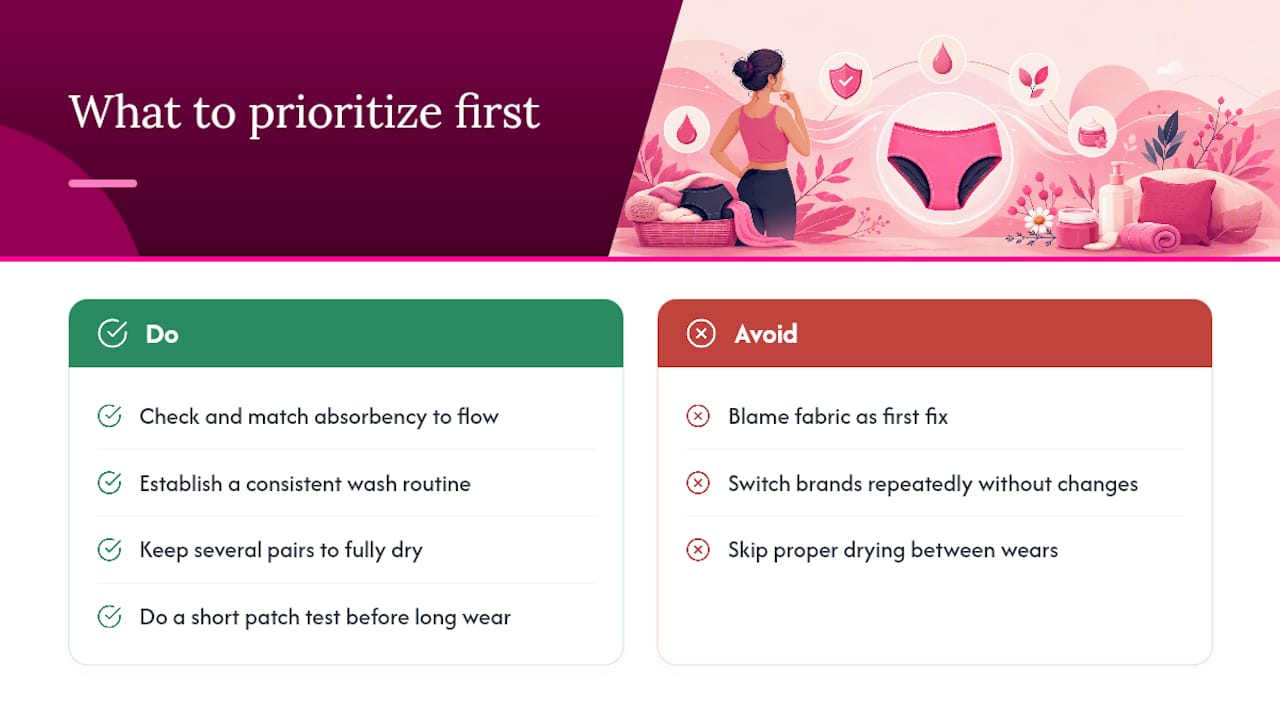
The other thing conventional advice underplays is how much individual variation matters. Anecdotal reports of dermatitis after switching brands show up regularly in period underwear forums, and that variability is real. Your skin’s reaction to a specific dye or elastic isn’t predictable from someone else’s experience, which is exactly why a short patch test before extended wear beats reading five more reviews.
Prioritize the boring stuff first: correct absorbency, a real wash routine, enough pairs in rotation to let fabric fully dry. Fix those three things before you assume you need a different product entirely.
— Tiera
Ready for Sensitive Skin? Where to Start Looking
If trapped moisture and mismatched absorbency are driving your irritation, the fix often isn’t a different underwear category. It’s the right absorbency level paired with a fabric built for longer wear without friction buildup. SweeTee Beauty’s heavy flow collection is designed for exactly that gap, higher capacity so you’re not sitting in saturated fabric for hours waiting for a change.
The Lace HipHugger is a solid option if you’re testing a new fit before committing to a full rotation, and the washing guide is worth reading before your first wear regardless of which pair you pick. Following that care routine from day one is the single easiest way to lower your irritation risk going forward. Browse the collection, pick your absorbency level, and give your skin a fair shot at a rash-free cycle.
Sources
- Are period panties safe? Insights from gynecologists
- Period underwear — NJ Department of Health
- Pad rash: Causes, relief and when to seek care — Medical News Today
This article is general information, not a substitute for advice from a qualified doctor. Consult a qualified healthcare professional about your own circumstances before acting on anything here.


