
Protect Your Period Underwear's TPU Membrane: Skip Bleach, Rinse Cold

You should not use chlorine bleach on period underwear. It breaks down the waterproof membrane and absorbent layers, weakens the elastic, and shortens the life of a garment that’s built to last through hundreds of washes. Rinse fresh stains in cold water, wash on a gentle cycle with mild detergent, and check the care label before even considering an oxygen-based bleach alternative.
TL;DR:
- Using chlorine bleach on period underwear damages the waterproof layer, elastic, and microfiber core, significantly shortening the garment’s lifespan.
- Cold water rinses immediately after use and gentle washing cycles are essential to protect the fabric and prevent blood proteins from setting.
- Hot water, fabric softeners, bleach, and high-heat drying accelerate material degradation and should be avoided to maintain performance.
- Oxygen-based bleach may be used occasionally for deep cleaning if permitted by the care label, but regular use still carries some risk.
- Proper care, including air drying and avoiding harsh chemicals, allows period underwear to last several years with minimal wear.
Table of Contents
- Is It Safe to Use Bleach on Period Underwear?
- Everyday Washing Rules That Actually Protect Performance
- Why Bleach Harms Period Underwear Materials
- Safe Alternatives and How to Deep Clean Without Damage
- How to Remove Stains Without Setting Them In
- Drying and Storing Without Wrecking the Membrane
- When It’s Time to Replace, Not Repair
- Why Trust This Guide
- A Quick Editorial Note on Longevity Over Shortcuts
- Reusable Period Underwear Built for the Wash Routine You Just Read About
- Sources
- FAQ
Is It Safe to Use Bleach on Period Underwear?
Chlorine bleach and period underwear don’t mix, and nearly every manufacturer care page says so directly. Some brand guidance lists “do not bleach” as a headline care rule, right up there with avoiding fabric softener and high heat.
The reason comes down to what’s actually inside the garment. Period underwear isn’t just cotton. It’s a stack of materials, usually a moisture wicking top layer, an absorbent microfiber core, and a waterproof barrier made from TPU or PUL (polyurethane laminate). Chlorine bleach is a strong oxidizer that breaks down synthetic polymers over repeated exposure. That means the waterproof layer that stops leaks can crack, thin out, or lose its seal entirely, and you might not notice until you’re standing in a meeting wondering why today felt different.
Oxygen-based bleach is a gentler cousin, but “gentler” doesn’t mean risk-free. It’s a conversation for the deep-clean section below, not your everyday wash routine.
Everyday Washing Rules That Actually Protect Performance
Good habits here aren’t complicated. They’re just consistent.
- Rinse in cold water immediately after wearing. Blood proteins set fast in warm water, so cold is non-negotiable.
- Machine wash on the delicate cycle, cold water, with a mild, fragrance-free detergent. A mesh bag keeps elastic and seams from snagging on zippers or hooks.
- Skip chlorine bleach, fabric softener, and hot water entirely. Softener coats fibers with a residue that blocks the microfiber layer from absorbing anything.
- Never machine dry on high heat. Heat is just as damaging to TPU as chlorine is, sometimes more.
- Oxygen bleach is a maybe, not a default. Only use it if the care label or manufacturer instructions explicitly allow it, and only at the concentration they specify.
For a deeper breakdown of which detergents actually work well with these fabrics versus which ones quietly wreck them over time, SweeTee Beauty’s detergent guide is worth a look before you commit to a bottle.
Pro Tip: Keep a small mesh bag by your hamper specifically for period underwear. It removes the “which cycle do I run this on” decision entirely, since you just toss the whole bag in with your next delicate load.
Why Bleach Harms Period Underwear Materials
Think of period underwear as four jobs stacked on top of each other in one garment: a soft layer against your skin, a microfiber core that pulls in and holds fluid, a waterproof TPU or PUL barrier underneath that, and elastic edges holding the whole thing together.
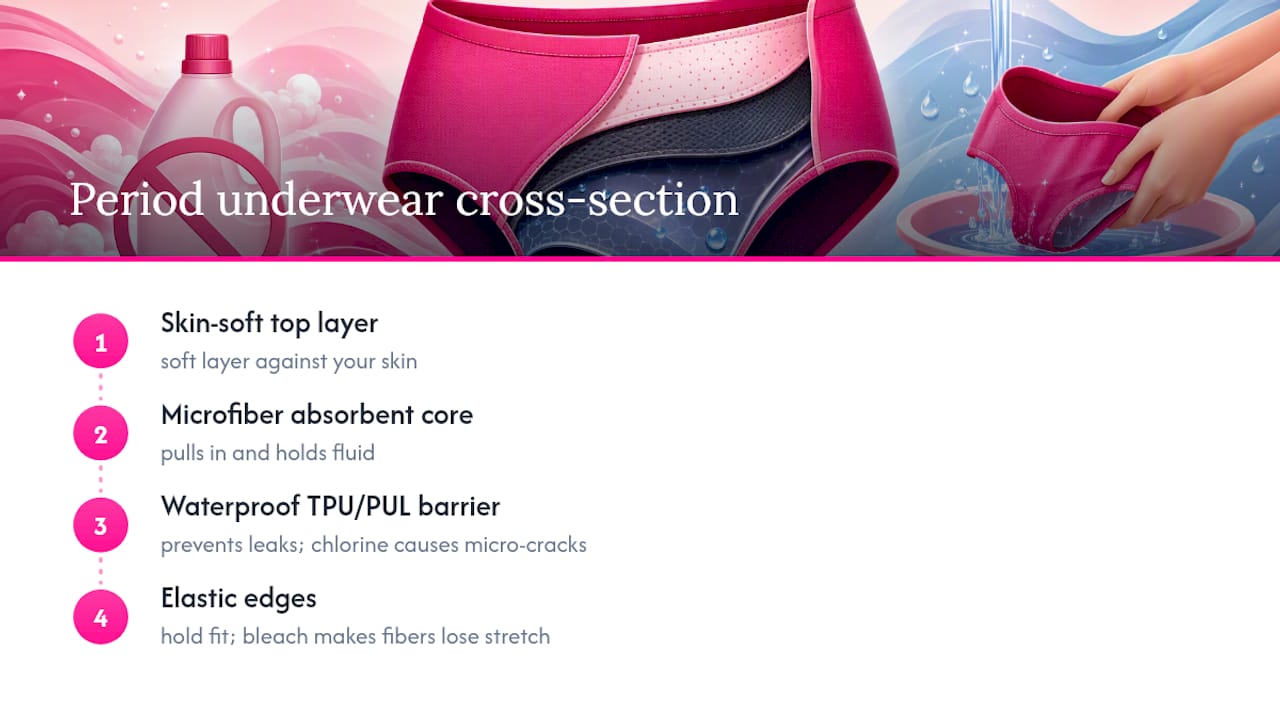
Chlorine bleach attacks synthetic polymers at a molecular level. On the TPU layer, that means micro-cracking. On elastic, it means the fibers lose their stretch memory and go slack faster than they should. Manufacturer care documentation consistently flags bleach, hot water, and fabric softener as the three fastest ways to shorten a garment’s usable life, and heat compounds the damage because it accelerates the same breakdown process.
There’s a stain-specific problem too: bleach and heat both “set” blood proteins into fabric rather than lifting them out, and they compress the microfiber’s capillary structure so it holds less liquid over time. Oxygen-based bleach avoids the chlorine chemistry, but it’s still an active cleaning agent. Used carelessly, it can fade colors or, in high concentrations, stress the same seams and elastic that chlorine attacks.
Safe Alternatives and How to Deep Clean Without Damage
Stubborn stains don’t require bleach. They require patience and the right sequence.
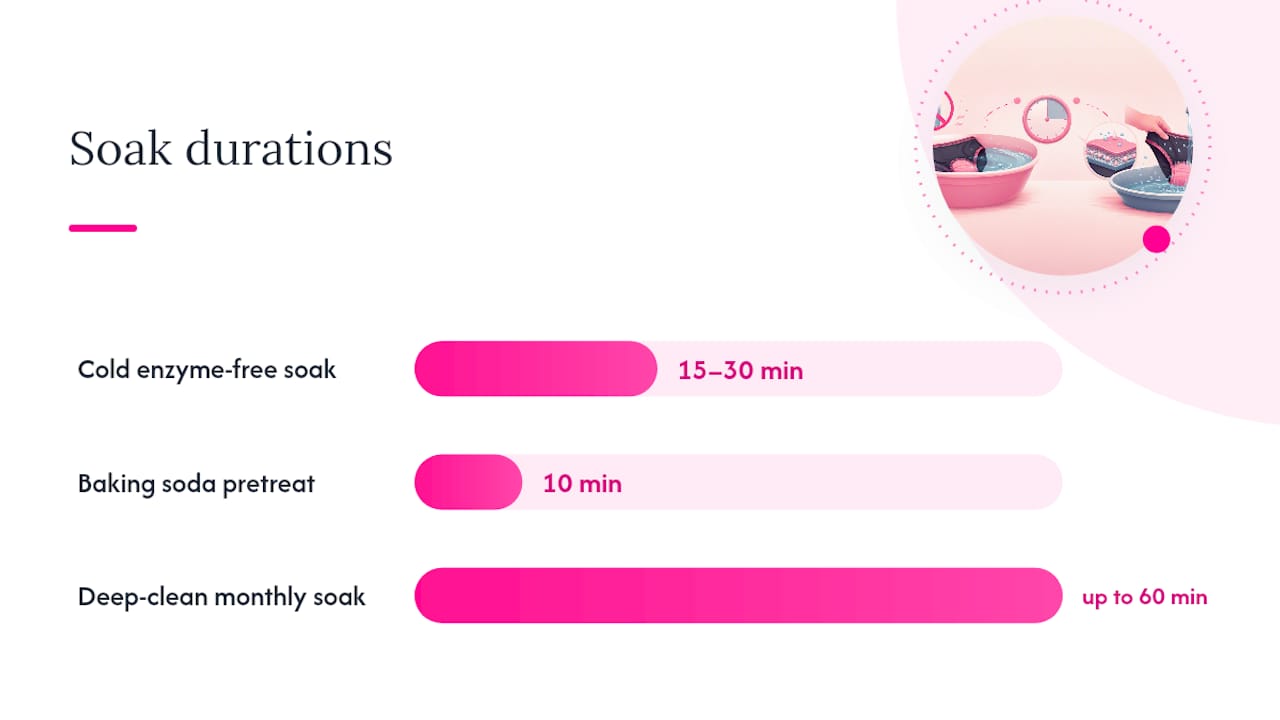
- Cold soak first. Mix cold water with a small amount of enzyme-free, mild detergent and let the garment sit for 15 to 30 minutes before any scrubbing.
- Try an oxygen-based bleach (sodium percarbonate) for deep cleaning. Some brands recommend a dedicated oxygen soak at a specified concentration and soak time, but only after confirming the care label permits it.
- Pretreat with vinegar or baking soda for lighter stains. A tablespoon of white vinegar in a cup of cold water, or a paste of baking soda and water left on the spot for 10 minutes, lifts a lot without any harsh chemistry.
- Run a full deep-clean soak monthly, not weekly. Soak for up to an hour in cold water with detergent, then follow with a normal cold, gentle machine wash. No heat at any step.
One detail that surprises people: rinsing within the first several minutes after use is the single most effective step for stopping a stain from setting at all, more effective than anything you do later in the wash cycle. That one habit does more work than any product you buy.
For a full walkthrough of restorative deep cleaning without wrecking the fabric, SweeTee Beauty’s stripping guide covers the process step by step.
How to Remove Stains Without Setting Them In
Fresh stains and old stains need different approaches. Mixing them up is how people accidentally make a stain permanent.
- Rinse immediately under cold running water, rubbing gently with your fingers from the back of the fabric to push the stain out rather than deeper in.
- Soak in cold water for 15 to 20 minutes with a splash of mild detergent if the stain hasn’t lifted after rinsing.
- Agitate gently by hand, then rinse again before tossing it in with your next delicate laundry load.
- For older, already-dried stains, repeat cold soaks over a day or two, or use an oxygen-based soak cycle if your care label allows it. One pass rarely does the job on set-in stains.
Rael’s washing guide echoes the same core sequence: cold rinse, gentle cycle, air dry. Consistency across brands on this point isn’t a coincidence.
Pro Tip: Never wring or twist period underwear to get water out. Press it between two towels instead. Wringing stresses elastane fibers at exactly the seams you’re trying to protect.
For photo-by-photo guidance on tackling different fabric types and stain ages, SweeTee Beauty’s stain removal guide breaks it down by surface.
Drying and Storing Without Wrecking the Membrane
Air drying is the safest option, full stop.
- Turn the garment inside out and either lay it flat or hang it by the waistband, away from direct sun, since UV exposure degrades TPU almost as fast as heat does.
- Never tumble dry on high heat, and keep it off radiators or heated towel rails.
- Let it dry completely before folding it into a drawer. Storing anything even slightly damp invites mildew and odor that no amount of rewashing fully solves.
- Wash after every wear rather than letting several pairs pile up unwashed, and skip the urge to let a used pair soak in a sink for hours before you get around to a full cycle.
When It’s Time to Replace, Not Repair
Some damage doesn’t wash out, and no amount of extra soaking will fix it. Watch for leaks that persist even after a correct wash, visible cracking or peeling on the inner layer, elastic that’s gone loose or won’t snap back, and odor that lingers after a proper cold wash and full air dry. With consistent gentle care, most well-made period underwear holds up for several years of regular use. Bleach and high heat can cut that timeline dramatically, sometimes in a matter of months.
Why Trust This Guide
This guide was written by Tiera, drawing on manufacturer care documentation and material science that governs how TPU, PUL, and absorbent microfiber actually behave under stress. Period underwear designs generally incorporate multilayer materials that require careful washing, favoring cold water and bleach avoidance over aggressive cleaning shortcuts. For readers who want more detail than a single article can cover, the detergent and stain removal guides linked throughout this piece go deeper into specific product recommendations and technique.
A Quick Editorial Note on Longevity Over Shortcuts
Treating period underwear gently isn’t fussiness. It’s the difference between one pair lasting years and three pairs ending up in a landfill within a season. Skip the bleach, follow the care label, and choose the slower, less aggressive fix every time.
— Tiera
Reusable Period Underwear Built for the Wash Routine You Just Read About
Multilayer period underwear is designed to be washed with cold water, gentle detergent, and air drying. Proper care helps maintain membrane integrity and elastic longevity, supporting the concept of washable, reusable materials rather than disposable products.

Every pair ships with its own care label, and it’s worth reading before your first wash, not after your third. If you’re shopping for heavier flow days, SweeTee Beauty’s Heavy Flow Protection collection is built with extra absorbency in mind, while the Period Underwear collection covers the full range of styles and absorbency levels. Browse the collection, check the care instructions on the product page, and pick the pair that matches your flow and your laundry habits.
Sources
For more on washing without damaging fabric, see the manufacturer’s care guide to 50+ washes and this breakdown of gentle intimate-wear washing, which covers similar principles for other washable intimate items.
- How to Wash Period Underwear: The Manufacturer’s Guide to 50+ Washes | LJVOGUES
- How to wash period panties without ruining them — MioLook
- How To Wash Your Period Underwear + Care Guide – Free Bleed®
FAQ
Can You Bleach Period Underwear Safely?
No. Chlorine bleach degrades the waterproof membrane and elastic in period underwear, shortening its usable life. Care guides across multiple manufacturers list bleach as a top thing to avoid, recommending cold water and mild detergent instead.
What Is the Best Way to Deep Clean Period Underwear?
A monthly cold-water soak with mild detergent, followed by a normal gentle wash cycle, works well for most buildup. If stains persist, an oxygen-based bleach soak at manufacturer-approved concentrations is the safer deep-clean option, but only when the care label permits it.
Are You Supposed to Free Bleed in Period Underwear?
Yes, that’s the intended use. The absorbent core and waterproof barrier are designed to catch flow directly without a pad, tampon, or cup, which is why protecting those layers with proper washing matters so much.
Is It Safe to Use Bleach on Regular Underwear?
Bleach is generally safer on plain cotton underwear than on period underwear because cotton doesn’t have a waterproof membrane to damage. Even so, it still weakens elastic over time, so many care guides recommend limiting bleach use even on standard cotton garments.
What’s the Best Detergent for Period Underwear?
A mild, fragrance-free detergent without added enzymes or brighteners works best, since enzyme cleaners can be too aggressive on absorbent microfiber over repeated washes. SweeTee Beauty’s detergent guide breaks down specific ingredients to avoid.


