
Rinse 30–60 Seconds in the Shower to Cold Wash Period Underwear

Yes, cold rinse and cold delicate washing is the correct way to clean period underwear, and it works because the temperature never gives blood a chance to bond with the fabric. Rinse in cold water until it runs clear, wash on a cold delicate cycle with a mild detergent, and never reach for fabric softener or the high-heat dryer setting. Skip any of those three moves and you risk breaking down the absorbent core faster than it should wear out.
TL;DR:
- Rinsing in cold water immediately helps remove blood and prevents it from bonding with the fabric, which is crucial before any washing step.
- Use a gentle, fragrance-free liquid detergent in cold water and avoid fabric softeners or bleach to preserve the integrity of the absorbent layers.
- Air drying underwear fully within hours is essential, and high heat from dryers or sunlight accelerates fabric breakdown and shortens lifespan.
- Washing should be done every 8 to 12 hours, with proper rinsing and air drying, especially when flow is heavy, to prevent odor and bacterial growth.
- Some styles require hand washing or delicate cycles; always check the care label and follow specific brand recommendations to ensure longevity.
Table of Contents
- How Do You Cold Wash Period Underwear Step by Step?
- Which Detergents Are Safe for Cold-Water Washing?
- How Should You Dry and Store Period Underwear?
- What’s the Safest Way to Remove Stains and Odors?
- How Often Should You Change and Wash Period Underwear?
- What Does SweeTee Beauty Recommend for Care?
- A simple habit that makes cold washing stick
- Shop Period Underwear Built for Easy Cold-Water Care
- Sources
- FAQ
How Do You Cold Wash Period Underwear Step by Step?
Cold washing period underwear only works if the rinse happens first. Skip that step and you’re just moving a stain from the gusset into the rest of the wash load.
- Rinse immediately in cold water. Hold the underwear under a cold tap or take it into the shower with you and run water through the absorbent layer until it turns clear, usually 30 to 60 seconds of light agitation with your fingers.
- Choose hand wash for small loads or heavy stains. Fill a basin with cold water, add a small amount of mild detergent, swirl the garment for a minute, then squeeze gently. Never wring or twist. Rinse until no suds remain.
- Choose machine wash for regular loads. Drop the rinsed underwear into a mesh laundry bag, set the machine to cold delicate, and wash it alongside similar colors rather than towels or jeans that add friction.
- Check the care label before either method. Some styles call for handwashing only, and the label overrides any general advice here.
Hand washing beats the machine when you’re dealing with just one or two pairs, a stain that didn’t fully rinse out, or a label that flags delicate trims like lace. The cold-rinse-first approach that most expert care pages recommend holds up whether you’re washing one pair in a hotel sink or a full week’s rotation at home.
Pro Tip: Rinse the underwear during your actual shower instead of afterward at the sink. It takes seconds, uses water you’re already running, and means nothing sits in a hamper getting harder to clean.
Which Detergents Are Safe for Cold-Water Washing?
Not every detergent behaves the same way in cold water, and the wrong one can undo everything the cold cycle is protecting.
- Use a gentle, fragrance-free liquid detergent. Powders sometimes don’t fully dissolve below 60°F, leaving residue in the absorbent layers.
- Add an oxygen-based stain remover for tougher marks instead of chlorine bleach.
- Skip fabric softener entirely. It coats fibers with a waxy film that blocks moisture absorption right where you need it most.
- Avoid bleach altogether. It breaks down elastic and can degrade the waterproof layer over repeated washes, a concern InStyle’s washing guide flags directly.
- Stick to about half the detergent dose recommended for a regular load. Period underwear doesn’t carry the dirt volume of everyday clothes, and less soap means less residue to rinse out.
Enzyme detergents still work in cold water, just more slowly than in warm. Give them the full cycle time rather than a quick rinse if you’re using one to tackle protein-based stains.
How Should You Dry and Store Period Underwear?
Air drying is non-negotiable if you want the leak-proof layer to last. High heat is what actually shortens the lifespan of these garments, not normal wear.
- Air-dry fully, ideally within a few hours, before putting the underwear away.
- Skip the tumble dryer’s high-heat setting; low heat or no heat is the safer call if you must use one.
- Hang by the waistband or lay flat depending on the gusset construction, since heavier absorbent panels can stretch if hung by the crotch seam.
- Never store underwear while still damp, and skip airtight containers that trap moisture and encourage mildew.
- Use a breathable fabric bag or open drawer instead of a sealed plastic bin.
Repeated heat exposure, whether from a hot dryer or direct sunlight for hours at a time, breaks down the elastic and waterproof membrane faster than washing itself ever will.
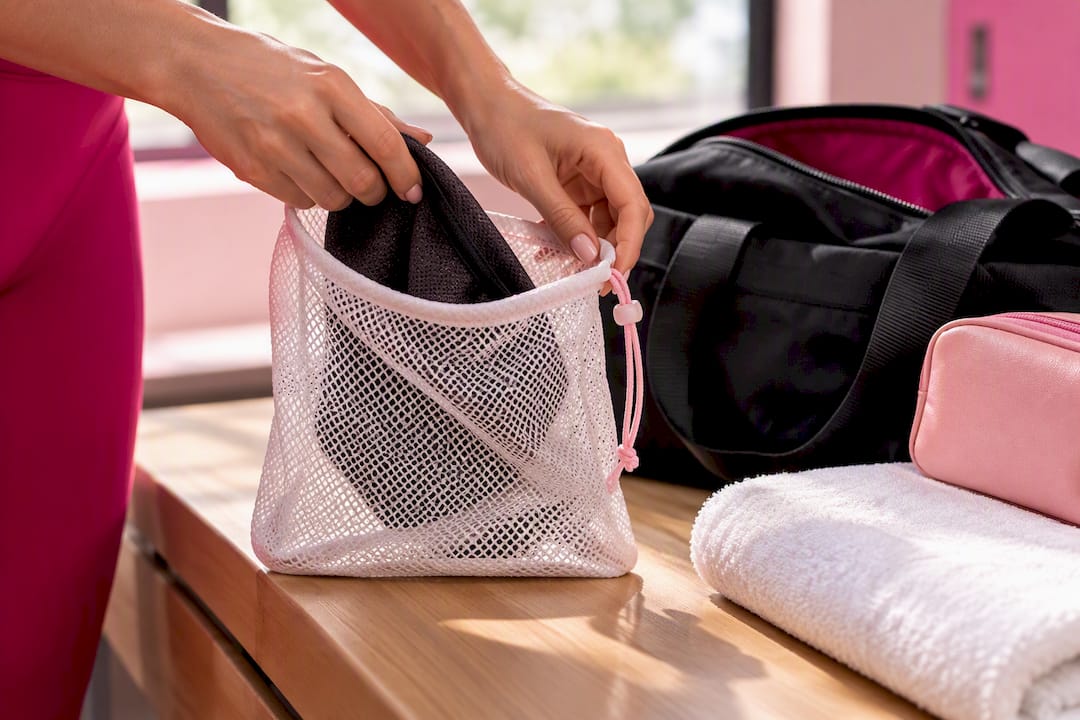
Pro Tip: Keep a second breathable bag in your gym or travel bag specifically for underwear that’s been worn but not yet washed. It stops dampness from sitting against your other clothes until you can rinse it properly.
What’s the Safest Way to Remove Stains and Odors?
Stains respond better to patience than to heat. A short soak almost always beats aggressive scrubbing.
- Pre-soak fresh stains in cold water for 15 to 30 minutes before washing, then rinse until clear.
- For lingering odor, try a vinegar soak of 20 to 60 minutes, following a measured ratio and rinsing thoroughly afterward so no residual smell or acidity remains.
- For set-in stains, use a short oxygen-based soak or an enzyme spray, then rinse well before the underwear goes into the wash.
- Avoid hot water, chlorine bleach, and long stretches of hard scrubbing. All three do more damage to the fabric than the stain ever would.
How Often Should You Change and Wash Period Underwear?
Public-health guidance recommends changing and cleaning period underwear roughly every 8 to 12 hours, sooner if your flow is heavy. Waiting longer raises the risk of odor and bacterial buildup, the same concern behind general menstrual hygiene guidance from the CDC.
- If you can’t wash right away, rinse the underwear and let it air-dry briefly rather than tossing it damp into a hamper.
- Rotate through several pairs so nothing sits wet for hours waiting on laundry day.
- Make sure everything is fully dry before it goes back into a drawer, even if that means a short wait.
What Does SweeTee Beauty Recommend for Care?
SweeTee Beauty’s multilayer design depends on the same cold-wash principles covered above, and the brand’s own care and wash guide walks through the routine in more detail.
- Rinse in cold water, then wash on a cold delicate cycle or by hand.
- Skip fabric softener and bleach to protect the absorbent core and leak-proof barrier.
- Air-dry fully; avoid the dryer’s high-heat setting.
- For a first wash straight out of the packaging, follow this quick maker-backed routine before wearing.
A simple habit that makes cold washing stick
Rinse in the shower, not at the sink later. It takes ten extra seconds while you’re already wet and undressed, and it means you’re never scrubbing a set-in stain the next morning.
— Tiera
Shop Period Underwear Built for Easy Cold-Water Care
Multilayer period underwear constructions are designed to hold up under the exact cold-rinse, cold-cycle routine outlined above, so the care habits that protect your underwear also protect your investment in it.

If you’re shopping for a new rotation, the Period Underwear collection covers everyday styles, while the Heavy Flow Protection line is built for higher absorbency without sacrificing how the fabric responds to cold washing. Both lines are made with materials that hold their shape wash after wash when you skip the dryer’s heat and stick to a gentle detergent. Browse either collection now and pick styles that match your flow, then keep them in rotation using the cold-wash steps above.
Sources
This guide draws on Boody’s washing guidance, Undies Mag’s expert care steps, and public-health sources from NJ.gov and the CDC. Always check your own garment’s care label first.
- How to Wash Period Underwear, According to Experts
- Period underwear (New Jersey Department of Health)
- Menstrual hygiene (CDC)
- How to Wash Period Underwear Properly (InStyle)
FAQ
Do Gynecologists Recommend Period Underwear?
Many gynecologists view period underwear as a safe, reusable option for light to heavy flow when washed properly between uses. The key concern clinicians raise is hygiene, which is why following an 8 to 12 hour change schedule and washing in cold water matters as much as the product itself.
Are You Supposed to Free Bleed in Period Underwear?
Yes, that’s the point. The absorbent layers are designed to catch flow directly without a pad, tampon, or cup, which is why proper cold-water washing between wears matters so much for keeping the fabric working as intended.
How Many Times Can Period Underwear Be Washed?
With consistent cold washing and air drying, most period underwear holds up for two to three years of regular use, though lifespan varies by brand and how often heat or harsh detergents get used. Skipping fabric softener and high-heat drying is the biggest factor in stretching that lifespan.
How Do I Wash My Period Underwear?
Rinse in cold water until it runs clear, then either hand wash with mild detergent or machine wash on a cold delicate cycle inside a mesh bag. Air-dry completely and never use fabric softener, bleach, or a high-heat dryer setting, steps SweeTee Beauty’s own care guide walks through in detail.


