
Period Underwear: Greener If Washed Cold and PFAS Free, for Menstruators

Menstrual cups carry the lightest environmental footprint of any period product, according to a peer-reviewed life-cycle assessment across France, India, and the US. Period underwear ranks close behind, well ahead of disposable pads and tampons, but two factors can shrink that gap fast: how you wash and dry it, and whether the fabric contains PFAS. Get those two things right, and reusable underwear is one of the clearest sustainability upgrades available to menstruators.
TL;DR:
- Menstrual cups offer the lowest environmental impact, especially when used for their full multi-year lifespan, while disposables contribute most to plastic waste.
- Proper laundry habits, such as washing in cold water, line drying, and rotating multiple pairs, significantly reduce the life-cycle footprint of reusable underwear.
- Many period underwear tested positive for PFAS chemicals, making transparency and certification critical factors when choosing eco-friendly options.
- The lifespan of well-maintained period underwear ranges from two to five years, with care routines like cold wash and avoiding heat prolonging their usefulness.
- Shipping emissions are generally less impactful than manufacturing and use-phase, but consolidating orders and selecting brands with minimal packaging further lower overall environmental costs.
Table of Contents
- How Do Menstrual Products Compare in Life Cycle Assessments?
- What Drives the Footprint: Materials, Manufacturing, and Laundry Habits
- Are There Harmful Chemicals in Period Underwear?
- How Long Does Period Underwear Need to Last to Be Worth It?
- What Happens to Period Underwear at the End of Its Life?
- How Do Different Brands and Styles Stack Up Environmentally?
- Does Shipping and Distribution Add to the Footprint?
- What Ethical Issues Affect Sustainable Period Products?
- How Much Does Washing Frequency Change the Environmental Math?
- Sweeteebeauty’s Approach to Sustainability and Safety
- Which Sweeteebeauty Collection Fits Your Flow and Your Values
- Sources
- FAQ
How Do Menstrual Products Compare in Life Cycle Assessments?
The 2022 comparable life-cycle assessment measured eight environmental indicators, including climate change, water depletion, and resource use, across cups, period underwear, reusable pads, and disposables. Cups came out lowest in nearly every category. Period underwear and reusable pads landed next, roughly comparable to each other. Disposables trailed behind across the board.
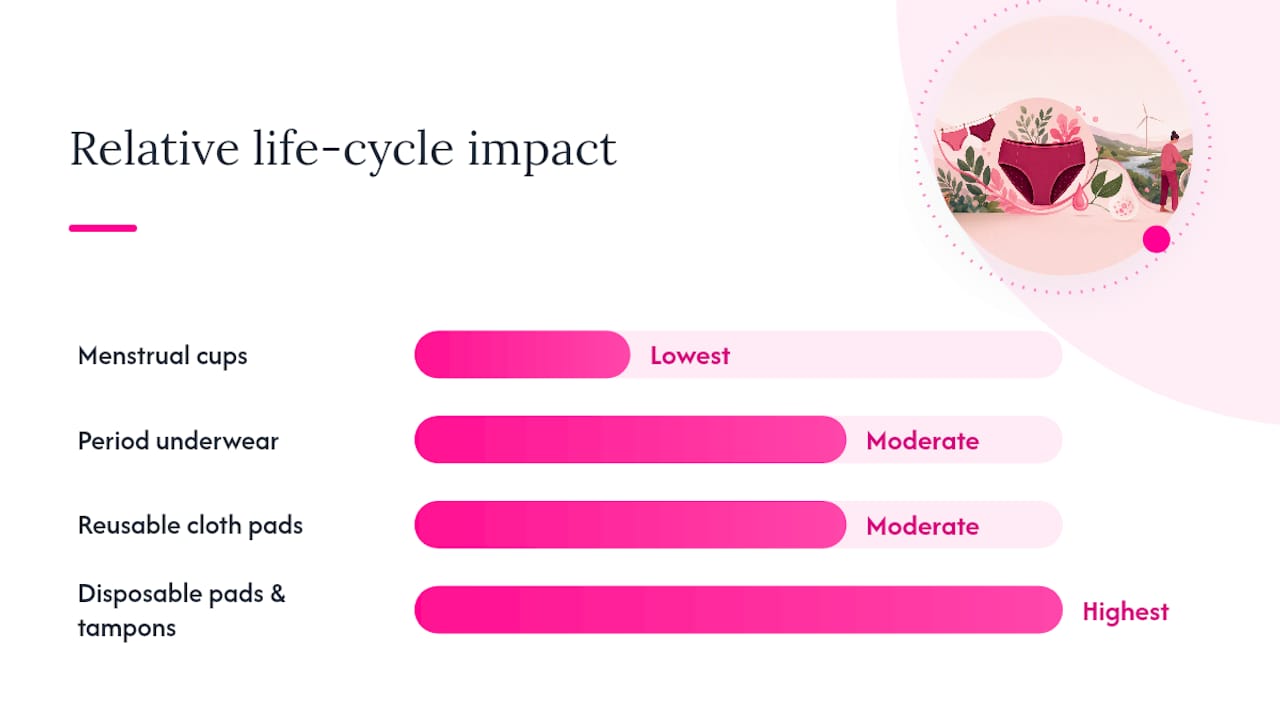
The reason comes down to where the impact happens. Disposable pads and tampons concentrate their damage in production and disposal: manufacturing plastic components, then sending that plastic to a landfill after a few hours of use. Reusable products shift the burden toward the use phase. A cup or a pair of underwear gets manufactured once, then washed hundreds of times, so what happens in your laundry room matters as much as what happens in the factory.
Scale drives the disposable numbers home. Disposable products can run up to 90% plastic by weight, and the US discards an estimated 20 billion of them annually, generating roughly 240,000 tonnes of solid waste. A UNEP and Life Cycle Initiative meta-analysis reached a similar conclusion after reviewing multiple studies, adding an important caveat: results shift depending on geography, water access, and individual washing habits.
Here’s the practical breakdown for reducing your footprint:
- Lowest impact: menstrual cups, when used for their full multi-year lifespan
- Strong second: period underwear and reusable cloth pads, especially with efficient laundering
- Highest impact: disposable pads and tampons, driven by plastic content and landfill volume
- Wildcard factor: wash and dry habits can push reusables up or down this ranking
What Drives the Footprint: Materials, Manufacturing, and Laundry Habits
Disposable pads rely on plastic backing, superabsorbent polymers, and synthetic nonwovens, all of which take fossil-fuel inputs to produce and centuries to break down. Reusable products swap most of that for textiles, usually cotton blended with a moisture-wicking or absorbent core layer. Cotton isn’t automatically the greener choice, though. Conventional cotton is a thirsty, pesticide-heavy crop, while organic cotton cuts chemical inputs but often needs more land and water per pound harvested. Neither version is free of trade-offs.
Where reusables actually win or lose is in your laundry room. Washing energy is one of the biggest swing factors in the entire lifecycle, and machine drying generates notably higher emissions than line drying. A cold cycle with a full load and an air-dry finish can cut the use-phase footprint dramatically compared to hot water and a heated dryer run for one or two pairs.
Three habits make the biggest difference:
- Wash cold, not hot. Cold cycles use a fraction of the energy and are usually gentler on absorbent layers anyway.
- Wait for a full load. Running the machine for three pairs of underwear wastes water and energy that a full load would use more efficiently.
- Skip the dryer when you can. Line drying avoids one of the single largest energy draws in the reusable product lifecycle, and it tends to extend fabric life too.
Pro Tip: Wash new period underwear once before first use to set the absorbent layers, then stick to cold water for every wash after that. A quick 60-second first wash is enough to get it ready.
Are There Harmful Chemicals in Period Underwear?
A share of reusable menstrual products tested in 2025 came back positive for PFAS, according to testing and expert commentary reported through Notre Dame. PFAS, sometimes called “forever chemicals,” resist breaking down in the environment and can leach out during washing or after disposal, creating both a direct exposure risk and a longer-term contamination problem.
The bigger issue is transparency. Marketing a product as “eco-friendly” says nothing about whether it’s PFAS-free, and few brands publish independent lab results. Experts quoted in that reporting urge consumers to ask for actual test data rather than trust green-sounding labels alone.
A few concrete steps help here:
- Ask brands directly for third-party lab test results on PFAS content
- Prioritize products with explicit PFAS-free certification, not just general “eco” claims
- Follow the manufacturer’s washing guidance, since some care routines are designed to limit chemical migration over time
How Long Does Period Underwear Need to Last to Be Worth It?
Break-even is the point where a reusable product’s ongoing use has offset the environmental cost of manufacturing it. Below that point, you’re still in an environmental deficit compared to buying disposables for the same period. Above it, every additional wear is a net gain.
A rough example makes this concrete: if a pair of period underwear takes roughly the same manufacturing footprint as 50 disposable pads, and you’d use six pads per cycle, that pair pays itself back in under two cycles of regular wear. After that, months or years of continued use are pure savings. Cups usually break even even faster because of their smaller material footprint and long usable life.
Realistic lifespan matters just as much as the math. A conservative estimate for well-cared-for period underwear is two to five years, depending on fabric quality and how it’s washed. Heat is the main enemy: hot water and machine drying break down elastic and absorbent layers faster than gentle care does.
To stretch that lifespan and maximize the payoff:
- Wash in cold water and skip the dryer’s heat cycle when possible.
- Rotate between several pairs so no single one wears out early from overuse.
- Avoid fabric softener, which can coat and degrade absorbent fibers over time.
What Happens to Period Underwear at the End of Its Life?
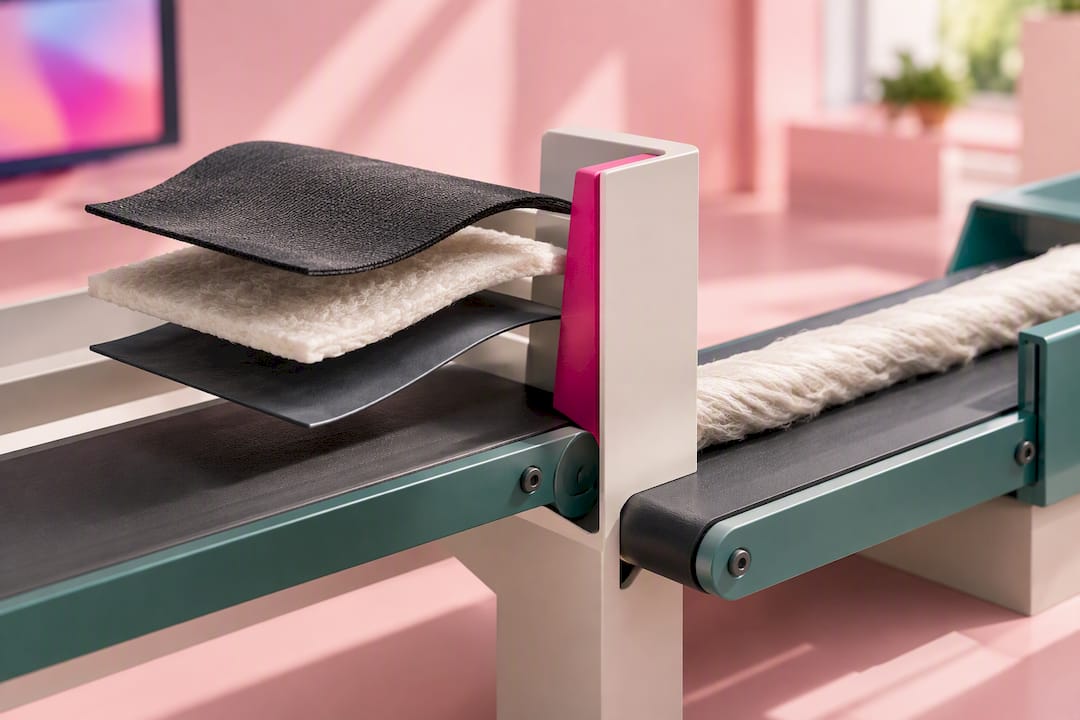
Most period underwear is built from multiple fabric layers bonded together for leak protection, and that construction is exactly what makes it hard to recycle. Textile recycling infrastructure generally handles single-material fabrics, not blended, multi-layer technical garments, so most worn-out pairs currently end up in landfill unless a specific take-back program exists.
That’s a bigger deal if the fabric contains PFAS, since landfilled or incinerated PFAS-containing textiles can continue releasing those persistent chemicals into soil, water, or air.
Until monomaterial designs and dedicated recycling streams become common, the best options are:
- Check whether the brand offers a take-back or repair program before tossing worn-out pairs
- Repurpose old underwear for non-menstrual uses (cleaning rags, garden ties) to squeeze out extra life
- Avoid burning or improperly disposing of any textile suspected of containing PFAS
How Do Different Brands and Styles Stack Up Environmentally?
Not all period underwear is built the same way, and that changes its footprint. A seamless, high-waist style with a thick multilayer core generally uses more material per pair than a thin liner-style brief, which raises its manufacturing footprint slightly but also tends to extend its usable lifespan through heavier flow days, balancing out over time.
Fabric choice matters more than most shoppers realize. Underwear made with a higher percentage of natural fiber (cotton, bamboo viscose blends) generally biodegrades further than fully synthetic options, though synthetic moisture-wicking layers often last longer before wearing out. Absorbency level plays a role too: a heavy-flow pair replaces more disposable products per cycle than a light-flow liner, which means it pays back its manufacturing footprint faster in real-world use.
Brand-level differences in chemical safety practices are arguably the biggest variable of all. Two pairs of period underwear can look nearly identical and still carry very different PFAS profiles, which is why published lab results matter more than marketing copy when comparing options. A brand that discloses testing data and specifies exactly which layers use which materials give you more to evaluate than one that simply claims to be “eco-friendly” without backing it up. Style and flow-match matter for comfort, but chemical transparency and durability claims are what actually separate a genuinely lower-impact product from one riding on green branding alone.
Does Shipping and Distribution Add to the Footprint?
Transportation is a real but generally smaller slice of a period product’s total footprint compared to manufacturing and use-phase energy. Still, it isn’t negligible. Textiles for period underwear often get manufactured in one country, assembled or finished in another, and then shipped to distribution warehouses before reaching a customer’s door, and each leg of that trip adds fuel emissions.
Packaging compounds the issue. A garment shipped in excess plastic wrap or oversized boxes carries a larger transportation and end-of-life burden than one shipped in minimal, right-sized packaging. Readers curious about what “sustainable packaging” actually requires, beyond marketing language, can find a clear breakdown in this explainer on eco-friendly packaging.
Buying in bulk cuts down on per-unit shipping impact, since a single shipment of several pairs spreads transportation emissions across more product than repeated single-item orders. Consolidating orders, choosing brands with regional warehouses, and avoiding rush shipping when it isn’t necessary are small but real levers. None of these outweigh the production and use-phase impacts covered earlier, but they stack on top of them, and every reduction counts toward the total lifecycle number.
What Ethical Issues Affect Sustainable Period Products?
Environmental impact and ethical production aren’t separate conversations. Cotton farming, the base material for most period underwear, has a documented history of labor concerns in some growing regions, including underpaid agricultural work and pesticide exposure for field workers. Choosing organic or certified cotton addresses the chemical side of that equation, but certification doesn’t automatically guarantee fair wages or safe working conditions further down the supply chain.
Garment assembly carries its own risks. Textile manufacturing, wherever it happens, has a track record of labor issues ranging from excessive hours to unsafe factory conditions. Brands that publish supply chain information, name their manufacturing partners, or hold third-party labor certifications give shoppers more to go on than brands that stay silent on the topic.
There’s also an access dimension to sustainability that gets overlooked. Reusable products require reliable water access, private space to wash and dry laundry, and often a higher upfront cost than a single box of pads. For someone without consistent access to a washing machine, a private bathroom, or the cash for an upfront purchase, disposables may remain the only realistic option regardless of their environmental cost. A genuinely sustainable shift in menstrual products has to account for that gap, not just push reuse as a universal fix. Ethical sourcing and equitable access are two sides of the same sustainability question, and neither one gets solved by fabric choice alone.
How Much Does Washing Frequency Change the Environmental Math?
Your habits move the numbers more than almost any other variable in this entire picture. Two people using the identical pair of period underwear can produce meaningfully different environmental outcomes based purely on how they wash, dry, and rotate their products.
Changing frequency matters less for underwear than for pads or tampons, since a well-designed pair is built to be worn for several hours before changing. But wash frequency compounds fast. Someone who tosses a single pair into the machine after every wear, using a half-empty load and a heated dryer cycle, generates far more use-phase emissions per year than someone who batches washing efficiently. Laundering choices like cold water, full loads, and line drying are widely considered the single most actionable lever consumers have over their reusable product’s footprint.
Rotation habits matter too. Owning enough pairs to avoid daily washing, then doing one efficient load every few days, tends to beat owning too few pairs and running the machine constantly. Overbuying carries its own cost, though: more pairs than you’ll realistically wear through before they wear out just shifts extra manufacturing footprint onto a wardrobe that never gets fully used. The sweet spot is enough pairs to wash efficiently, not so many that some sit unused in a drawer.
Sweeteebeauty’s Approach to Sustainability and Safety
Some brands build period underwear with leak-proof, multilayer construction using eco-friendly, reusable materials designed to cut down on single-use waste. Reusable products can cut single-use plastic waste from periods by 93 to 99 percent over a comparable stretch of disposable use, which is the core argument for choosing reusable underwear in the first place. Chemical transparency and durability both matter as much as the switch itself, and readers weighing a purchase should look for brands willing to publish testing information and clear care guidance alongside their sustainability claims.
— Tiera
Which Sweeteebeauty Collection Fits Your Flow and Your Values
A reusable pair of period underwear can replace dozens of single-use products over its working life, and multilayer, leak-proof construction aims to provide effective protection.
The lineup is built around how you actually bleed, not a one-size guess. Heavy Flow Protection carries the thickest absorbent core for the days disposables let you down. Moderate Flow Days and Light Flow Days scale the absorbency down without scaling down the leak protection, so you’re not overbuying material you don’t need. Teens get their own fit and sizing in the For Teens line, and postpartum bleeding, which behaves nothing like a regular cycle, has a dedicated Postpartum Care collection built for that specific recovery window. Readers who want the style upgrade alongside the function can check the Rosey Inner Wear Collection.
Many styles aim to use multilayer, irritation-free construction intended to last through repeated washing without breaking down early, as durability affects environmental impact. Start by browsing the full period underwear collection and matching a style to your flow before you check out.
This article is general information, not a substitute for advice from a qualified doctor. Consult a qualified healthcare professional about your own circumstances before acting on anything here.
Sources
- Menstrual products: A comparable Life Cycle Assessment
- Environmental impact of menstrual hygiene products - PMC
- PFAS testing and expert commentary (University of Notre Dame / related reporting)
FAQ
Are There Harmful Chemicals in Period Underwear?
Some period underwear tested positive for PFAS in 2025 lab testing, and these chemicals persist in the environment and can leach out during washing. Not all brands contain PFAS, so look for products with explicit PFAS-free certification or published test results.
Do Gynecologists Recommend Period Underwear?
Many gynecologists consider period underwear a reasonable option for light to moderate flow days, postpartum recovery, and as backup protection alongside other products. It’s not universally prescribed over other methods, but it’s widely recognized as a low-irritation, reusable alternative for people sensitive to synthetic pad materials.
Do Menstrual Cups Release Microplastics?
Silicone menstrual cups are generally considered a low microplastic risk since medical-grade silicone doesn’t shed fibers the way synthetic textiles can. Cups still rank as the lowest-impact option overall in life-cycle assessments, though any product with plastic components carries some degree of theoretical shedding risk over years of use.
What Are the Most Environmentally Friendly Menstrual Products?
Menstrual cups generally rank lowest in lifecycle impact, with period underwear and reusable cloth pads close behind, according to peer-reviewed LCA research. Disposable pads and tampons rank highest across most environmental categories, driven by plastic content and landfill volume, so switching to any well-cared-for reusable option is a meaningful upgrade.
How Many Times Can You Reuse Period Underwear Before Replacing It?
Well-cared-for period underwear typically lasts two to five years depending on fabric quality and washing habits. Cold washing and air drying, rather than hot water and machine drying, are the biggest factors in getting the longer end of that range.


