
Backpacking on Your Period: A Practical Trail Guide

Yes, you can backpack on your period, and it doesn’t have to derail a single mile of your trip. Preparation is what makes the difference: the right product, a compact go-kit, and a plan for waste disposal. Your three realistic options are a menstrual cup, tampons or pads, and period underwear, and most experienced backpackers land on one of these or a combination of two.
- Menstrual cup: fewer changes, longer wear time, less trash to pack out
- Tampons or pads: familiar, widely available, but generate waste you must carry
- Period underwear: reusable, comfortable as a backup or standalone layer for lighter days
Pro Tip: Test any new product through two or three cycles at home before you rely on it miles from a trailhead. One rule that applies no matter which option you pick: pack out everything that doesn’t belong in the backcountry, following Leave No Trace guidance for the outdoors.
Key Takeaways
Backpacking on your period is manageable when you pair a tested product with a pack-out plan built around Leave No Trace principles.
| Point | Details |
|---|---|
| Pick a tested method | Choose a cup, tampon, pad, or period underwear you’ve already used through two or three cycles at home. |
| Respect wear-time limits | Tampons max out around 8 hours; cups can typically go up to 12 hours per manufacturer guidance. |
| Pack out everything | Non-biodegradable items like tampons, applicators, and wipes must leave the trail with you. |
| Plan for cycle shifts | Travel stress and altitude can change timing, so pack backup supplies even on off-cycle trips. |
| Reusable underwear cuts waste | Sweeteebeauty’s leak-proof period underwear, worn in a three-pair rotation, eliminates trail trash entirely. |
Table of Contents
- Menstrual Cup, Tampons, or Period Underwear: Which Works Best on Trail?
- What Should Go in Your Period Go-Kit?
- How Do You Handle Period Waste and Hygiene in the Backcountry?
- How Do You Manage Cramps and Swimming on Trail?
- When Period Underwear Is Your Best Trail Option
- Adjusting Your Period Strategy for Climate and Altitude
- What If Your Period Starts Early or Your Cycle Is Irregular?
- Staying Hydrated and Fueled While Menstruating on Trail
- The Real Problem Isn’t Your Period, It’s Bad Planning
- Ready for Trail-Tested Period Underwear?
- Sources
Menstrual Cup, Tampons, or Period Underwear: Which Works Best on Trail?
Each method handles differently once you’re away from running water and private bathrooms, so the “best” one depends on your trip length, water access, and how your body already tolerates each product.
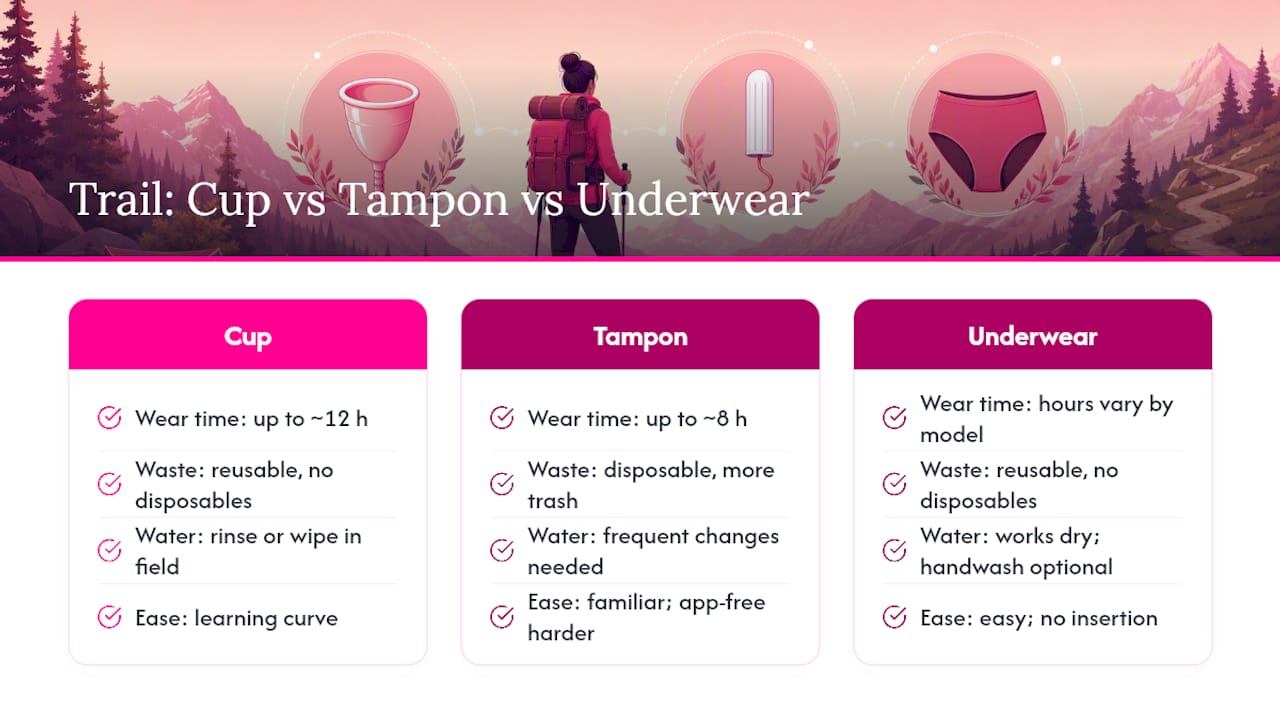
A menstrual cup is popular with multi-day backpackers because manufacturers commonly rate it for up to about 12 hours of wear, meaning you might only need to empty it once during a full hiking day. Emptying it in the field means rinsing with filtered or treated water when it’s available, or wiping it clean with toilet paper or a wet wipe and doing a full rinse back at camp. The tradeoff is a learning curve. If you’ve never used one, a remote trail is the wrong place to figure out insertion and removal for the first time.
Tampons and pads remain the most familiar option, but they come with a firm safety limit: don’t leave a tampon in longer than about 8 hours because of toxic shock syndrome risk. That means more frequent changes and more waste to carry. Applicator-free tampons take up less pack space and generate less trash, though some people find them harder to insert without practice. Pads require less precision but don’t work well for swimming and add bulk to your pack.
Period underwear solves the disposal problem entirely since there’s nothing to throw away. Reusable underwear with layered absorbency works well on lighter flow days, as a backup layer under a cup, or as your primary method if you’re comfortable hand washing on trail. Combine it with a cup or tampon on your heaviest days for extra security.
Whatever you choose, wear it under real trail conditions (sweat, movement, temperature swings) before your trip. A product that performs fine around the house can behave differently on a 12 mile day.
What Should Go in Your Period Go-Kit?
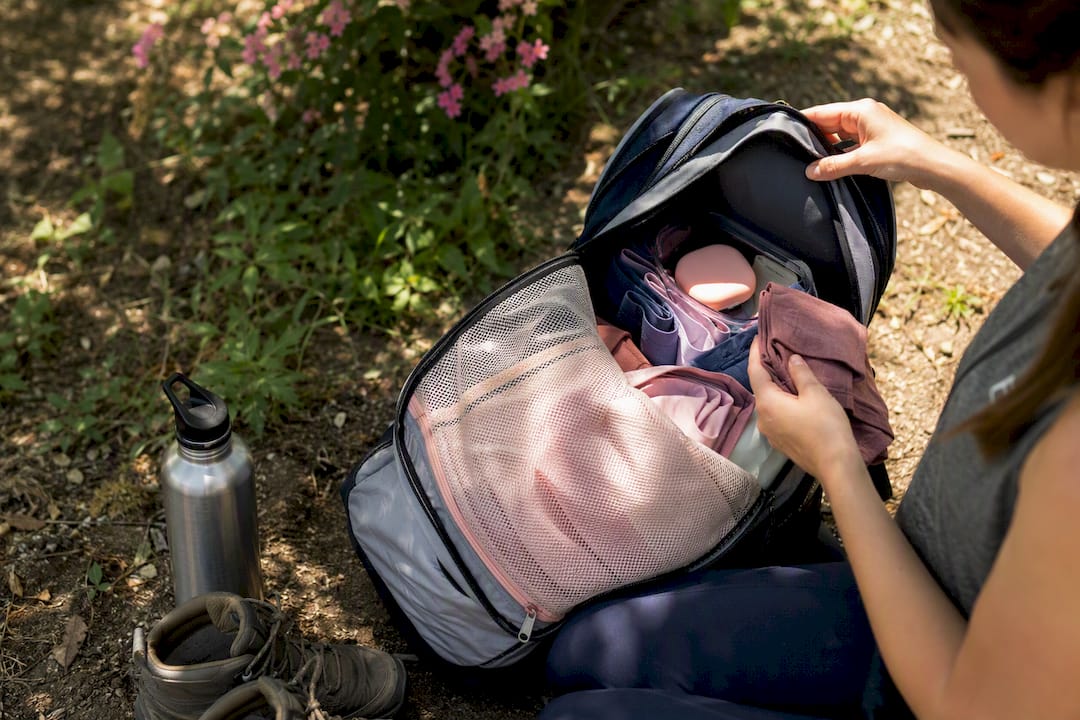
A dedicated pouch keeps your supplies organized and easy to grab without digging through your whole pack. Build it around these categories:
- Clean supplies: enough cups, tampons, pads, or period underwear for your trip length plus two extra days
- Waste bags: dedicated opaque or smell-proof bags separate from your regular trash bag
- Hand sanitizer and biodegradable soap: for hygiene before and after handling products
- Wipes: unscented, for quick cleanup when water isn’t accessible
- Disposable gloves: optional, but useful in cold or high-altitude conditions when you want to keep hands clean
- Spare underwear: at least one extra pair beyond what you’re wearing
- Pain relief: ibuprofen or naproxen, whatever you already know works for you
- A small heat source: a wide-mouth water bottle you can fill with hot water works as a makeshift heating pad
For storage, a simple system works better than anything elaborate: a quart bag for clean supplies, a separate gallon bag lined with a smell-proof liner for used items. Dropping a used tea bag or a small packet of coffee grounds into the waste bag cuts down on odor noticeably over a multi-day trip.
On weight versus convenience: disposables are lighter per unit but accumulate as trash you’re carrying out anyway, while period underwear weighs more upfront but produces zero trail waste. If you’re going the reusable route for more than a couple of days, pack at least three pairs, since you’ll always have one in use, one clean, and one drying.
How Do You Handle Period Waste and Hygiene in the Backcountry?
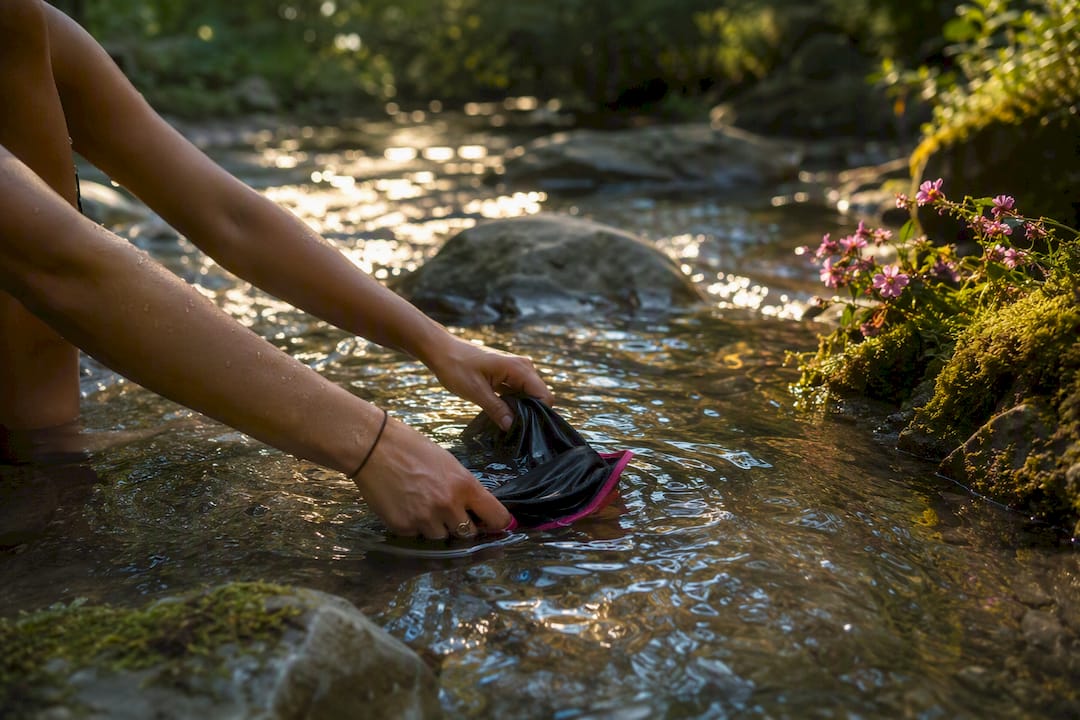
Leave No Trace principles apply directly to menstrual care, and the organization publishes specific guidance for it: pack out every non-biodegradable item, including tampons, applicators, and used wipes, since they don’t break down the way natural waste does and burying them doesn’t solve the problem. Wash reusable products at least 200 feet from any water source and use only biodegradable soap, exactly the same distancing rule Leave No Trace applies to dishwashing and bathing.
Cleaning a menstrual cup in the field usually means a quick rinse with filtered or treated water, or a wipe with toilet paper if water isn’t nearby, followed by a more thorough wash once you’re back at camp with your cook water or a dedicated hygiene bottle. Boiling the cup for a deeper clean is worth doing when you have the fuel and time, but it’s not required every single day.
Hand hygiene matters more on trail than most people expect, since you’re touching gear, food, and your face constantly. Wash with soap and water when you have access to it; use sanitizer as the backup, not the default.
- Pack out tampons, applicators, pads, and wipes, no exceptions
- Wash at least 200 feet from streams, lakes, or trails
- Rinse or wipe your cup between changes; deep clean at camp
- Respect the 8 hour tampon limit and roughly 12 hour cup limit
- Sanitize hands before and after every product change
One myth worth putting to rest: research on black bear behavior has found no evidence that menstrual blood attracts bears. Pack out your waste for sanitation and Leave No Trace reasons, not because of a wildlife risk that doesn’t hold up.
How Do You Manage Cramps and Swimming on Trail?
Cramps don’t pause for elevation gain, but a few trail-adapted tactics help more than people expect. A wide-mouth water bottle filled with hot water and wrapped in a shirt or sock works as an improvised heating pad, often more comfortably than a bulky insulated bottle since the thinner walls transfer heat faster. Over-the-counter NSAIDs like ibuprofen remain the standard first-line option for menstrual pain, though anyone with kidney issues or on blood thinners should check with a doctor before relying on them daily. A portable heat and massage device like NuFemme can be worth the extra few ounces if cramps regularly slow you down.
- Fill a water bottle with hot water for a makeshift heating pad
- Take NSAIDs early, before pain peaks, rather than after
- Track your cycle with an app before departure to anticipate timing
- Pack two extra days of supplies in case travel shifts your cycle
Travel stress, altitude, and disrupted sleep can genuinely shift when your period arrives or how heavy it runs. Time zone changes and irregular sleep are common culprits, and cycles typically settle back to normal within a month or two once you’re home.
Pro Tip: Swimming during your period is safe, and a tampon or cup works fine in the water. Just swap it out once you’re back on dry land, since a wet product loses some of its effectiveness.
When Period Underwear Is Your Best Trail Option
Reusable period underwear earns its place in a backpacking kit because it removes the waste problem entirely while still handling real flow. Sweeteebeauty builds its underwear with a multilayer, leak-proof design available across light, moderate, heavy, and postpartum absorbency levels, which means you can match the product to your actual flow instead of over-relying on a single method.
For multi-day trips, rotate at least three pairs: one in use, one clean, one drying. Moisture-wicking synthetic fabrics dry faster overnight than cotton, which matters when you’re hanging a pair from your pack in humid conditions. On heavier days, pair the underwear with a cup or tampon as backup rather than asking it to work alone.
The most trail-tested strategy isn’t picking one perfect product. It’s layering a reliable primary method with a reusable backup that never runs out and never needs to be packed out as trash.
Adjusting Your Period Strategy for Climate and Altitude
Cold, wet, and high-altitude conditions each change how you manage your period on trail, and the strategy that worked on a summer trip won’t automatically transfer to a winter one.
In cold weather, wipes and hand sanitizer can freeze, so keep a small bottle in an inner pocket close to body heat. Cups become harder to clean when your water source is icy, so lean on wipe-and-carry-on methods more and save full washes for inside a warm tent or shelter. Altitude itself doesn’t change your period biologically, but the dehydration and appetite suppression that often come with high elevation can intensify cramps and fatigue, so treat hydration as part of your period management plan, not a separate concern.
In hot, humid climates, moisture becomes the bigger issue. Period underwear and pads sit against skin longer in sweaty conditions, raising the chance of irritation, so more frequent changes and a moisture-wicking fabric matter more than in cooler weather. Desert conditions bring the opposite problem: low humidity dries out wipes and can make cup insertion less comfortable, so a small vial of water-based lubricant is worth the extra weight.
Whatever the environment, the same principle holds: your go-kit contents should shift slightly by season, not just by trip length. A winter kit needs insulation for liquids and gloves for cold-hand changes; a summer kit needs more frequent underwear rotation and extra water for washing.
What If Your Period Starts Early or Your Cycle Is Irregular?
Unpredictable cycles are common enough on trail that experienced backpackers plan for the possibility even when they don’t expect their period during the trip window. Pack a small emergency supply, a couple of tampons or a spare pair of period underwear, in your first aid kit even on trips where your period isn’t due, since travel stress and altitude can shift timing earlier or later than usual.
Cycle-tracking apps like Clue help you spot patterns before you leave, and checking in on your predicted window a week before departure gives you time to pack accordingly rather than improvising at the trailhead. If your period does start unexpectedly and you didn’t pack full supplies, a bandana or spare sock folded into a makeshift pad can get you through until you reach your full kit or a resupply point. It’s not comfortable, but it works for a few hours.
Irregular cycles that run consistently unpredictable are worth discussing with a doctor outside of trip planning, since chronic irregularity sometimes points to something beyond travel stress. For trip purposes, the practical fix is redundancy: never let your full supply live in only one place in your pack, and always carry at least one backup product in an easily accessible pocket, not buried at the bottom of your bag.
Staying Hydrated and Fueled While Menstruating on Trail
Menstruation increases your body’s demand for fluids and certain nutrients right when trail conditions are already testing your hydration habits, so this is one area where cutting corners costs you more than usual.
Blood loss during your period can contribute to lower iron levels, and combined with the physical demand of hiking with a loaded pack, that can mean more fatigue than you’d otherwise feel on the same trail. Iron-rich trail foods like dried lentils, jerky, and dark chocolate help offset that, while foods high in electrolytes (not just water) matter more during menstruation since cramping and bloating are partly tied to fluid balance.
Aim to drink consistently rather than in large infrequent gulps, and add an electrolyte mix to at least one bottle a day rather than relying on water alone. Caffeine and alcohol both worsen dehydration and can intensify cramps, so if you’d normally have trail coffee, balance it with extra water rather than cutting it out entirely. Craving salty or sugary snacks during your period is normal and tied to hormonal shifts, so don’t fight it. Pack trail mix with a mix of salty and sweet components rather than forcing a purely “healthy” snack rotation that you’ll abandon by day two.
The Real Problem Isn’t Your Period, It’s Bad Planning
Most advice about backpacking on your period focuses obsessively on which product is “best,” as if there’s a universal winner. There isn’t. The research actually supports a more useful conclusion: the method that works is the one you’ve already practiced, paired with a waste system you’ve thought through before you’re standing at a trailhead figuring it out.
Where conventional advice falls short is in treating this as a one-time product decision instead of a system. A cup is only as good as your plan for cleaning it in the cold. Tampons are only convenient if you’ve actually built a pack-out habit instead of hoping you’ll figure it out. Reusable underwear only earns its space in your pack if you’ve rotated enough pairs to keep up with a multi-day trip.
If you take one thing from this guide, prioritize testing over shopping. Buy the product weeks before your trip, wear it on a local day hike, wash it the way you’ll wash it in the backcountry. The gear matters less than the rehearsal.
— Tiera
Ready for Trail-Tested Period Underwear?
Sweeteebeauty’s multilayer, leak-proof design means one less product to pack out and one less thing to worry about at mile eight. The absorbency range, from light to heavy flow to postpartum, means you can match your underwear to the actual trip instead of guessing.
For a weekend trip, two pairs usually cover you; for anything longer than three days, pack three so you always have one clean, one in use, and one drying. Browse the period underwear collection to build your trail rotation, or check the heavy flow protection line if your heaviest days need extra backup. Start with one pair, test it on a local hike, and see how it holds up before your next trip.
Sources
- Summer travel & your period: how to manage cycle changes (Clue)
- Backpacking With Your Period (REI Expert Advice)
- A Period Guide for the Outdoors (Leave No Trace)
- Toxic shock syndrome and menstrual product guidance (NCBI/PMC)
- Reactions of black bears to human menstrual odors (BearStudy)
Recommended
- What to Pack in Your Period Kit — The Complete List | SweeTee Beauty | SweeTee Beauty
- Best Period Underwear for Teens: A Parent’s Guide | SweeTee Beauty | SweeTee Beauty
- How Period Underwear Works | The SweeTee Journal | SweeTee Beauty
- How to Wash Period Underwear & Make It Last | SweeTee Beauty | SweeTee Beauty


