
Cut Drying Time in Half: Travel Laundry Gear for Backpackers

For most trips, a sink wash with detergent sheets plus towel-roll drying is the fastest, lightest travel laundry solution you’ll find. Save the laundromat for heavy loads or a cold, humid stretch where nothing dries. Pack a Scrubba or basic wash bag if sinks are shared, scarce, or off-limits. Drying is the real bottleneck, not washing, so plan airflow before you plan soap.
TL;DR:
- Hand-washing in sinks or tubs is quick and effective for lightweight fabrics like merino wool and synthetics, but heavy or structured items dry slowly.
- Lightweight gear like detergent sheets, a portable wash bag, microfiber towel, and a travel clothesline turn travel laundry into a simple five-minute routine.
- Laundromats are best for heavy loads and humid climates, while hotel laundry is expensive but useful for pressing clothes before events.
- Efficient drying tactics, like rolling clothes in a towel and hanging near airflow, can cut drying time from hours to just overnight.
- Packing minimal clothing, with odor-resistant and fast-drying fabrics, reduces laundry needs and streamlines travel.
Table of Contents
- Quick Picks: What to Use When
- How Do You Hand-Wash Clothes in a Sink or Tub?
- Which Portable Wash Tools Should You Pack?
- Are Laundromats or Hotel Laundry Worth the Cost?
- What’s the Fastest Way to Dry Clothes While Traveling?
- How Should You Pack to Minimize Laundry Needs?
- What Safety and Policy Rules Should You Know?
- How Do You Wash Period Underwear and Delicates on the Road?
- Three Real Tradeoffs I Make on Every Trip
- How Sweeteebeauty Makes Travel Laundry Simpler
- Sources
Quick Picks: What to Use When
You don’t need to research this every time you check into a new place. Match the method to the trip, and move on.
- Backpacking or zero-equipment situations: a wash bag or a pack of detergent sheets, combined with the towel-roll drying method, handles almost everything. No sink required, no plumbing risk, no waiting around.
- Longer stays or heavy loads (think two weeks of jeans, towels, or hiking layers): a laundromat or a drop-off wash-and-fold service beats hand-washing on time and effort. You’re not going to scrub denim clean in a hotel sink no matter how motivated you are.
- Business trips or anything that needs to look pressed: hotel laundry or an express service is worth the markup. You’re paying for someone else’s iron and their dry cleaning press, not just clean fabric.
- Delicates and period underwear: hand-wash with a mild detergent and skip the dryer entirely. High heat breaks down the leak-proof layers in period underwear faster than almost anything else you own, so this category gets its own routine regardless of which method handles the rest of your laundry.
Most long-term travelers end up running a hybrid system rather than picking one lane. A nightly sink wash for base layers, a laundromat run once a week for heavier items, and hotel or dry-clean service only when something needs to be pressed. That mix keeps your load light without turning every hotel stay into a chore.
How Do You Hand-Wash Clothes in a Sink or Tub?
Before you fill a single sink, check your hotel’s policy. Some properties actively discourage in-room laundering because of water use, humidity damage to walls and fixtures, slip hazards, and the extra work it creates for housekeeping. A quick question at check-in saves you an awkward conversation later.
Once you’ve got the green light, here’s the sequence that works:
- Set up your space. Insert a universal drain stopper (hotel plugs are notoriously unreliable or missing entirely) and lay a towel on the floor to catch drips.
- Add water and detergent. Fill the sink or tub with lukewarm water and add a small dose: one detergent sheet, a capful of concentrated liquid, or a few swipes of a travel bar.
- Soak. Submerge the garments and let them sit for 5 to 10 minutes. This loosens dirt and sweat without you having to scrub hard.
- Scrub. Focus 2 to 3 minutes of attention on collars, underarms, and any visible stains, using a washcloth or a soft brush.
- Drain and rinse. Pull the plug, refill with clean water, and agitate the clothes until the water runs clear. Repeat once if you still see suds.
- Wring gently. Twist lightly to remove excess water, but don’t wring hard enough to stretch the fabric.
- Towel-roll. Lay the item flat on a dry towel, roll it up, and press firmly. This step removes far more water than wringing alone and can cut your drying time roughly in half.
Handwashing itself only takes 20 to 30 minutes of active effort per batch, though the drying phase afterward can stretch into several hours, which is why timing your wash around your schedule matters more than the wash itself.
Merino wool, synthetics, thin cotton, and underwear all hold up well in a sink. Heavy denim, structured pieces with padding or wire, and anything with a lot of hardware don’t belong here. They soak up water like a sponge and take forever to dry, and you risk warping the structure.
Pro Tip: Never use the hotel’s white towels as your wringing towel unless you’re prepared to pay for a replacement if it stains. Pack a dedicated microfiber towel just for laundry duty, and keep it separate from the one you dry your body with.
Which Portable Wash Tools Should You Pack?
The right gear turns laundry from a dreaded chore into a five-minute task you barely think about. Here’s what actually earns its space in your pack, and what each tool is really for.
- Scrubba or a similar wash bag: this is essentially a portable washing machine you can compress flat. It has an internal ridged panel that agitates fabric when you rub the bag, and it gives a wash quality close to a machine for small loads in just a few minutes, which makes it the best option when sinks are shared, dirty, or nonexistent, like on a multi-day trek.
- Detergent sheets: pre-dosed, dissolve instantly in cold water, and weigh almost nothing. They’re also TSA-friendly since they’re not classified as a liquid, which matters if you’re flying carry-on only.
- Detergent bars and concentrated liquids: bars last longer per ounce and never leak, but they’re slower to dissolve in cold water. Small liquid bottles work well too, as long as you keep them under the TSA’s 3.4 ounce liquids limit.
- Universal drain stopper: a rubber disc that fits almost any sink or tub drain, solving the missing or broken plug problem you’ll hit constantly in older hotels and hostels.
- Travel clothesline: a twisted or suction-cup line that doesn’t need clothespins because you thread the fabric through the twist. Packs down to the size of a golf ball.
- Hangers and a microfiber towel: hangers let you use shower rods and curtain rails as makeshift drying racks, while a compact microfiber towel dries faster than cotton and doubles as your wringing towel.
- Portable mini washing machine: a small electric or manual drum that handles a few days’ worth of clothes without a sink at all. These add real weight and bulk, roughly the size of a large water bottle for the compact models, so they make sense mainly for long-term travelers, van life, or anyone doing laundry often enough that the convenience outweighs the extra pack space.
Packing checklist for your travel laundry kit: drain stopper, detergent sheets or a small bar, a compact wash bag, a travel clothesline, a microfiber towel, and 2 to 3 lightweight hangers. Knowing how to handle laundry on the road lets you pack fewer clothes overall, since you’re not relying on a full week of outfits to get you through a week of travel.
Are Laundromats or Hotel Laundry Worth the Cost?
Sometimes you just need someone else to handle it. Knowing the real cost and time tradeoffs helps you decide when that’s worth paying for.
- Laundromats work best for jeans, towels, bedding, or any load too heavy for a sink, and they’re the right call in cold or humid climates where nothing air-dries fast.
- Drop-off wash-and-fold services save you the machine-watching time, but ask about their dryer settings. High heat is convenient for them and rough on delicates, elastic waistbands, and anything with a leak-proof lining.
- Hotel laundry is the most expensive per item, but it’s the right tool when you need something pressed for a meeting or event and don’t have time to deal with it yourself.
- Finding a laundromat or drop-off shop usually just takes a maps search for “laundromat near me” or “wash and fold,” or a quick question at the front desk, since staff almost always know the closest option.
| Method | Typical cost | Typical turnaround |
|---|---|---|
| Laundromat (self-serve wash and dry) | $3.50 to $9.00 per load | about 1 hour |
| Drop-off wash and fold | Higher than self-serve, priced per pound | Same day to next day |
| Hotel laundry service | Significantly more per item than a laundromat load | Often 24 hours |
| Hotel express service | Premium pricing | Same day |
The math is simple once you see it laid out: a laundromat load costs less than a single hotel-laundered shirt in most cases. Save the hotel option for when time, not money, is the constraint.
What’s the Fastest Way to Dry Clothes While Traveling?
Washing clothes on the road is easy. Drying them before you need to pack up and leave is the actual challenge, and it’s the step most travelers get wrong.
- Towel-roll first, always. Roll the garment tightly in a dry towel and press hard before you hang anything. This single step can shave one to three hours off total drying time compared to still-air hanging alone.
- Hang where air actually moves. A shower rod works, but a spot near an open window, a fan, or an AC vent dries clothes noticeably faster than a still bathroom corner.
- Fabric choice changes everything. Merino wool and thin synthetics often dry overnight; heavy cotton and denim can take a full day or more even with good airflow.
- Use a travel clothesline with spacing. Overlapping items on a line traps moisture between them. Give each piece breathing room.
- Quick hacks for a time crunch: point a hairdryer on cool or low heat at damp spots, hang items in a steamy bathroom right after a hot shower to loosen wrinkles, or run a short spin cycle in a portable mini washer if you have one.
Pro Tip: If you’re drying in a shared hostel bathroom, hang your line low and out of the walking path. Wet floors from drip-dry clothes are one of the most common reasons properties start banning in-room laundry altogether.
How Should You Pack to Minimize Laundry Needs?
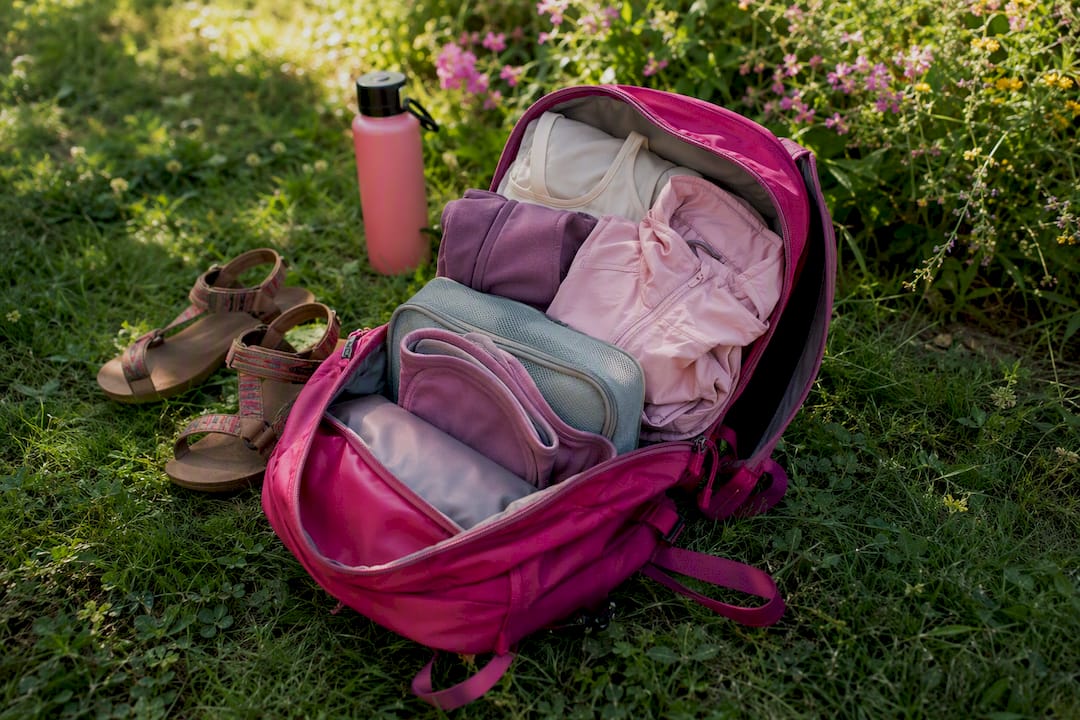
The less you pack, the less you have to wash, which sounds obvious until you actually try to build a one-bag wardrobe that holds up.
A workable baseline for most trips: 5 to 7 pairs of underwear, 4 to 5 pairs of socks, 3 to 4 tops, 2 bottoms, and one outer layer. That’s enough to go roughly a week between washes if you’re rotating and rewearing outer layers.
- Merino wool resists odor far longer than cotton, so you can wear it two or three times before it needs a wash.
- Synthetics dry fast, often overnight, which matters more than almost any other fabric property when you’re moving between cities every few days.
- Layering reduces wash frequency since your base layer takes the sweat and your outer layer stays cleaner longer.
- Separate dirty from clean with a dedicated dirty-laundry bag, and keep a small wet bag for anything still damp when you need to pack up and move.
What Safety and Policy Rules Should You Know?
A few rules protect both your clothes and your relationship with wherever you’re staying.
- Always check your property’s laundry policy before you fill a sink. Some hotels and hostels restrict in-room washing specifically because of water damage claims and slip-and-fall risk.
- The TSA’s 3-1-1 liquids rule caps carry-on liquids at 3.4 ounces (100 ml) per container, which is exactly why detergent sheets have become the default carry-on choice. They’re solid, not liquid, so they skip the restriction entirely.
- Drip-dry items over a towel-lined surface, never directly onto carpet or hardwood.
- If you’re camping or off-grid, use biodegradable soap and dump gray water away from streams and water sources.
Fragrance-free detergent isn’t just a personal preference in shared hostel dorms. Unscented strips reduce the odds of bothering roommates with sensitivities, and it’s a small courtesy that costs you nothing.
How Do You Wash Period Underwear and Delicates on the Road?
Delicates need their own routine, separate from the rest of your laundry rotation, and period underwear tops that list. The multilayer leak-proof construction that makes SweeTee’s underwear reliable is also the reason it needs gentler handling than a cotton t-shirt.
- Hand-wash in cool or lukewarm water with a mild, fragrance-free detergent. Skip the hot water; it breaks down the absorbent layers faster.
- Soak for 5 minutes, gently agitate, then rinse until the water runs clear.
- Skip the dryer entirely. High heat is the single fastest way to shorten the lifespan of leak-proof fabric. Air-dry flat or use the towel-roll method to speed things up without heat.
- A portable mini washing machine works well here too, on a gentle or hand-wash setting, if you’re washing more than one pair at once.
- Store damp pairs in a separate wet bag until they’re fully dry, especially in a shared dorm or bathroom where space is tight.
For a full breakdown of fabric care and product-specific recommendations, Sweeteebeauty’s guidance on how to wash period underwear covers the details worth knowing before your first trip with them.
Three Real Tradeoffs I Make on Every Trip
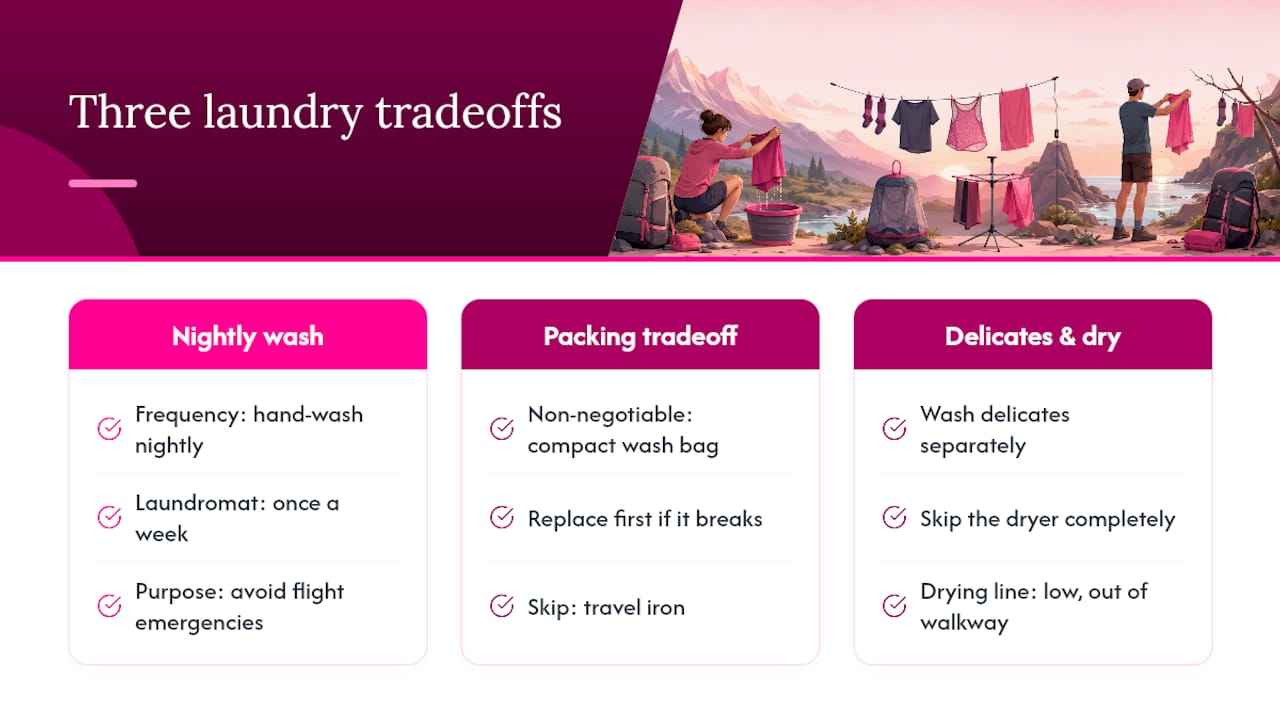
I hand-wash almost every night and save the laundromat for once a week, usually when jeans or a towel pile up. It’s less about saving money and more about never having a laundry emergency the night before an early flight.
My one non-negotiable item is a compact wash bag. It’s the thing I’d replace first if it broke. What I skip: a travel iron.
For delicates, I always wash them separately and skip the dryer completely, and in shared hostel bathrooms, I keep my drying line low and out of the walkway. Nobody wants to duck under someone else’s underwear to brush their teeth.
— Tiera
How Sweeteebeauty Makes Travel Laundry Simpler
Sweeteebeauty’s leak-proof period underwear cuts down on how often you need to wash or change anything mid-trip, which matters a lot when you’re relying on a hostel sink or a once-a-week laundromat run instead of a machine at home. The multilayer design holds up through a full day without leaks, so you’re not stuck hand-washing a backup pair in a rush between buses.
For travelers who want a compact solution for delicates without hunting for a working sink, a portable mini washing machine handles gentle loads in minutes and packs down small enough to justify the space. Pair it with a set of heavy flow period underwear built for long travel days, or browse the full period underwear collection to find the absorbency level that matches your trip. Shop the current styles and start packing lighter on your next trip.
Sources
- TSA — liquids, aerosols and gels rule
- How to wash clothes while traveling: the sink method, soap formats, and drying tricks | Kit Authority
- How to Do Laundry on Vacation: Easy Travel Laundry Tips | TravelPro


