
Pack 5–7 Pairs for a Week: Travel Tested Period Underwear Tips

Pack several pairs for most trips: mix overnight or heavy pairs, moderate pairs, and light pairs as backup, along with a wetbag and a small bottle of travel detergent. That mix covers flow changes, laundry delays, and the drying time that trips up most first-timers, according to Good Housekeeping’s testing and travel-worn advice from Sweeteebeauty’s own team.
TL;DR:
- Packing multiple pairs of varying absorbency levels, especially heavy or overnight ones, is essential for trips longer than two days or when laundry access is limited.
- High-waist, seamless styles dry faster and perform better during active travel, with at least one heavy or overnight pair recommended for unpredictable days.
- Using a wetbag for storing worn pairs after rinsing and drying them with a towel-roll method significantly reduces odor and drying time in humid conditions.
- Supplement period underwear with backup products like tampons or pads during swimming, remote travel, or long flights when sink washing isn’t feasible.
- Properly organizing fresh and used pairs in your luggage and managing slow drying in humidity with fans or air conditioning helps maintain hygiene and prevents odor buildup.
Table of Contents
- How Many Pairs of Period Underwear to Pack for Travel
- Which Absorbency and Style Work Best for Travel?
- Packing, Storage, and Odor Control on the Road
- Washing and Drying Period Underwear While Traveling
- When to Pair Period Underwear with Backup Products
- Quick Packing Checklist You Can Screenshot
- Fixing Common Travel Problems Fast
- Why Fabric Construction Shapes Your Travel Routine
- A Traveler’s Short Notes From the Road
- How Sweeteebeauty Fits Into This Packing System
- Sources
How Many Pairs of Period Underwear to Pack for Travel
The number that actually matters isn’t your trip length. It’s your access to a sink and a place to hang things dry. A three-day weekend with a hotel bathroom needs far less than a week of hostel-hopping with shared laundry on a schedule.
Here’s a realistic breakdown by trip type:
- Day trip: a few pairs (one worn, one spare in your bag).
- Weekend (2 to 3 days): several pairs, mixing moderate and heavy absorbency.
- Week-long trip: multiple pairs if you plan to wash regularly, more if laundry access is uncertain.
- Backpacking or remote travel: several pairs minimum, weighted toward moderate and heavy absorbency since sink washing isn’t always possible daily.
The stretch rule: add one extra pair for every leg of travel where you won’t have laundry access for more than 48 hours. Drying time is the real bottleneck here, not how many periods you’ll actually have. First-person travel reports consistently flag slow drying as the biggest constraint on reusable underwear, especially in humid climates where a pair can take over a day to fully dry.
If you’re unsure how many pairs fit your specific routine, Sweeteebeauty’s guide on how many pairs of period underwear you need breaks it down by lifestyle rather than just trip length, which is a better starting point for heavier or unpredictable flows.
Which Absorbency and Style Work Best for Travel?
Absorbency isn’t one-size-fits-all, and packing only one level is the most common travel mistake. Think of it in three practical tiers: light (spotting, end of cycle), moderate (regular daytime flow), and heavy or overnight (your first two days, long flights, or anywhere you can’t check a bathroom for hours).
Good Housekeeping’s testing found that matching absorbency to your itinerary matters more than brand loyalty, and that fit should feel like your regular underwear, not like a medical product. That’s a useful filter when you’re deciding what to throw in your suitcase.
For travel specifically:
- Seamless, high-waist cuts dry faster than bulky briefs because there’s less fabric layered at the seams.
- Boyshort or hipster styles hold up better during active days (hiking, sightseeing, long walks) since they move less.
- Pack at least one heavy or overnight pair even if your flow is usually light. Long-haul flights, delayed layovers, and unpredictable travel-day stress can shift your cycle without warning.
A mix of two absorbency levels beats packing six of the same style. It gives you flexibility without adding bulk, and it means you’re not stuck wearing an overnight pair for a two-hour museum visit when a light one would’ve been more comfortable.
Packing, Storage, and Odor Control on the Road
Clean and dirty need to stay separate, and that separation is what actually keeps your suitcase from smelling like a locker room by day four. Pack two small items specifically for this: a zip pouch for fresh, unworn pairs, and a wetbag for anything you’ve already worn.
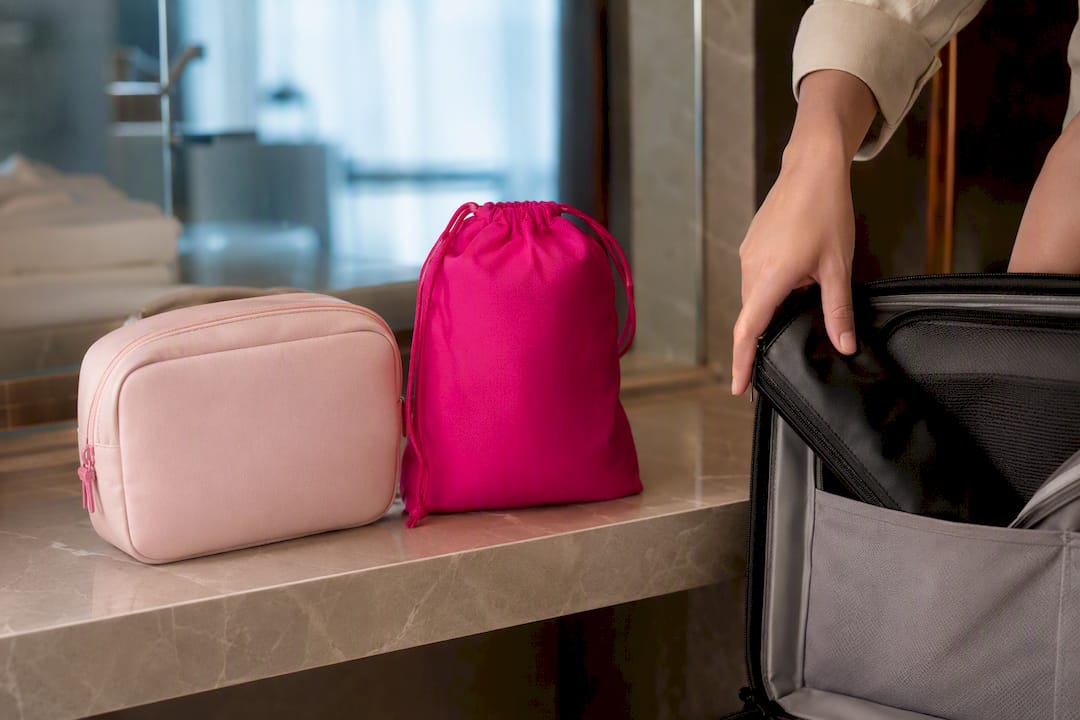
Before a used pair goes into the wetbag, rinse it in cold water until the water runs mostly clear, then wring it out. Sealing a soaked, unrinsed pair into a bag is how odor builds and stains set. Travelers on forums like Reddit’s period underwear community repeatedly point to a wetbag as the single easiest fix for managing this on the go, and it’s genuinely one of the cheapest items in your bag.
Where to actually store the wetbag depends on the setting:
- On a plane: in your seatback pocket or a side pocket of your carry-on, not your main compartment, so it’s grabbable without unpacking everything.
- On a bus or train: zipped into an outer bag pocket, away from snacks or electronics.
- In a hostel or shared room: inside your luggage, zipped shut, rather than left open on a shelf.
Pro Tip: Line the inside of your wetbag with a folded paper towel before you leave home. It absorbs excess moisture on the first rinse-and-seal and cuts down on smell until you can do a proper wash.
Public sink etiquette matters too. Rinse quickly, keep the water low, and avoid wringing directly over a sink other travelers will use next.
Washing and Drying Period Underwear While Traveling
Washing on the road doesn’t need a machine. A sink, a travel-size detergent, and five minutes will do the job in most situations.
- Rinse in cold water immediately after wearing, working the fabric gently until the water clears.
- Add a small amount of gentle, fragrance-free detergent and work it through the absorbent layers for about 30 seconds.
- Rinse again until no suds remain.
- Wring using the towel-roll method: lay the damp pair inside a microfiber travel towel, roll it up, and press firmly. This pulls moisture into the towel and can cut drying time roughly in half compared to air-drying alone.
- Hang to dry on a travel clothesline looped low in a shower stall, or over a towel rack near airflow.
If a hotel or hostel has laundry service, that’s your easiest option for a full week-long trip. Just skip the dryer sheet and any fabric softener. Reviewers and brand care guides agree that fabric softener degrades the moisture-wicking layers that make period underwear work in the first place.
Pro Tip: If you’re in a humid climate and drying is dragging into day two, a hotel room’s air conditioning unit or a hair dryer on low heat, held a few inches away, speeds things up without frying the fabric. A quick vinegar rinse (a tablespoon in a cup of water) also helps neutralize odor without leaving residue.
When to Pair Period Underwear with Backup Products
Period underwear alone handles most travel days fine. Backup products earn their space in your bag for three specific scenarios: swimming, multi-day remote travel with no laundry access, and long-haul flights where you can’t control bathroom timing.
For swimming, period underwear isn’t designed to work in water, so a cup or tampon is the practical choice for that block of time. For remote trips (camping, road trips through areas without regular stops), a few disposable pads or tampons as backup mean you’re never stuck if your underwear supply runs low before you find a sink.
- Swimming or water activities: use a cup or tampon instead.
- Multi-day remote travel: carry 2 to 3 disposable backups per week away from laundry.
- Long-haul flights: wear a heavier pair and keep one backup product in your carry-on, not checked luggage.
Kits that bundle reusable products with a few disposables solve exactly this gap. Flex’s on-the-go travel kit pairs a reusable option with disposable backups for moments when a sink simply isn’t available, which is the same hybrid logic worth applying to underwear plus a small tampon stash. If you do carry disposables through airport security, they’re allowed in carry-ons without restriction, and used ones should be wrapped and disposed of in any public restroom bin, not carried loose in your bag.
Quick Packing Checklist You Can Screenshot
Here’s the condensed version for when you’re packing at midnight and don’t want to reread six paragraphs:
- Day trip: 1 to 2 pairs, no wetbag needed.
- Weekend trip: 3 to 4 pairs (1 heavy, 2 to 3 moderate), 1 small wetbag.
- Week-long trip: 5 to 7 pairs, 1 wetbag, travel detergent, 1 to 2 disposable backups.
- Backpacking/remote trip: 6 to 8 pairs, 1 to 2 wetbags, detergent, travel clothesline, 3+ disposable backups.
- Always pack: one spare pair in your carry-on or day bag, not just your checked luggage.
Pack fresh pairs on top, wetbag and used items toward the bottom or in an outer pocket. That order keeps you from digging through worn items to find a clean one at airport security.
Fixing Common Travel Problems Fast
- Slow drying in humidity: use the towel-roll wring method twice, then finish with a fan or AC vent rather than open air.
- Lingering smell: a vinegar rinse before the final wash usually resolves it; skip scented detergent, which can mask rather than fix the issue.
- Stains: cold water rinse immediately, never hot, since heat can set blood stains into the fabric.
- Chafing on long travel days: switch to a seamless, high-waist style, which moves less during flights or long car rides.
Pro Tip: Tiera, who tests Sweeteebeauty’s fit and fabric combinations, notes that most chafing complaints trace back to sizing rather than the style itself. Sizing up slightly for travel days spent sitting for hours tends to solve it.
Why Fabric Construction Shapes Your Travel Routine
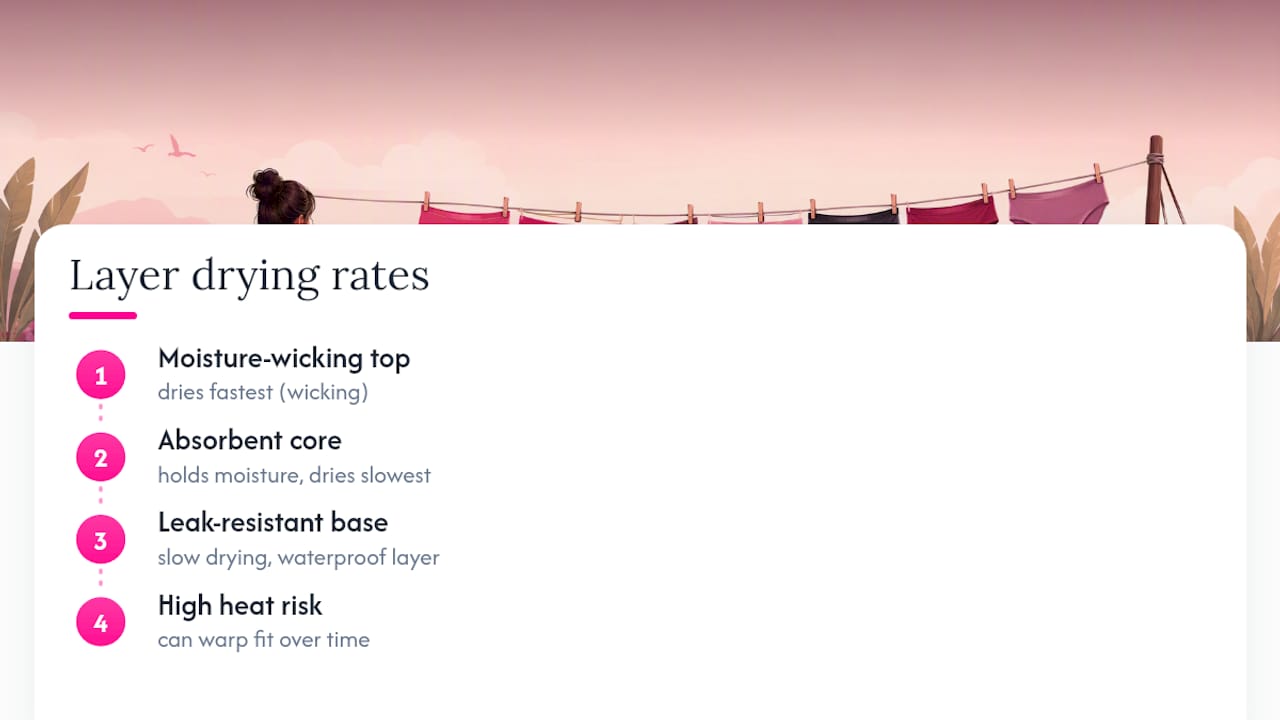
The multilayer construction in period underwear is what makes travel washing possible at all. A moisture-wicking top layer, an absorbent core, and a leak-resistant base each dry at different rates, which is why rushing the process with high heat can warp the fit over time rather than speed things up meaningfully.
Tiera’s posts on the Sweetee Journal focus heavily on real packing scenarios rather than lab conditions alone, because travel adds variables (humidity, limited sink time, shared laundry) that a home wash cycle doesn’t. The washing and care guide walks through the same rinse and towel-roll method covered above, built specifically around preserving the absorbent layers through repeated road washes.
A Traveler’s Short Notes From the Road
A week-long trip with four pairs and one wetbag taught me more than any packing list could. Two pairs handled the heavier days, one light pair covered the tail end, and the wetbag kept everything else in my suitcase smelling like nothing at all. The one adjustment I’d make next time: don’t rinse in a shared hostel bathroom sink during peak morning hours. Nobody says anything, but you’ll feel it. If you’ve been on the fence about trying period underwear for a trip, a four-pair mix is a low-risk way to find out it works better than you expected.
— Tiera
How Sweeteebeauty Fits Into This Packing System
A practical starting point once you know your travel mix, since it covers a light-to-heavy range this whole packing system depends on. Seamless, high-waist styles hold up to the towel-roll drying method described above, and washable, multilayer fabric can handle repeated road washes without falling apart quickly.
For a first travel kit, the HipHugger Period Underwear Bundle gives you a mix of absorbencies in one order, which saves you from guessing what to buy individually. Pair it with a compact wetbag and a travel detergent (the Hygiene and Protection Collection carries a few travel-sized options worth checking) and you’ve got the full system covered in one pass. Still unsure how many pairs your specific trip needs? Read how many pairs of period underwear you need before you check out, then build your bundle from there.
Sources
- 6 Best Period Underwear of 2026, Tested by Scientists — Good Housekeeping
- THINX period panties review — Her Packing List


