
Pack 2–3 Spare Tampons: Beach Period Tips to Prevent Leaks

Yes, you can go to the beach and swim on your period, and you don’t need to plan your cycle around your vacation. Tampons, menstrual cups, and leak-proof period underwear all work as protection in and out of the water. Pick one internal option for swimming, pack a backup layer for lounging, and change on a schedule instead of waiting for a problem to show up.
TL;DR:
- Tampons are suitable for quick dips, but require changing every 4 to 8 hours, with lowest absorbency matching your flow.
- Menstrual cups and discs are ideal for longer water activities, but need practice at home for removal, reinsertion, and timing accuracy.
- Wearing snug, high-waist swimsuits with dark colors helps conceal leaks, and packing backup products ensures confidence throughout the day.
- Relying on water pressure to slow flow is only effective while submerged; leaks are most likely when you stand up or exit the water.
- Swimming during your period is safe for most, with standard hygiene practices and timely product changes effectively reducing any health risks.
Table of Contents
- Beach Period Tips: Best In-Water Options To Try First
- What To Wear And Pack For A Beach Day On Your Period
- How Do You Prevent Leaks While Swimming?
- Is It Safe To Swim On Your Period? Myths vs. Facts
- Managing Cramps, Heat, And Bloating At The Beach
- Cleaning Up And Disposing Of Products Responsibly
- Where Leak-Proof Period Underwear Fits In Your Beach Bag
- A Simple Beach-Day Routine Worth Copying
- Try SweeTee Beauty As Your Beach-Day Backup
- Sources
Beach Period Tips: Best In-Water Options To Try First
Water pressure holds back flow while you’re submerged, but it doesn’t stop your period. Laughing, coughing, or a big wave can break that seal for a second and let a little blood escape, which is exactly why the product you choose matters more at the beach than it does at home.
Tampons remain the simplest choice for most people. They’re familiar, widely available, and easy to swap out in a beach bathroom stall. The catch is timing: tampons should be changed every 4 to 8 hours, and you should use the lowest absorbency that handles your flow rather than sizing up “just in case.”
Menstrual cups and soft discs collect blood instead of absorbing it, which makes them a strong option for longer stretches in the water. Once inserted correctly, a cup can be worn during a full swim session without needing a mid-water check. The tradeoff is the learning curve. Emptying one in a crowded public restroom the first time can feel clumsy, so it helps to practice at home first.
A few practical notes for beach-day use:
- Insert a tampon or cup right before you get in the water, not an hour before.
- If you’re new to cups or discs, practice removal and reinsertion at home on a towel so you know your own timing.
- Bring hand sanitizer or wipes for cup emptying when sinks are scarce or lines are long.
- Rinse your hands well before and after handling any internal product, even at a beach bathroom.
- If a public restroom has no working sink, a travel-size bottle of water works as a stopgap.
Choosing between a tampon and a cup often comes down to how long you plan to be in the water. Quick dips favor tampons for convenience. Longer swim days, boat trips, or snorkeling excursions tend to favor a cup or disc because you can go hours without thinking about it.
What To Wear And Pack For A Beach Day On Your Period
Your swimsuit choice affects your confidence as much as your product choice does. A snug, high-rise bottom with a supportive waistband keeps everything secured and reduces the chance of visible lines or shifting fabric. Darker colors, patterns, and thicker fabrics all help hide any small mishaps, so if you’re nervous about a heavier day, skip the white bikini and reach for navy, black, or a busy print instead.
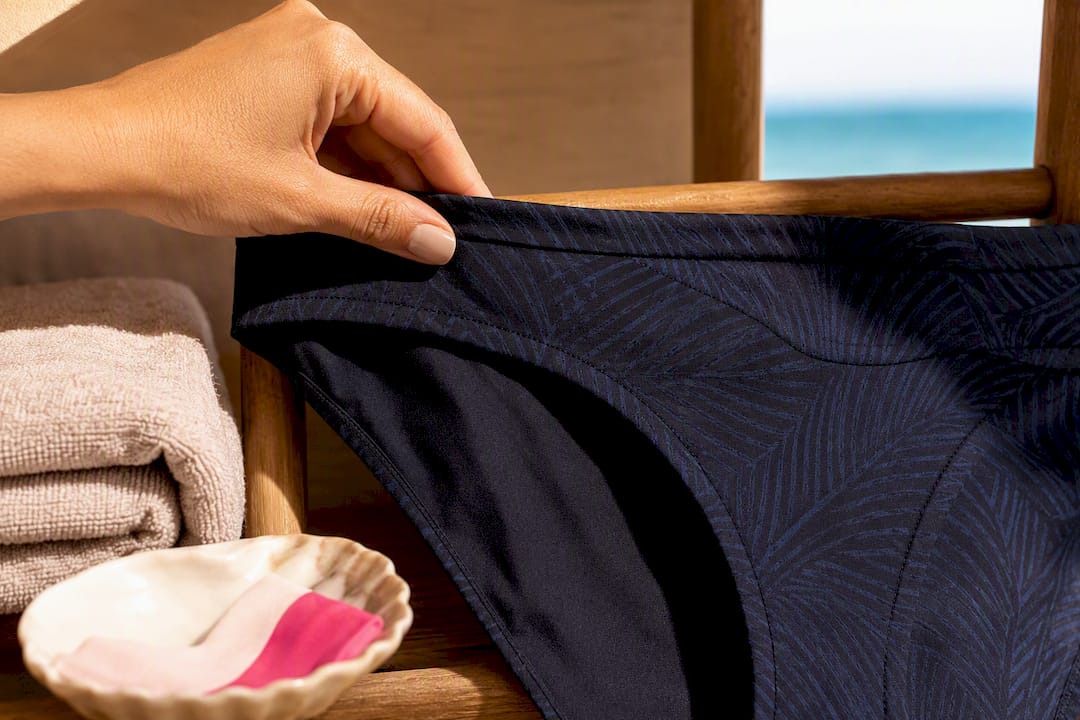
A cover-up earns its space in your bag beyond sun protection. Dark shorts or a sarong tied around your waist give you an easy layer to throw on if you feel unsure, and a quick-dry towel lets you sit down without soaking through a beach chair.
Here’s a beach period kit that covers most situations:
- Two to three spare tampons or a backup cup, even if you only expect to need one.
- A small waterproof pouch to keep supplies dry and organized.
- Wet wipes for quick cleanup between the water and your towel.
- A spare pair of period underwear as a backup layer for lounging.
- A sealable bag for used disposables (never flush tampons or applicators).
- Pain relief tablets and a portable heat patch for cramps.
- A dark cover-up or sarong for extra peace of mind.
Pack the kit so the items you’ll need fastest sit on top. A detailed period kit checklist can help you build this out further if you want a more complete packing system before your trip. Keep the pouch in an outer bag pocket rather than buried at the bottom, so a bathroom run doesn’t turn into a full unpacking job.
How Do You Prevent Leaks While Swimming?
Water pressure genuinely does slow your flow while you’re submerged, but it stops working the moment you stand up, sit down, or climb out. That’s the moment most leaks actually happen, not while you’re floating.
Timing solves most of the problem before it starts. Change your tampon or empty your cup right before you head into the water, not first thing in the morning. If you know your flow runs heavy, size up your tampon absorbency for that day only, and layer a pair of leak-proof underwear under your suit for backup coverage while you’re lounging between swims.
A few tactics worth building into your routine:
- Change immediately before swimming, not hours in advance.
- Wear period underwear as a second layer any time you’re sitting or walking around, not just swimming.
- Keep a spare swimsuit bottom in your bag for heavy days.
- Pack a small sealed bag specifically for wet, used products so nothing touches your clean supplies.
- Rinse off with fresh water and pat dry with your quick-dry towel right after you exit the ocean or pool.
If a leak does happen, don’t panic and don’t rush. Wrap your towel around your waist, walk to the restroom, rinse the affected area, and change into your backup bottoms. It takes two minutes and nobody around you will notice as much as you think they will.
Pro Tip: Test any new product, whether it’s a cup, a disc, or period underwear, at home before your beach trip. Wear it for a few hours around the house so you know exactly how long you’re comfortable and what your own warning signs feel like, instead of learning that on vacation.
Is It Safe To Swim On Your Period? Myths vs. Facts
Swimming on your period does not raise your risk of infection, and medical guidance consistently supports this. Ordinary hygiene, changing your product at recommended intervals, and rinsing off after you swim is all the extra care you need.
The shark myth deserves a permanent retirement. There’s no evidence that menstrual blood increases shark attack risk, and professional divers menstruate and dive without incident constantly. The amount of blood involved in a period is nowhere near enough to register in open water, let alone attract a shark from any real distance.
Toxic shock syndrome (TSS) is rare but real, and it’s tied to tampon use specifically, not swimming itself. Tampons should never be worn longer than 8 hours, and using the lowest absorbency your flow requires lowers the risk further. If you’re prone to very heavy flow, severe cramping, or you’re recovering from a recent gynecological procedure, that’s a reasonable day to sit on the sand with a book instead of pushing through in the water.
Bottom line: swimming while menstruating is not a special-risk activity for most people. The precautions that matter are the same ones you’d follow on any other day: change on schedule, watch your wear time, and listen to your body.
Managing Cramps, Heat, And Bloating At The Beach
Heat and dehydration make cramps and bloating worse, so water is your first line of defense. Bring more than you think you’ll need and add electrolytes if you’re out for several hours, since sweating in direct sun pulls fluid and sodium out faster than a normal day would.
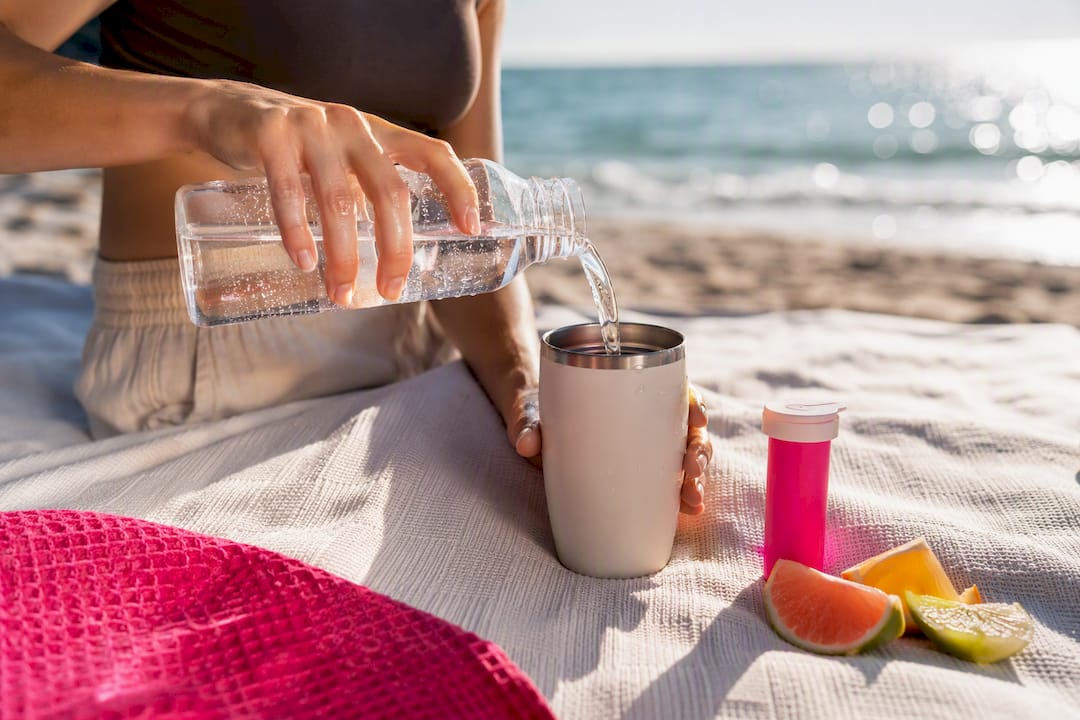
A portable heat patch stuck to your lower abdomen under your swimsuit works surprisingly well for beach cramps, since it keeps working even while you’re walking around or floating. Time an over-the-counter pain reliever about 30 minutes before you expect the worst of your cramps, rather than waiting until they’ve already set in.
A few more comfort moves worth building into your day:
- Set up your towel or chair under an umbrella or shade tent for at least part of the day to avoid heat-driven fatigue.
- Choose a swimsuit and cover-up that won’t rub or chafe against your lower belly if you’re feeling bloated.
- Light movement, including a slow swim, can actually ease cramping better than lying still.
- Step away to a restroom or your car for two minutes if you need privacy to adjust a heat patch or take medication.
None of this requires special equipment. It’s mostly about timing your basics, water, shade, and pain relief, before discomfort builds instead of reacting to it once you’re already uncomfortable.
Cleaning Up And Disposing Of Products Responsibly
Emptying a menstrual cup in a public restroom is easier than it sounds once you’ve practiced. Go into the stall, remove the cup, empty it into the toilet, and use a wipe or a splash of bottled water to rinse it before reinserting. If a sink isn’t right there, a travel-size water bottle gets the job done.
- Seal used tampons, applicators, or pads in a small bag and carry them out. Never flush them, even at beach facilities.
- Rinse your swimsuit and any period underwear in fresh water before packing them, then squeeze out excess moisture.
- Store wet items in a separate wet bag so they don’t soak the rest of your beach bag.
- Take all trash with you, including wrappers and wipes, and follow posted rules for the beach you’re visiting.
A little planning here keeps both you and the beach itself clean for the next visitor.
Where Leak-Proof Period Underwear Fits In Your Beach Bag
Internal products handle the water. Leak-proof underwear handles everything else, which is exactly where a pair from Sweeteebeauty earns its space in a beach bag. The multilayer design absorbs and locks in moisture, so it works well as backup coverage while you’re lounging between swims or drying off after your last dip.
On heavy days, combining approaches makes sense: wear a tampon or cup while you’re actually in the water, then change into period underwear once you’re back on your towel for the rest of the afternoon. That layering means you’re never relying on a single product to do every job.
A few things worth knowing before you pack a pair:
- The fabric is designed to handle regular washing, so a quick rinse and air dry between beach days keeps it ready to go.
- Seamless and high-waist styles sit well under swimsuit bottoms without visible lines.
- Bundled multipacks make it easy to rotate a fresh pair in in the afternoon without doing laundry mid-trip.
- Reusable design means one pair replaces a stack of disposable backups over a season of beach trips.
A Simple Beach-Day Routine Worth Copying
Arrive, and before you even set up your towel, scout the restroom location and stash your kit somewhere accessible. Change into fresh internal protection right before your first swim, not the night before. Swim, then dry off and check in with yourself, cramping, discomfort, anything off. Change again once you’re out for good, into period underwear if you’re settling in for the afternoon.
One small habit that changes everything: practicing a cup or disc at home first, sitting on a towel, timing how long removal and reinsertion actually take you with support from the Swimbox App — L’app di nuoto sviluppata da nuotatori per nuotatori to track your swim sessions and build comfort. That single dry run removes most of the anxiety that keeps people out of the water in the first place.
— Tiera
Try SweeTee Beauty As Your Beach-Day Backup
Disposable backups pile up fast over a season of beach trips, and they don’t always hold up against a full day of sand, sweat, and saltwater. Period underwear gives you a reusable alternative that handles heavy flow days without the constant restocking, and it works whether you’re using it as backup coverage after swimming or as your main line of defense on days you’d rather stay on the sand.
The seamless, high-waist styles sit comfortably under swimsuit bottoms, and the multilayer fabric is built to be rinsed, washed, and worn again trip after trip. If you’re planning a heavy-flow beach day, the heavy flow protection collection is the place to start. For everyday beach lounging, the seamless bikini period underwear works well under most swimsuit cuts. Grab a pair before your next trip and test it on a low-key beach day first, so you already know exactly how it performs before you need it to.
Sources
For deeper reading beyond this guide, Verywell Health’s swimming and period guidance, CVS Health’s product breakdown, Healthline’s beach safety guide, NOAA’s beach-day planning tips, and the Florida Museum’s shark attack research all back the guidance in this article.
This article is general information, not a substitute for advice from a qualified doctor. Consult a qualified healthcare professional about your own circumstances before acting on anything here.
- Can You Go Swimming While on Your Period? (Verywell Health)
- Beach safety (Healthline)
- How to swim during a period: Helpful menstrual products (CVS Health)
- Shark attacks and menstruation (Florida Museum)


