
How Often to Change Period Underwear: A Practical Schedule

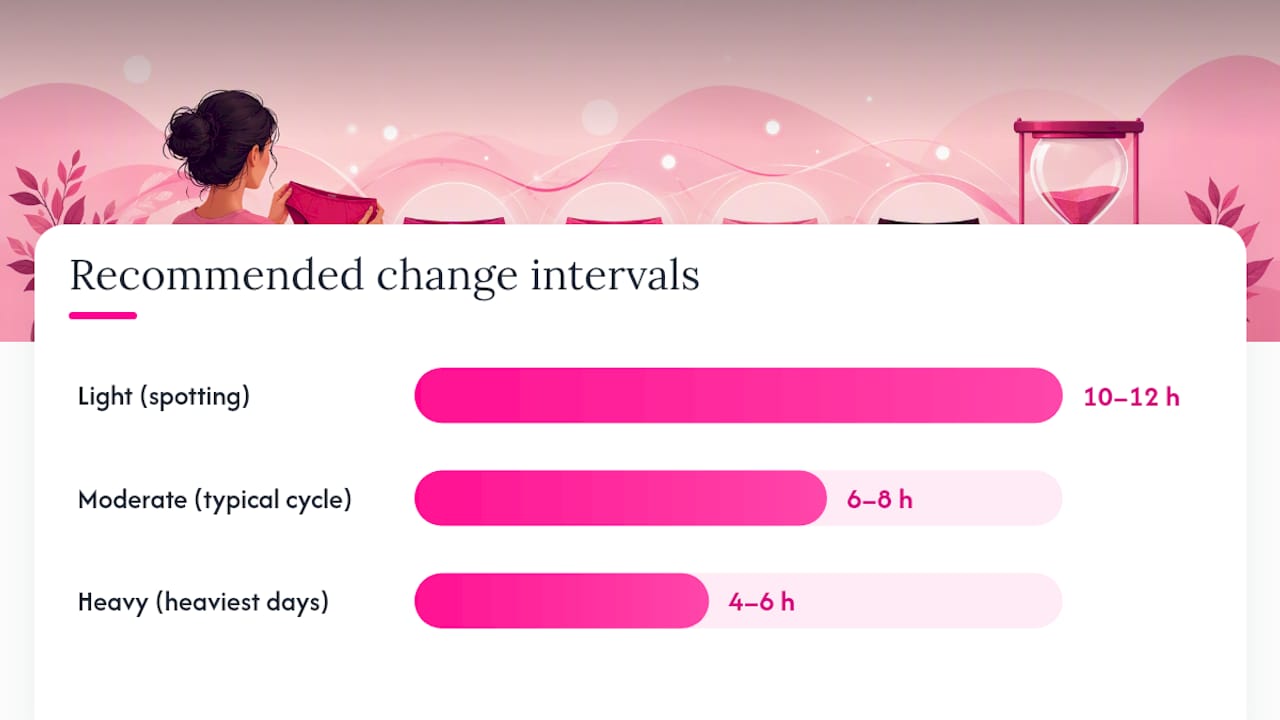
Change your period underwear every 4 to 12 hours depending on flow, and never push past the 12-hour mark regardless of how light the day feels. That’s the whole rule. Heavier bleeding needs faster turnover; lighter days buy you more time.
Here’s the breakdown by flow level:
- Light flow: up to 10 to 12 hours
- Moderate flow: 6 to 8 hours
- Heavy flow: 4 to 6 hours, or pair with a backup product
If you’re ever unsure, change sooner. A fresh pair costs you two minutes; a leak costs you the rest of your day.
Key Takeaways
Changing period underwear on a flow-matched schedule, light up to 12 hours, moderate 6 to 8, heavy 4 to 6, is the single most reliable way to avoid leaks, odor, and irritation.
| Point | Details |
|---|---|
| Match change time to flow | Light up to 10-12 hours, moderate 6-8 hours, heavy 4-6 hours or add backup. |
| Watch your body, not just the clock | Dampness, odor, leakage, or itching mean change now regardless of elapsed time. |
| Pair up on heavy days | Combine a cup or tampon with period underwear for postpartum bleeding, heavy flow, or long travel. |
| Rinse cold, skip softener and bleach | Proper care extends most pairs to 2-5 years of reliable use. |
| Sweeteebeauty offers absorbency-matched options | Light, moderate, heavy, and postpartum styles help you build a rotation suited to your actual cycle. |
Table of Contents
- How Often Should You Change Period Underwear by Flow?
- What Are the Signs You Need to Change Now?
- When Should You Pair Period Underwear with Backup Protection?
- What’s the Best Rule for Overnight and Travel?
- How Many Pairs Should You Own?
- How Do You Wash and Care for Period Underwear?
- Where Can You Find Comfort Support and Buy the Right Fit?
- Sources
How Often Should You Change Period Underwear by Flow?
Absorbency ratings exist for a reason, and matching them to your actual flow is what makes the whole system work. Light-absorbency pairs are built for spotting or the tail end of your period, and they can comfortably go up to 10 to 12 hours without feeling saturated. Moderate absorbency covers the bulk of a typical cycle, and most people find the 6 to 8 hour window keeps them dry and confident. Heavy-flow styles hold more, but even the best multilayer designs have limits, so the 4 to 6 hour range still applies on your heaviest days.
Activity changes the math. Exercise, hot weather, or long stretches on your feet all increase moisture and can shift a “moderate flow” day into “change it now” territory. Sweat doesn’t just add discomfort. It breaks down the feel of freshness faster than blood alone would, so a pair that would normally last eight hours might only give you five after a workout.
A few things shorten your safe wear window:
- Running, cycling, or any extended cardio session
- Hot or humid environments
- Sitting for long periods, which traps warmth and moisture against the skin
- Wearing the same pair two days in a row without a wash cycle in between
Pro Tip: Don’t just watch the clock. Do a quick feel-check around the midpoint of your expected wear time. If the fabric feels heavier or less breathable than when you put it on, that’s your cue to swap early, no matter what the label promised.
What Are the Signs You Need to Change Now?
Your body will tell you before the clock does. Watch for these signals:
- Dampness against the skin — the fabric no longer feels dry or breathable
- A faint odor — a sign bacteria are starting to build up on retained blood
- Visible leakage or spotting on the outside of the underwear
- Itching, redness, or the start of a rash near the waistband or inner thighs
Each of these matters for a different reason. Dampness and odor point to bacterial buildup, which is uncomfortable now and a hygiene risk later. Leakage means you’ve exceeded the absorbency rating, full stop. Itching or a rash usually means the fabric has been in contact with moisture too long. Persistent irritation, unusual discharge, or a fever alongside any of these warrants a call to your doctor rather than another change of underwear.
When Should You Pair Period Underwear with Backup Protection?
Period underwear works best as your primary layer on light to moderate days, but a few situations call for reinforcement. Heavy flow days, postpartum bleeding, overnight wear without a high-absorbency pair, long flights, and vigorous exercise or hikes all push saturation risk higher than a single pair can reliably handle.
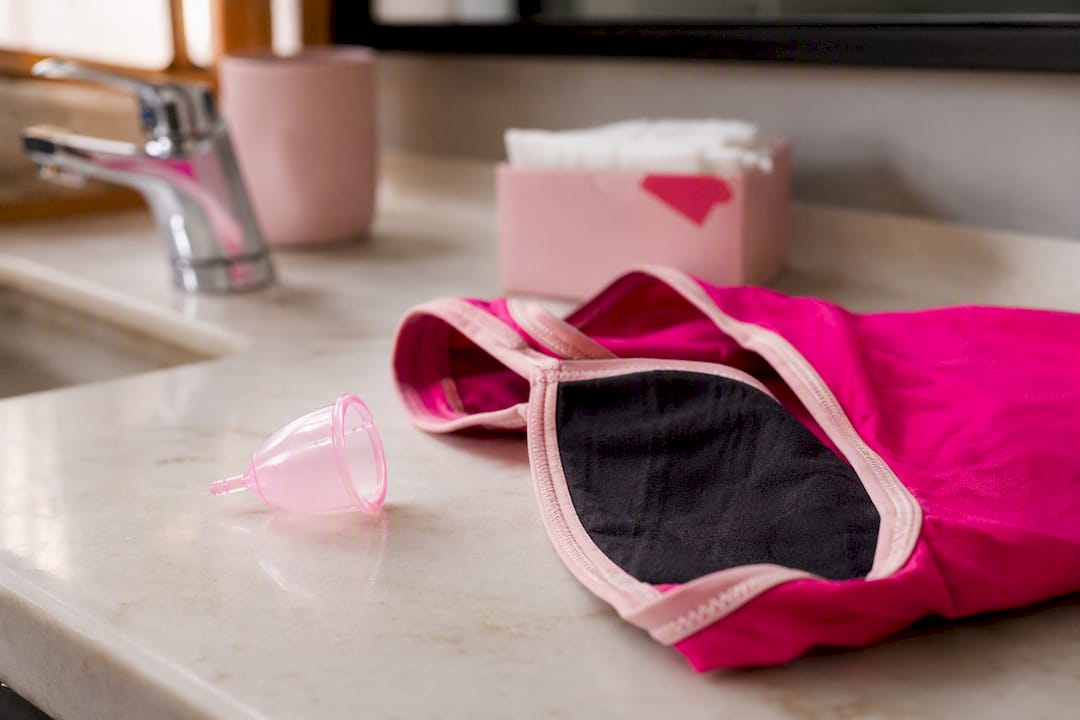
In those cases, pairing a cup or tampon with period underwear is a smart move. The internal product handles volume, and the underwear catches any overflow, which meaningfully lowers your leakage risk on the days you can least afford one. Clinicians note that period underwear was often designed as backup protection in the first place, so leaning on it alone during heavy bleeding without checking it regularly increases your odds of a surprise.
Whatever combination you choose, don’t let any single product sit saturated for hours on end. Toxic shock syndrome is linked to retained menstrual products, so extended saturation isn’t just uncomfortable. It’s a real health consideration.
What’s the Best Rule for Overnight and Travel?
- Sleep in a high-absorbency pair built for overnight wear, and change it first thing in the morning regardless of how it feels.
- Pack at least one spare pair plus a small wet bag or resealable bag so a used pair doesn’t have to sit loose in your luggage.
- On flights or long travel days, plan for at least one change if you’re on a heavy day, and always bring backups. Bathroom access on a plane is unpredictable, and you don’t want your schedule dictated by the beverage cart.
How Many Pairs Should You Own?
- Aim for 5 to 7 pairs total. This range gives you enough rotation to always have a clean, dry pair ready while others are in the wash, and it lets you match absorbency to how your flow shifts across the cycle.
- Build a simple weekly laundry rhythm. Wash every two to three days during your period so you’re never down to your last clean pair.
- Keep one spare in your bag at all times. Unexpected changes happen, and a backup pair means you’re never stuck.
How Do You Wash and Care for Period Underwear?
Care habits determine how long your underwear actually performs, not just how long it survives in a drawer.
- Rinse in cold water immediately after wearing. Cold water lifts blood before it sets into the fabric, while hot water locks it in.
- Skip fabric softener. It coats the absorbent layers and reduces how well they wick moisture.
- Machine wash per the label, typically in cold or warm water, then air dry rather than tumble dry on high heat.
- Avoid bleach entirely. It breaks down the specialized layers that make the underwear leak-proof in the first place.
Handled well, most quality pairs last about 2 to 5 years depending on how often you wear and wash them. That’s a wide range, and where you land in it comes down almost entirely to whether you follow the steps above or skip them.
Warning: high heat, bleach, and fabric softener are the three fastest ways to shorten your underwear’s lifespan and weaken its absorbency well before its time.
A Note from Sweeteebeauty
Choosing the right absorbency level matters more than any single care trick. We build our period underwear in light, moderate, heavy, and postpartum options specifically because one pair can’t serve every flow day well.
Tiera, a Sweeteebeauty blog contributor, recommends starting with a variety pack so you can match absorbency to your actual cycle instead of guessing. For more care breakdowns and buying guides, check the Sweeteebeauty blog.
A Routine That Actually Sticks
I keep a spare pair in my bag, do a quick feel-check around midday, and rinse in cold water the moment I get home. It’s a small habit that made periods feel a lot less stressful.
Where Can You Find Comfort Support and Buy the Right Fit?
Sweeteebeauty makes changing on schedule easier because our multilayer design holds up through the full wear window you just read about, not just the first hour or two. Every collection is sorted by absorbency, so instead of guessing whether a pair will get you through a 6-hour moderate day or a 4-hour heavy one, you pick based on what your flow actually needs.
If cramps are part of your routine alongside flow tracking, pairing your underwear rotation with a heat or massage tool like NuFemme can round out your comfort setup on tougher days. For period underwear itself, our heavy flow protection styles are built for the 4 to 6 hour window, while teens can start with the teen brief for lighter, more predictable days. Not sure where your flow lands day to day? A period tracker planner makes the pattern obvious fast. Browse the full period underwear collection and build a rotation that actually matches how you bleed, not a generic guess.
Sources
- What Is Period Underwear and Does It Work? — Cleveland Clinic
- Toxic shock syndrome — Mayo Clinic
- Period underwear — New Jersey Department of Health
This article is general information, not a substitute for advice from a qualified doctor. Consult a qualified healthcare professional about your own circumstances before acting on anything here.


